Capital investment for deploying an automated factory Energy Management System (EMS) in mid-to-large manufacturing plants in 2026 ranges from 42,000,000 VNĐ to 220,000,000 VNĐ, determined by the density of monitored feeder circuits (spanning 20 to over 150 metering nodes), meter precision class (Class 0.5S vs. Class 1.0), communication bus infrastructure (wired RS485 vs. wireless 4G cellular IoT gateways), and software deployment architecture (On-Premise local server vs. Cloud SaaS).
This technical guide is part of DeviceLab's comprehensive engineering handbook on factory energy monitoring system.
📌 EMS Budget & Payback Summary (Key Takeaways):
- Average Investment per Metering Point: Ranges from 1,400,000 to 2,200,000 VNĐ / metering point (inclusive of Modbus digital power meter, split-core CTs, communication cabling, and software licensing).
- Return on Investment (ROI) Timeline: Typically achieves payback within 06 to 09 months (and under 3 months for high-tariff plants) with monthly electric bills exceeding 300 million VNĐ, driven by peak-hour load shifting and eliminating power factor penalties.
- Elimination of Reactive Power Surcharges: Real-time monitoring of power factor (Cos Phi) per substation, automatically alerting maintenance teams to blown capacitor fuses before EVN levies reactive power penalties.
- Statutory Compliance with Decision 42/2026/QĐ-TTg: Mandates designated large greenhouse gas emitting industrial facilities to maintain automated continuous energy logging and greenhouse gas inventory reporting systems.
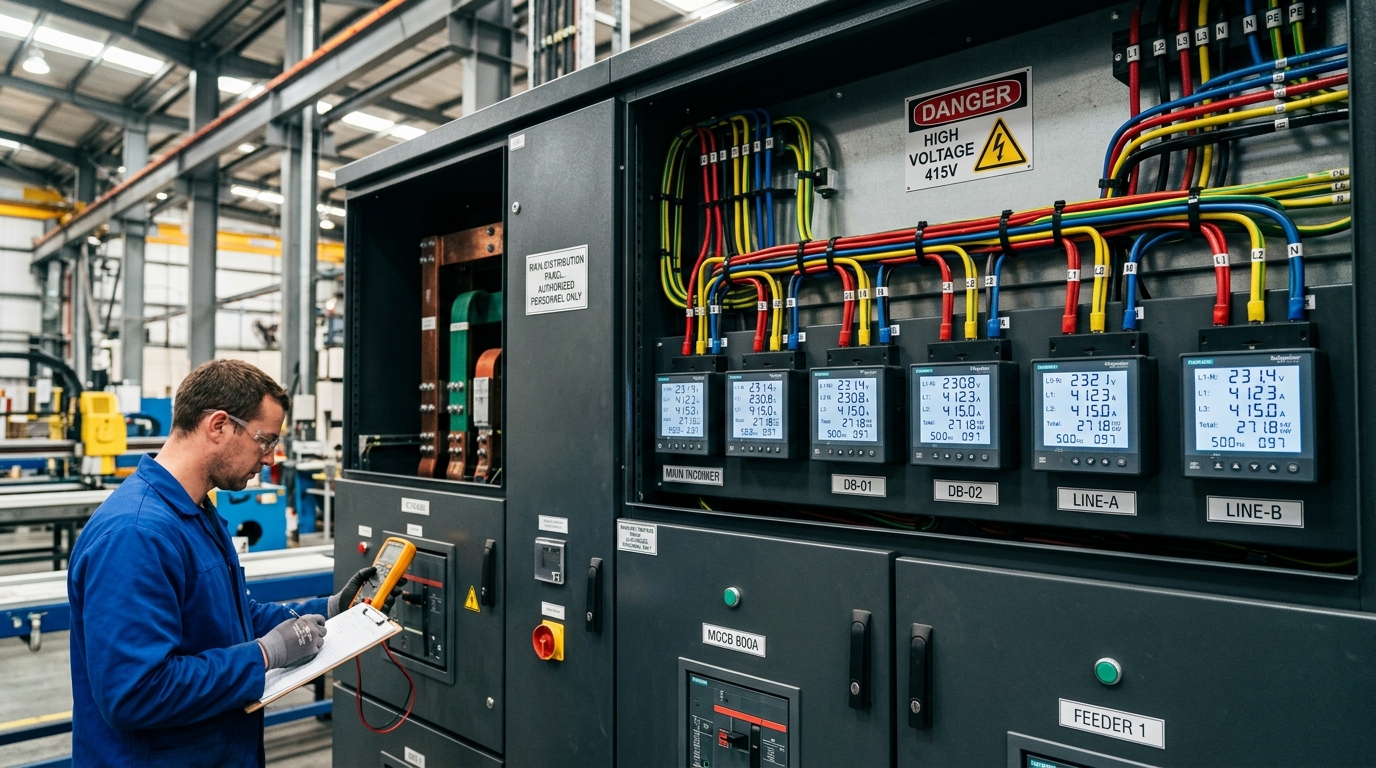
Itemized EMS Turnkey Budget Breakdown (Sample 40-Metering-Point Facility)
Below is a comprehensive engineering budget for a manufacturing facility comprising one 1,600kVA Transformer Substation, 2 Main Switchboards (MSB), and 6 Sub-Distribution Panels (totaling 40 feeder circuits):
| No. | Equipment / Service Item | Qty | Unit | Unit Price (VNĐ) | Subtotal (VNĐ) |
|---|---|---|---|---|---|
| I | FIELD ELECTRICAL METERING HARDWARE | ||||
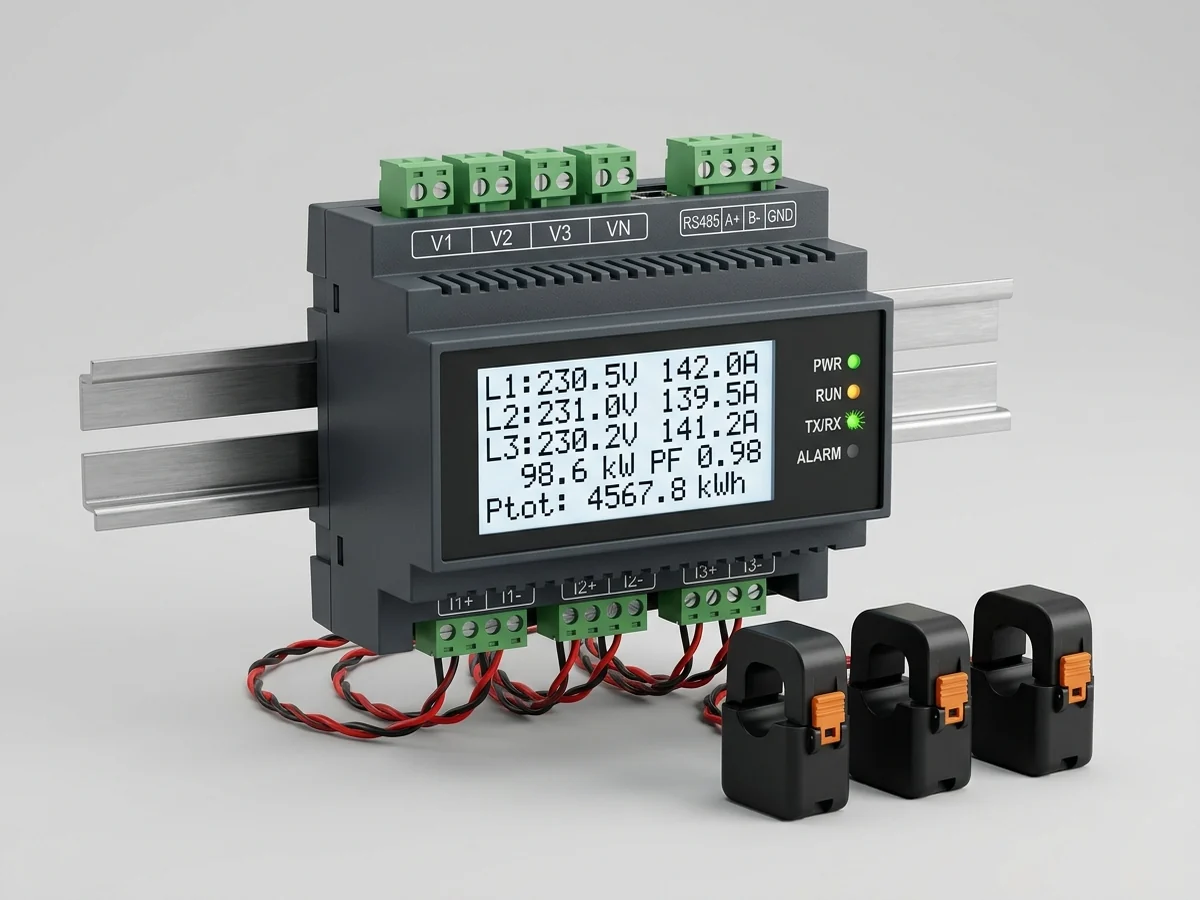
| 1 | Modbus RS485 Digital Multi-Function Meter (Class 0.5S) | 40 | Unit | 950,000 | 38,000,000 |
| 2 | Split-Core Current Transformer Pack (100A - 800A/5A) | 40 | Set (3 pcs) | 320,000 | 12,800,000 |
| II | DATA ACQUISITION & IOT GATEWAY HARDWARE | ||||
| 3 | DeviceLab DL-GW200 4G Modbus Concentrator Gateway | 3 | Set | 3,800,000 | 11,400,000 |
| 4 | MeanWell 24VDC Industrial DIN-Rail Power Supply | 3 | Unit | 380,000 | 1,140,000 |
| III | EMS SOFTWARE & COMMISSIONING SERVICES | ||||
| 5 | EMS Cloud Software License (Telemetry, Reports, EnPI) | 1 | Package/Year | 9,000,000 | 9,000,000 |
| 6 | Auxiliary Materials: Shielded RS485 Cable, Conduits | 1 | Lot | 6,000,000 | 6,000,000 |
| 7 | Installation Labor, Modbus Addressing & Dashboard Setup | 1 | Lot | 7,500,000 | 7,500,000 |
| TOTAL TURNKEY INVESTMENT FOR 40-POINT EMS SYSTEM | 85,840,000 VNĐ | ||||
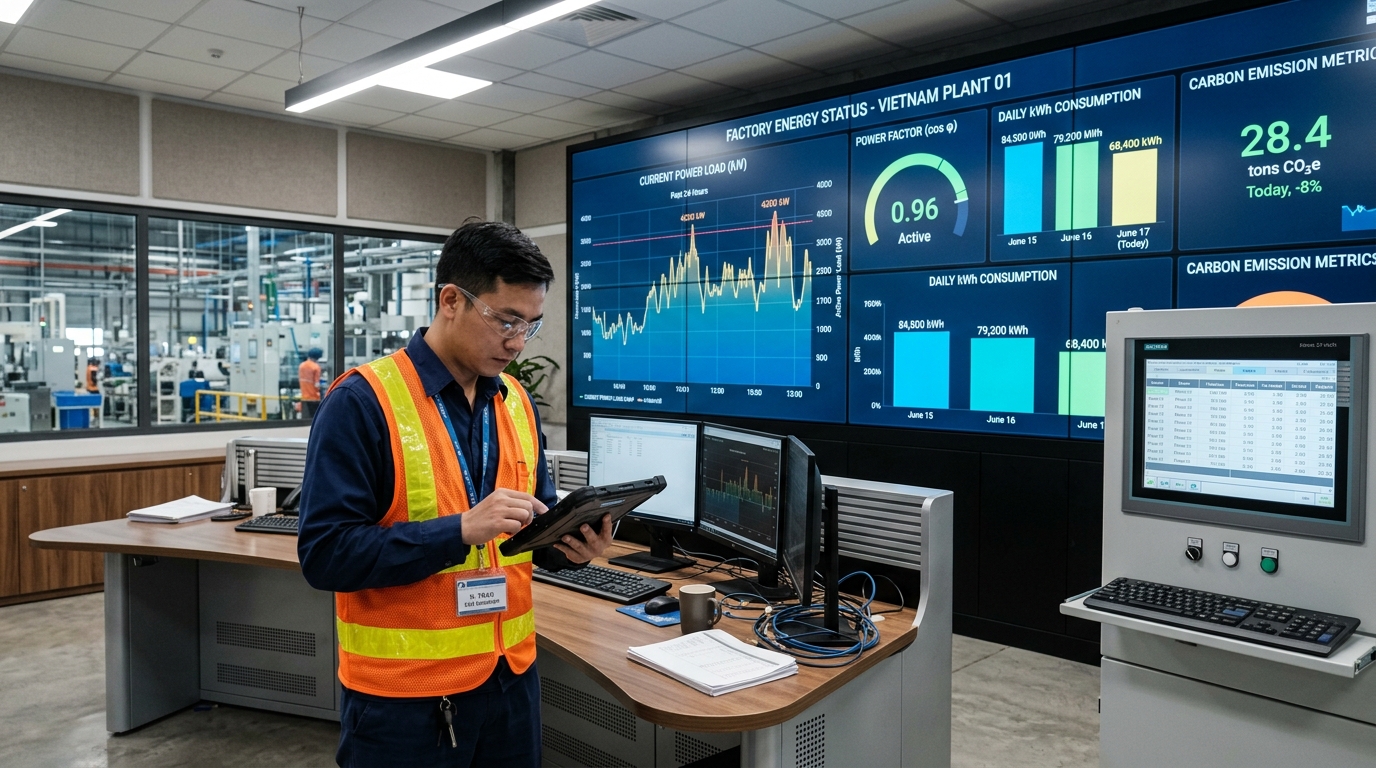
Real-World ROI Analysis: How Rapidly Does EMS Pay for Itself?
A vital question posed by executive management is: "After investing ~85 million VNĐ in this system, how many months until we break even?"
Here is empirical operational data from a metal fabrication plant located in Quang Minh Industrial Park (Hanoi) with an average monthly utility bill of 420,000,000 VNĐ / month:
- 1. Shifting Heavy Loads Away from Peak Tariff Windows: Utility peak tariffs (3,171 VNĐ/kWh) are nearly triple off-peak rates (1,100 VNĐ/kWh). Post-installation, EMS telemetry revealed heat treatment annealing ovens and cooling pumps running squarely between 09:30 - 11:30 AM. Rescheduling shifts to start at 12:00 PM reduced monthly energy bills by 28,000,000 VNĐ / month.
- 2. 100% Elimination of Power Factor Penalties: Previously, a blown capacitor fuse went undetected by technicians, causing the plant power factor (Cos Phi) to sag to 0.81 and triggering monthly reactive power fines averaging 8,500,000 VNĐ / month. Instant Telegram alerts ended these penalties permanently.
- 3. Catching Unloaded Equipment Running Through Lunch Breaks: Eliminating unneeded exhaust fans and idling compressors during shift breaks saved another 4,500,000 VNĐ / month.
Total Monthly Savings Achieved: 28 + 8.5 + 4.5 = 41,000,000 VNĐ / month.
Empirical Payback Period: 85,840,000 / 41,000,000 ≈ 2.1 months (Breakeven achieved in just over two months of operation!).
Panel Audit & Customized EMS Quotation
DeviceLab engineers provide on-site electrical single-line diagram evaluations, advise on optimized metering point allocations, and deliver an itemized turnkey proposal within 24 hours.
Energy Engineer: (+84) 982.503.355