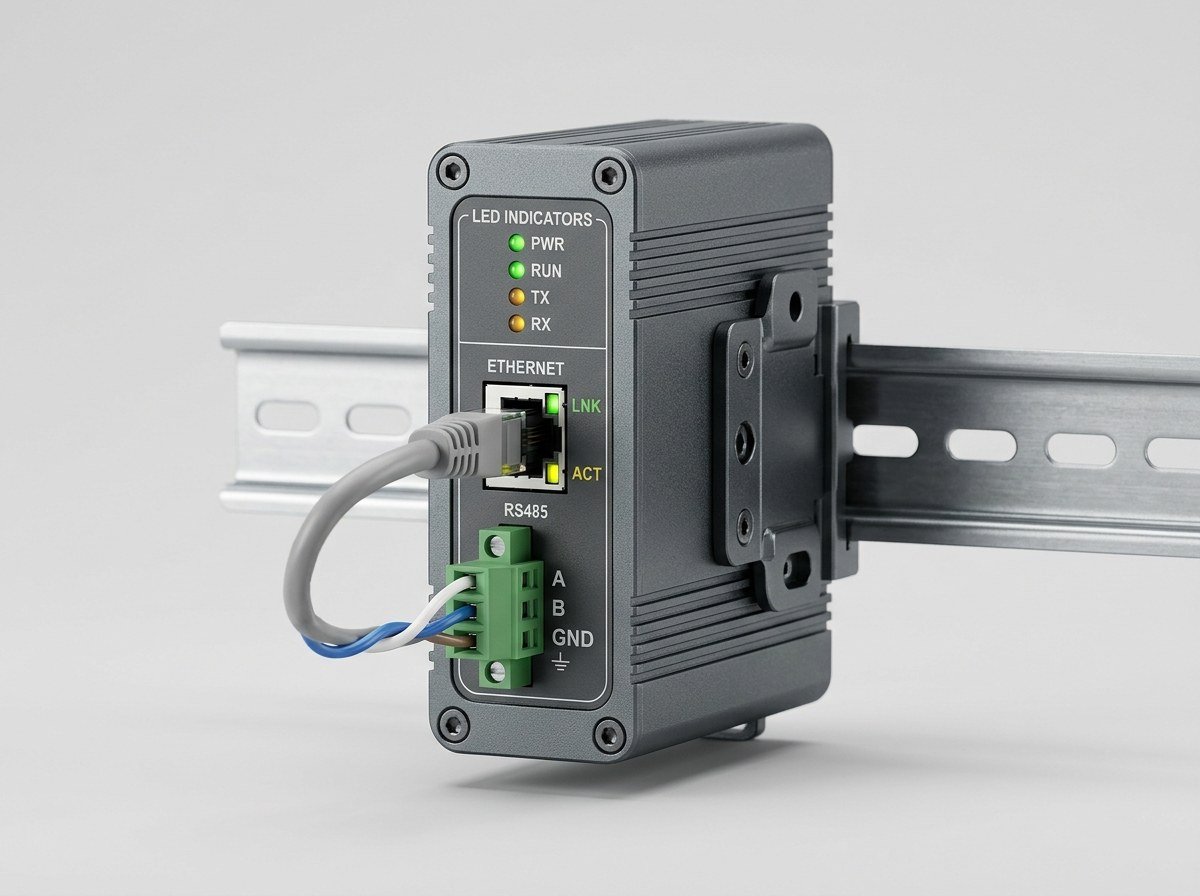
A Modbus-to-MQTT Industrial Gateway is a specialized edge bridge device engineered to operate as a local Modbus Master, continuously interrogating register tables from digital power meters, sensors, variable frequency drives (VFDs), and PLCs across Modbus RTU (RS485) or Modbus TCP (Ethernet) protocols. It parses and packages raw telemetry into optimized JSON payloads, publishing them securely to cloud platforms (such as AWS IoT Core, Azure IoT Hub, ThingsBoard, or Cloud SCADA) over TLS/SSL-encrypted MQTT with minimal latency and high data efficiency.
This technical guide is part of DeviceLab's comprehensive engineering handbook on industrial Modbus RS485 gateway.
📌 Modbus to MQTT Technical Summary (Key Takeaways):
- Core Architectural Distinction: Modbus operates on a synchronous Master-Slave polling loop that consumes extensive network bandwidth. MQTT utilizes an asynchronous, event-driven Publish/Subscribe pattern, reducing 4G cellular data consumption by over 80% compared to raw transparent Modbus TCP tunneling.
- Quality of Service (QoS) Management: Deploy QoS 1 for billing-grade energy metering and fault alarms (guaranteeing message delivery at least once); assign QoS 0 for transient real-time display telemetry (grid frequency, line voltages).
- Industrial-Grade Security: Native support for TLS v1.2/v1.3 encryption across port 8883 with mutual X.509 cryptographic certificate authentication, preventing packet sniffing and unauthorized command injection.
- Last Will and Testament (LWT): Cloud brokers detect panel blackouts and cellular link drops within seconds of hardware power loss.
- Non-Volatile Store-and-Forward: During cellular dropouts, the gateway autonomously buffers upwards of 100,000 JSON messages into onboard Flash, executing throttled backfill when internet routing restores.
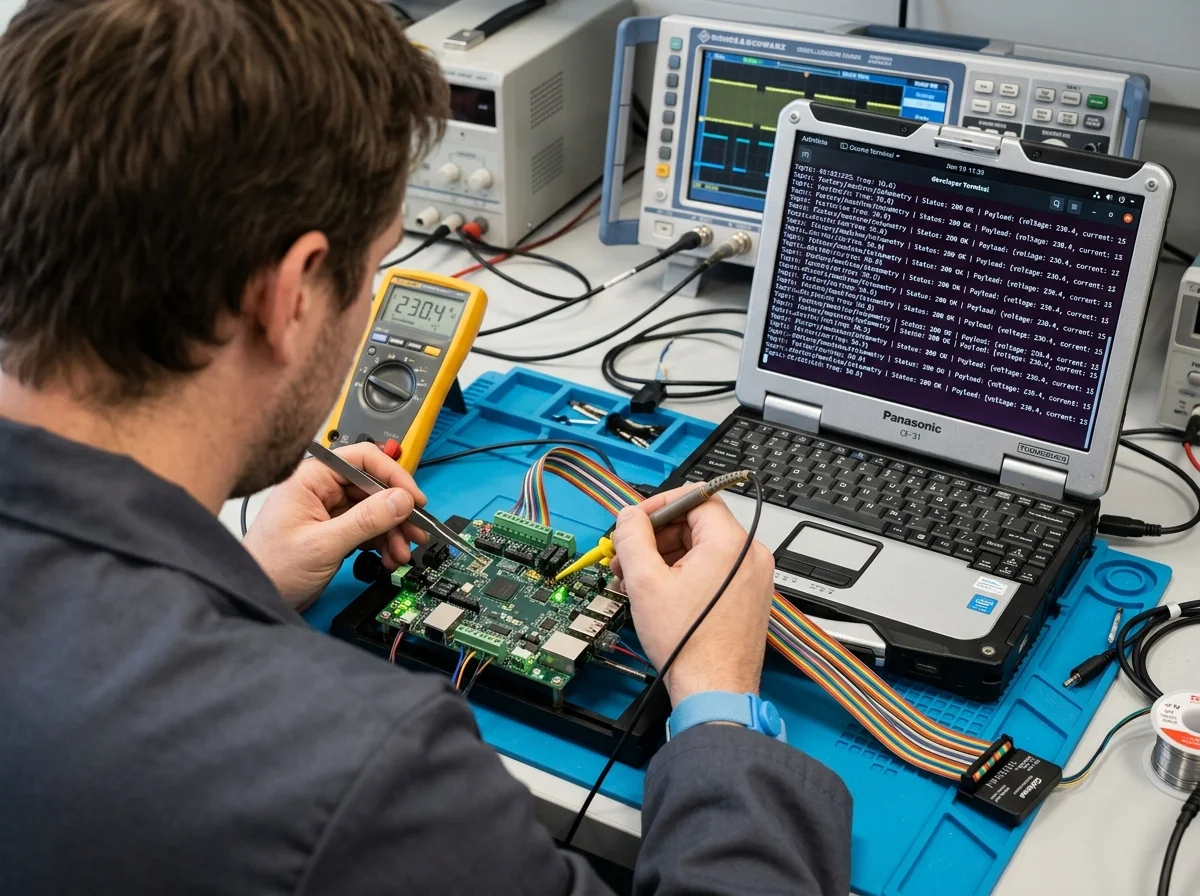
Why You Should Never Tunnel Raw Modbus RTU Directly to Cloud SCADA
In legacy automation architectures, systems engineers traditionally daisy-chained dozens of RS485 slave devices directly to a desktop SCADA machine located inside a plant control room. However, when migrating to Smart Factory ecosystems and multi-site enterprise cloud architectures, this approach exposes crippling limitations:
- Latency Bottlenecks in Polling Cycles: Modbus RTU operates over a half-duplex serial bus. Polling 32 energy meters daisy-chained at 9600 bps can require 5 to 10 seconds per scan cycle. If a single meter loses power, the master stalls until the timeout expires (typically 1000ms), delaying data acquisition for all subsequent downstream nodes.
- Astronomical Cellular 4G Data Overhead: Utilizing a transparent virtual COM serial modem to stream raw Modbus TCP query/response polling frames across 4G 24/7 consumes between 2GB and 5GB of cellular data per month per switchboard.
- Severe Cybersecurity Vulnerabilities: Modbus possesses zero native encryption or authentication. Anyone intercepting the TCP stream can observe confidential production data or inject unauthorized function codes (e.g., FC 05/06/16) to trip circuit breakers or override machine speeds.
A Modbus-to-MQTT Edge Gateway resolves these problems completely: The device performs edge processing locally, polling Modbus registers at high speed inside the cabinet, but only packaging and publishing MQTT updates when values deviate beyond deadbands (Report-by-Exception) or at planned periodic intervals. 4G cellular data consumption drops by over 80%, while all packets are shielded by military-grade TLS cryptographic ciphers.
Edge Data Flow Architecture: From Modbus Registers to MQTT JSON Payloads
The following diagram illustrates how the DeviceLab DL-GW200 processes field telemetry at the network edge:
| EDGE-TO-CLOUD DATA CONVERSION PIPELINE |
+-----------------------------------------------------------------------------------+
| [Schneider PM2200 Power Meter] --- (Modbus RTU: Polling Registers 3000-3010)
| [Danfoss FC302 VFD Inverter] --- (Modbus RTU: Reading Frequency, Motor Current)
| [Environmental Temp/Humidity] --- (Modbus RTU: Reading Ambient Temperature, RH)
| |
| v (RS485 Daisy Chain - 19200 bps, 8-E-1)
| +-------------------------------------------------------------------------------+
| | DL-GW200 INDUSTRIAL EDGE IOT GATEWAY |
| | |
| | [Modbus Master Engine] -> 500ms localized scan rate |
| | [Data Parsing & Scaling] -> Engineering units (x0.1, x0.01), Float/Int |
| | [JSON Formatter Engine] -> Formats structured JSON with RTC Timestamps |
| | [Store-and-Forward Buffer] -> LittleFS Flash storage during 4G disconnects |
| | [mbedTLS v1.3 Engine] -> AES-256 payload encryption over Port 8883 |
| +-------------------------------------------------------------------------------+
| |
| v (4G LTE Cat 1 / Industrial Ethernet - Port 8883 TLS)
| [ENTERPRISE MQTT CLOUD BROKER] (AWS IoT Core / ThingsBoard / EMQX Enterprise)
| Topic: "factory/plant01/switchboard_msb/telemetry"
| Payload JSON: {"ts": 1791813800000, "V_L1": 220.4, "I_L1": 45.2, "kW": 9.8} +-----------------------------------------------------------------------------------+
Bandwidth-Optimized JSON Payload Schema for Energy Telemetry:
"dev_id": "DL-GW200-A0184",
"ts": 1791813800000,
"data": {
"meter_01": {"v1": 220.5, "v2": 221.2, "v3": 219.8, "i1": 45.2, "kw": 28.5, "kwh": 14205.8},
"vfd_fan01": {"freq_hz": 48.5, "current_a": 12.4, "motor_temp": 54.2, "status": "RUN"}
},
"diag": {"rssi": -68, "cpu_temp": 42.5, "buff_pending": 0}
}
4 Non-Negotiable Criteria When Selecting a Modbus-to-MQTT Gateway
- 1. Native TLS v1.2/v1.3 Cryptographic Support: Budget gateways often only support unencrypted MQTT over port 1883. Leading cloud brokers like AWS IoT Core and Microsoft Azure IoT Hub reject unauthenticated connections, mandating mutual TLS authentication with Root CA certificates, Client Certificates, and Private Keys.
- 2. Flash Store-and-Forward Buffering: Cellular coverage in industrial zones experiences periodic congestion during peak manufacturing hours. Without onboard non-volatile Flash buffering, energy meter readings during dropouts are lost forever, corrupting cumulative billing profiles.
- 3. 2.5kV Galvanically Isolated RS485 Ports: Industrial cabinets harbor strong transient spikes from heavy contactors and VFD switching. Non-isolated serial ports quickly suffer electrical overstress, permanently destroying gateway MCU UART interfaces.
- 4. Keep-Alive & Last Will and Testament (LWT) Messaging: MQTT's LWT mechanism allows the cloud broker to immediately notify plant maintenance managers when a cabinet loses power before an orderly disconnect packet can be transmitted.
Python Test Script Simulating a Cloud MQTT Subscriber
The following script leverages the paho-mqtt library to subscribe to, decode, and parse secure telemetry dispatches from the DL-GW200 gateway:
import paho.mqtt.client as mqtt
BROKER_ADDRESS = "mqtt.devicelab.vn"
PORT = 8883
TOPIC_SUB = "factory/+/telemetry"
def on_connect(client, userdata, flags, rc):
if rc == 0:
print("Connected successfully to secure TLS MQTT Broker!")
client.subscribe(TOPIC_SUB)
else:
print(f"MQTT connection failed with error code: {rc}")
def on_message(client, userdata, msg):
try:
payload = json.loads(msg.payload.decode('utf-8'))
dev_id = payload.get("dev_id")
meter_data = payload.get("data", {}).get("meter_01", {})
print(f"[{msg.topic}] Telemetry received from Gateway: {dev_id}")
print(f" -> Phase A Voltage: {meter_data.get('v1')} V | Active Power: {meter_data.get('kw')} kW")
except Exception as e:
print(f"JSON payload parsing error: {e}")
client = mqtt.Client()
client.tls_set(ca_certs="ca.crt") # Configure Root CA certificate
client.username_pw_set("plant_operator", "SecurePass2026@")
client.on_connect = on_connect
client.on_message = on_message
client.connect(BROKER_ADDRESS, PORT, keepalive=60)
client.loop_forever()
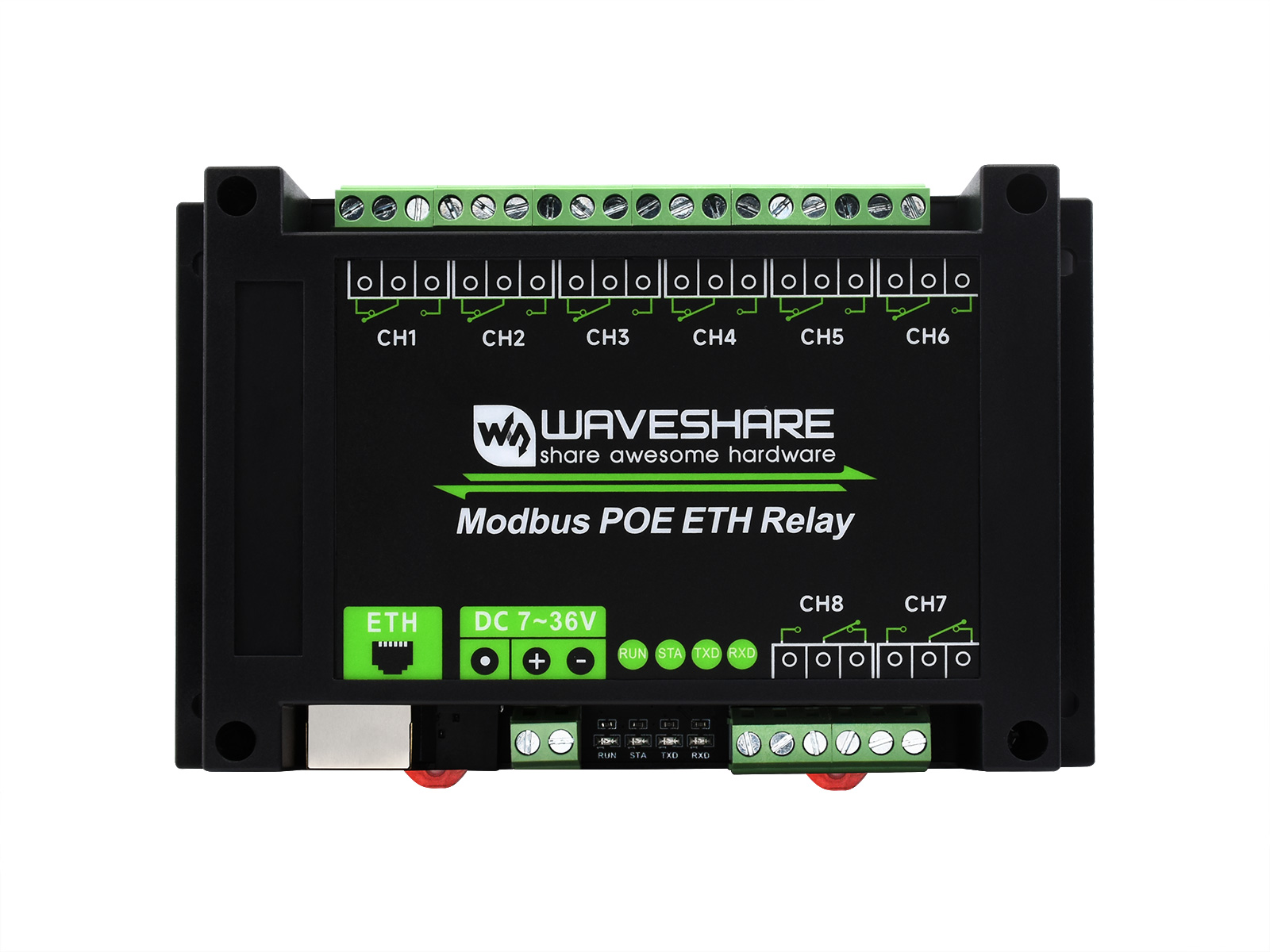
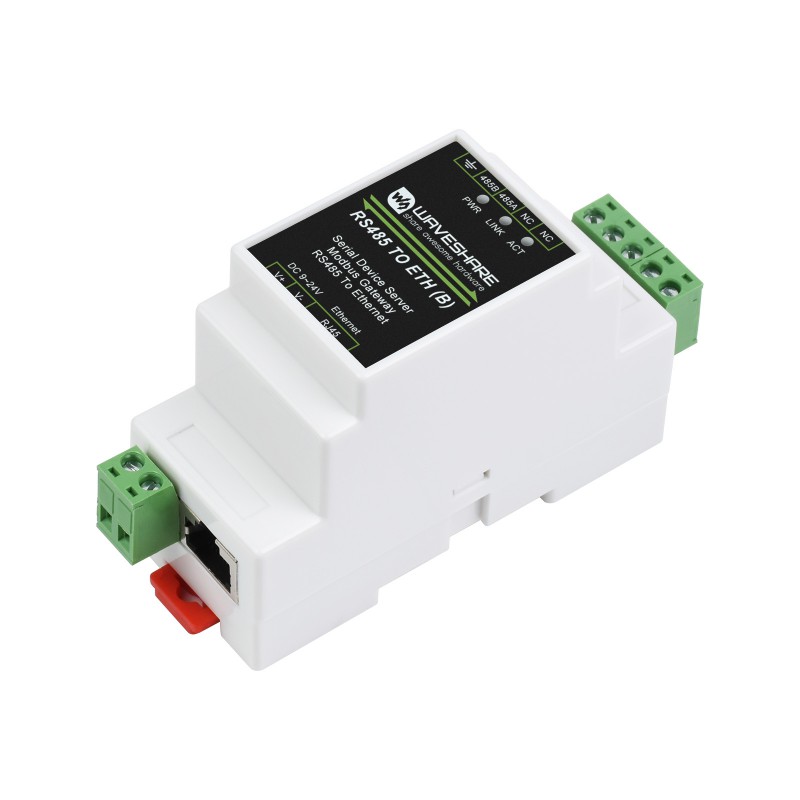
DeviceLab DL-GW200 Industrial Modbus to MQTT Gateway
Equipped with dual 2.5kV optically isolated RS485 ports, global 4G LTE Cat 1 modem, and hardware-accelerated TLS v1.3 supporting direct AWS IoT and ThingsBoard integration. 100,000-message Flash buffer prevents telemetry loss during cellular outages.
Technical Consultation: (+84) 982.503.355