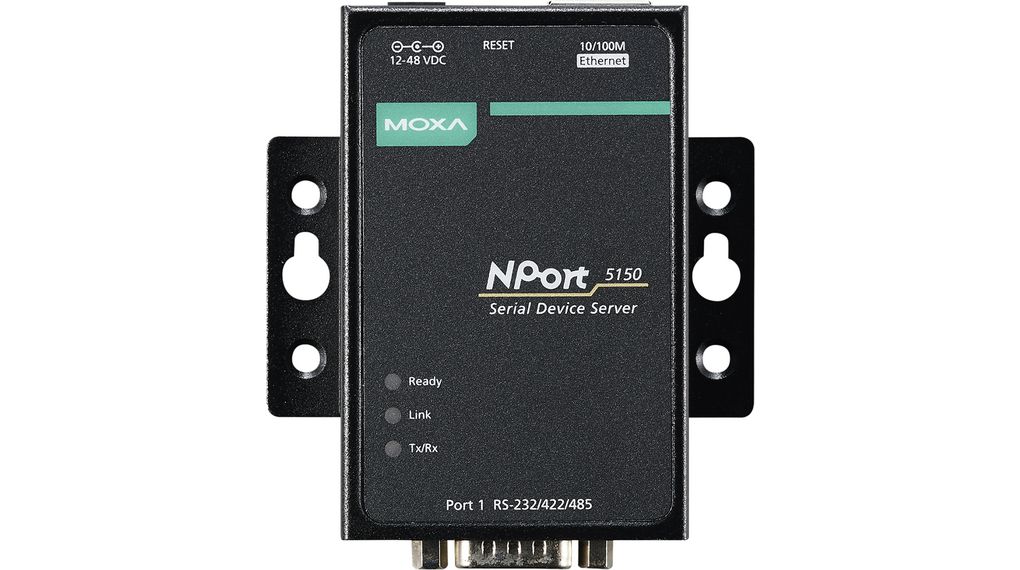
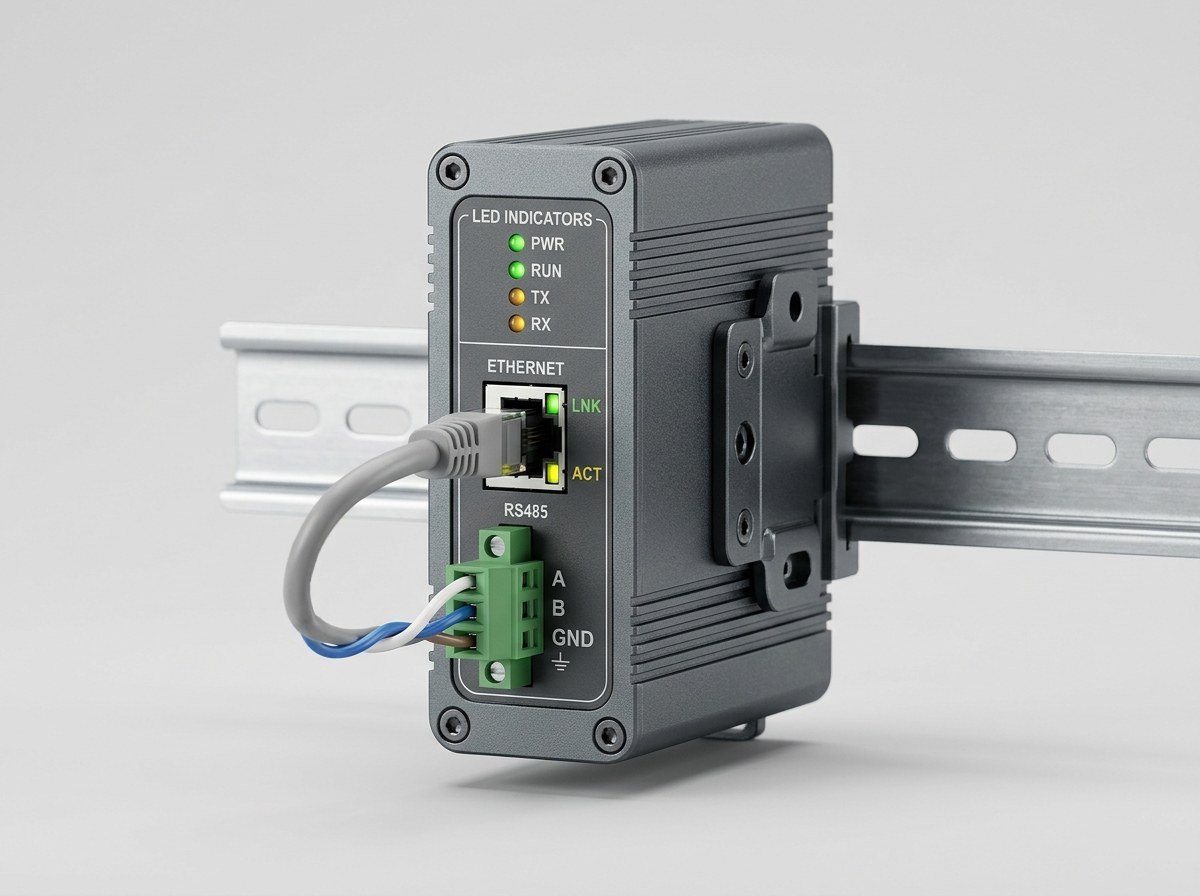
Selecting an IoT Gateway for M&E (Mechanical & Electrical) Bidding Dossiers requires meeting stringent technical standards: IEC 61000 EMC/EMI electromagnetic compatibility certifications, IEC 62443-4-2 industrial OT cybersecurity compliance, open protocol interoperability (Modbus TCP, BACnet/IP, OPC UA, MQTT), full CO/CQ legal documentation, and standardized Material Approval Request (MAR / RFA) submission workflows.
This technical guide is part of DeviceLab's comprehensive engineering handbook on industrial Modbus RS485 gateway.
In major infrastructure projects—commercial high-rises, hospitals, data centers, and manufacturing plants—M&E supervisory consultants routinely reject off-the-shelf commercial IoT modules due to unverified electrical noise immunity, missing laboratory test reports, or uncertified cybersecurity profiles. Understanding the rigorous approval criteria ensures contractors pass technical scrutiny on the first submission.
10-Point Technical Checklist for IoT Gateways in M&E Bidding Dossiers
The checklist below outlines the 10 mandatory technical requirements demanded by Tier-1 engineering consultants (e.g. Meinhardt, Aurecon, WSP, Artelia) for building management systems (BMS), energy submetering (EMS), and industrial SCADA packages:
| Checklist Item | M&E Tender Specification Standard | Required Verification Documentation | DeviceLab Technical Compliance |
|---|---|---|---|
| 1. EMC/EMI Noise Immunity | IEC 61000-6-2 (Immunity for industrial environments) and IEC 61000-6-4 (Emissions) | Certified test reports from accredited laboratories (Nemko, Quatest, TUV) | Compliant: Full Level 4 ESD/EFT/Surge lab test report included. |
| 2. Galvanic Optical Isolation | Minimum 2,000Vrms isolation on serial RS485 and power supply ports | Schematic diagram, component datasheet (HCPL/ADuM), breakdown voltage test | Compliant: 2,500Vrms optical isolation + 600W TVS surge suppression. |
| 3. Open BMS/SCADA Protocol Support | Native Modbus RTU/TCP, BACnet/IP, MQTT with TLS 1.3, OPC UA | BTL (BACnet) certificate or third-party protocol conformance test log | Compliant: Certified seamless integration with Siemens, Schneider, Honeywell. |
| 4. Enclosure & Ingress Protection | Heavy-duty extruded aluminum or flame-retardant polycarbonate (UL94-V0), IP40 minimum | Material flammability test report and mechanical ingress certificate | Compliant: Hard-anodized CNC aluminum alloy enclosure, IP40 rating. |
| 5. Industrial Mounting Standard | Standard EN 50022 35mm DIN-rail mounting with metallic spring latch | Mechanical drawing showing dimension clearances and mounting profile | Compliant: Heavy-duty 35mm DIN-rail latch and optional surface screw ears. |
| 6. Wide Operating Temperature | Continuous operation from -20°C to +70°C without active cooling fans | Thermal chamber burn-in test report (72-hour continuous stress at 60°C) | Compliant: 100% boards burn-in tested for 72 hours; fanless passive thermal design. |
| 7. Industrial OT Cybersecurity | IEC 62443-4-2 technical security requirements; disabled debug ports; encrypted storage | Vulnerability penetration test report, firmware hash manifest, security whitepaper | Compliant: JTAG fuse blown, mTLS authentication, encrypted SPI Flash storage. |
| 8. Offline Data Loss Prevention | Onboard non-volatile memory storing ≥50,000 timestamped records with auto-backfilling | Store-and-forward firmware validation test log during simulated WAN disconnect | Compliant: 16MB–64MB dedicated SPI Flash; zero data loss during network outage. |
| 9. Electrical Safety Compliance | IEC 62368-1 / IEC 61010-1 electrical safety for measurement and control equipment | Dielectric withstand test report and insulation resistance certificate (>100MΩ) | Compliant: Certified insulation resistance and ground continuity verified. |
| 10. Legal & Supply Chain Dossier | Valid Certificate of Origin (CO), Certificate of Quality (CQ), and manufacturer warranty letter | Legal notarized CO/CQ and formal 24-month manufacturer warranty commitment | Compliant: Full domestic OEM manufacturing documentation and tax invoices provided. |
Deep Dive: Deciphering IEC 61000 EMC Testing Requirements in Accredited Laboratories
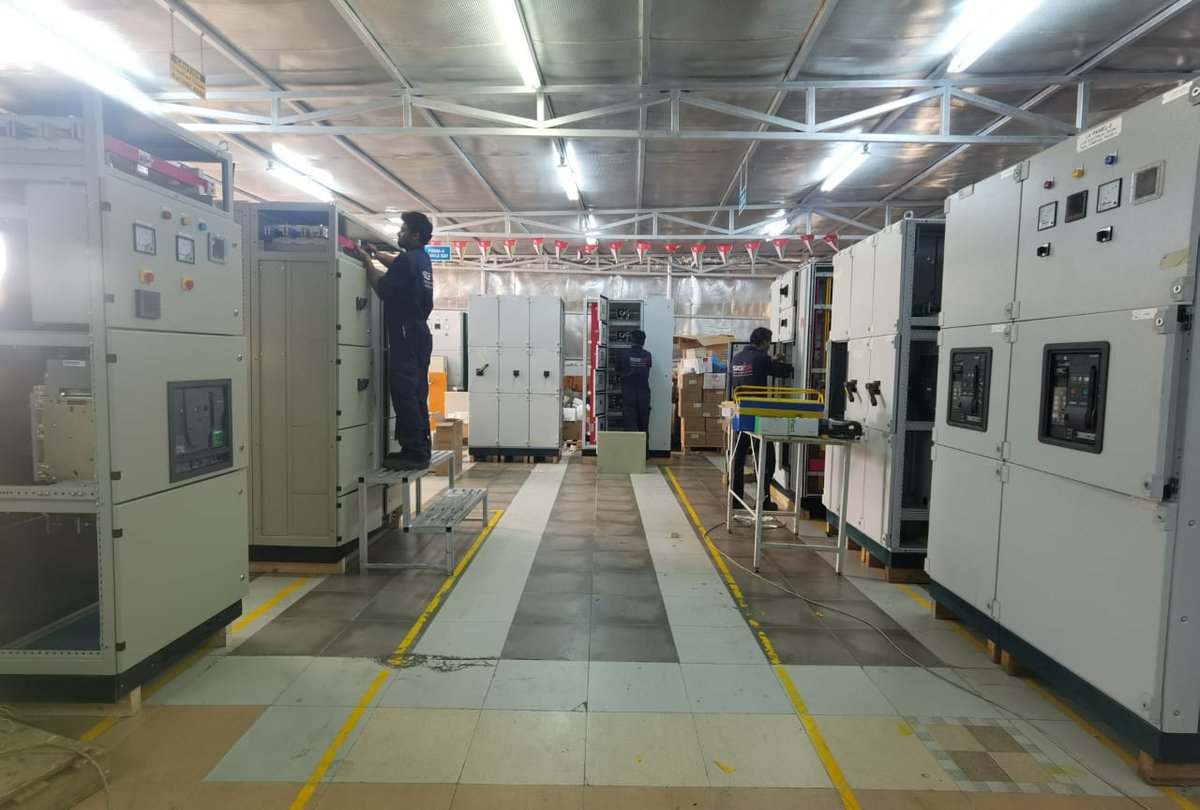
Supervisory consultants prioritize electromagnetic compatibility because electrical distribution panels house powerful variable frequency drives (VFDs), contactors, and air circuit breakers (ACBs) that emit massive transient electrical spikes:
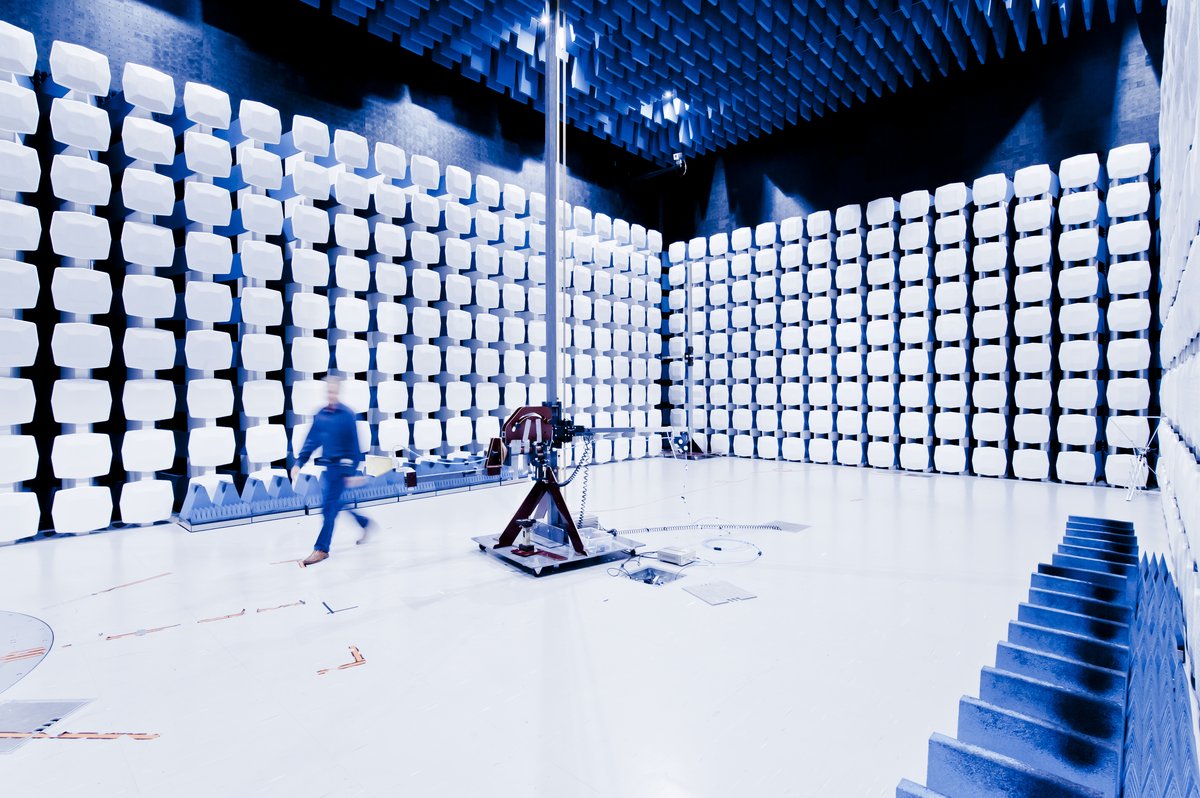
The three most critical laboratory test procedures required in M&E approval dossiers are:
- IEC 61000-4-2: Electrostatic Discharge (ESD) Immunity: Simulates human electrostatic discharge when maintenance personnel touch enclosure terminals. Gateways must withstand ±8kV Contact Discharge and ±15kV Air Discharge without operational latch-up or CPU resets (Performance Criterion A).
- IEC 61000-4-4: Electrical Fast Transient / Burst (EFT): Replicates high-frequency spark bursts generated when inductive contactors open under load. Gateways must endure ±2kV bursts (5/50ns pulse duration, 5kHz repetition rate) coupled onto power and RS485 communication lines.
- IEC 61000-4-5: Lightning Surge Immunity: Evaluates immunity against indirect lightning strikes and large switching surges. Requires testing with a 1.2/50μs voltage combination wave: ±1kV Line-to-Line (differential mode) and ±2kV Line-to-Ground (common mode) on serial ports, and up to ±4kV on AC power inputs.
Legal Documentation & 5-Step Material Approval Request (MAR / RFA) Process
Securing consultant sign-off for IoT gateways follows a structured 5-step engineering approval protocol:
- Step 1: Technical Specification Compliance Statement: Prepare a clause-by-clause compliance matrix against the consultant's tender specification, verifying item-by-item alignment.
- Step 2: Engineering Datasheets & Shop Drawings: Submit high-resolution dimensional shop drawings, terminal pinout connection schematics, and detailed power consumption data.
- Step 3: Laboratory Test Certificates (EMC / Safety / Environmental): Attach authenticated test reports from accredited ISO/IEC 17025 testing laboratories.
- Step 4: Physical Sample Submission: Provide a fully functioning physical evaluation unit for consultant inspection, demonstrating enclosure build quality and DIN-rail latching.
- Step 5: Manufacturer Authorization & Warranty Letter: Include a project-specific manufacturer warranty letter guaranteeing 24-month advance replacement support.
Open Protocol Interoperability: Seamless Interfacing with Siemens, Schneider, Honeywell & Johnson Controls
A frequent stumbling block in BMS integration is vendor protocol lock-in. DeviceLab industrial IoT gateways implement multi-stack protocol engines verified against the industry's dominant automation ecosystems:
- Schneider Electric EcoStruxure: Direct Modbus TCP and EcoStruxure Power Monitoring Expert (PME) register polling with zero communication timeout errors.
- Siemens Desigo CC / S7-1500: Direct connection via Modbus TCP client/server architecture and structured OPC UA information models.
- Honeywell WEBs-N4 / Tridium Niagara: Native driver integration translating multi-vendor field meter data into structured Niagara points.
- Johnson Controls Metasys: Seamless BACnet/IP and Modbus gateway routing supporting dynamic device discovery and alarm point mapping.
IEC 62443-4-2 Technical Security Compliance for Industrial IoT Gateways
In modern corporate and municipal bidding packages, IoT gateways are subject to strict cybersecurity scrutiny to protect operational technology (OT) networks from cyber intrusion:
- Account & Credential Hardening: Elimination of generic factory default passwords; enforcement of mandatory initial credential change upon first boot; multi-tier role-based access control (Admin, Operator, Read-Only).
- Cryptographic Data Transport: All upper-level SCADA and cloud telemetry encrypted via TLS 1.3 with mutual certificate-based authentication (mTLS), preventing man-in-the-middle packet spoofing.
- Physical Hardware Security: On-chip JTAG/SWD hardware debug interfaces permanently disabled via silicon e-fuses prior to factory shipping, preventing firmware extraction via hardware probes.
- Software Integrity & Secure Boot: Dual-partition A/B flash with RSA-2048 cryptographic signature validation, blocking unauthorized third-party firmware modification.
Diagnostic Matrix: 6 Reasons M&E Supervisory Consultants Reject IoT Gateways
Review this diagnostic table to preemptively eliminate common submission errors:
| Rejection Code / Consultant Comment | Underlying Technical Defect | Risk to Project Commissioning | Required Preemptive Corrective Action |
|---|---|---|---|
| "Missing accredited EMC test report" | Contractor submitted generic commercial CE self-declaration without full third-party test laboratory data. | High risk of VFD harmonic noise disrupting communication. | Provide full ISO 17025 accredited laboratory test reports for IEC 61000-4-2/4/5. |
| "Non-isolated RS485 communication port" | Hardware utilizes cheap non-isolated transceivers lacking optical galvanic barriers. | Ground loop currents cause panel fire or transceiver blowout. | Submit hardware schematic proving 2,500Vrms optical isolation and isolated DC-DC converters. |
| "Incompatible mounting mechanism" | Device uses plastic snap-tabs or requires screw-mounting that violates enclosure panel specs. | Vibration loosens unit; unorganized wiring inside switchboard. | Specify heavy-duty metallic 35mm DIN-rail latches conforming to EN 50022. |
| "Vendor proprietary lock-in" | Gateway only communicates with vendor's closed proprietary cloud platform. | Owner unable to integrate with central BMS/SCADA software. | Demonstrate open standard protocol output: Modbus TCP, BACnet/IP, MQTT, OPC UA. |
| "Lack of data loss prevention mechanism" | Gateway lacks non-volatile local memory for offline buffering. | Network disconnection causes permanent loss of billing/energy records. | Document Store-and-Forward Flash architecture capable of holding >50,000 records. |
| "Unverifiable legal provenance (CO/CQ)" | Imported parallel-market hardware lacking formal origin and quality certifications. | Failure during project financial audit and government inspection. | Provide authenticated manufacturer CO/CQ documentation and formal warranty letters. |
Field Case Study: Chiller Plant BMS Telemetry at Thu Thiem International Hospital
During the mechanical and electrical fit-out of a 600-bed international general hospital in Thu Thiem (Ho Chi Minh City), the main M&E contractor faced a critical hurdle: The supervisory consulting firm rejected the contractor's initial submission of imported commercial serial converters intended to monitor 24 water-cooled chillers, cooling towers, and variable speed primary pumps. The consultant cited lack of certified surge immunity (IEC 61000-4-5) and vulnerability to electromagnetic spikes during chiller compressor starts.
The contractor partnered with DeviceLab to submit a comprehensive replacement Material Approval Request (MAR):
- Turnkey Dossier Preparation: DeviceLab compiled a 45-page technical submission dossier containing Quatest 3 accredited test reports for IEC 61000-6-2/4, full 2.5kV galvanic isolation schematics, BACnet/IP interoperability test logs, and physical evaluation samples.
- Consultant Approval: The supervisory consultant approved the submission on the first round (Code A - Approved Without Comments) within 4 business days.
- Operational Verification: Installed 24 DeviceLab DL-IOT-GW industrial gateways communicating seamlessly with the hospital's central Honeywell Niagara BMS platform. Over 16 months of continuous operation through wet-season thunderstorms, the system maintained 100.0% data telemetry uptime with zero hardware faults.
Preparing an M&E bidding package or require Material Approval Request (MAR) documentation for your project? Contact the DeviceLab Engineering Team via Hotline: (+84) 982.503.355 or email your tender specification to hi@devicelab.vn. We provide complete technical compliance matrices, laboratory test reports, and physical sample units within 24 hours.