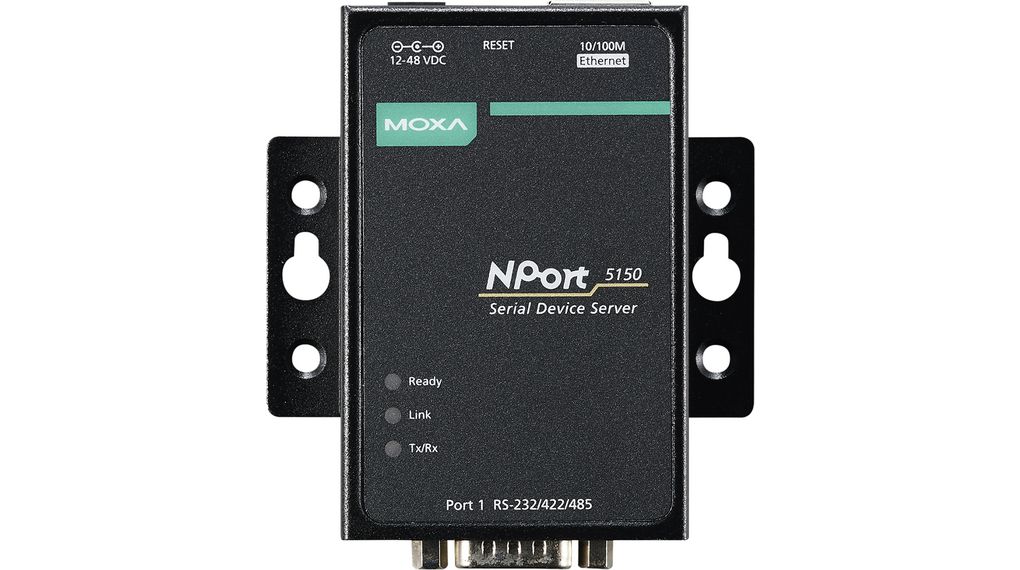
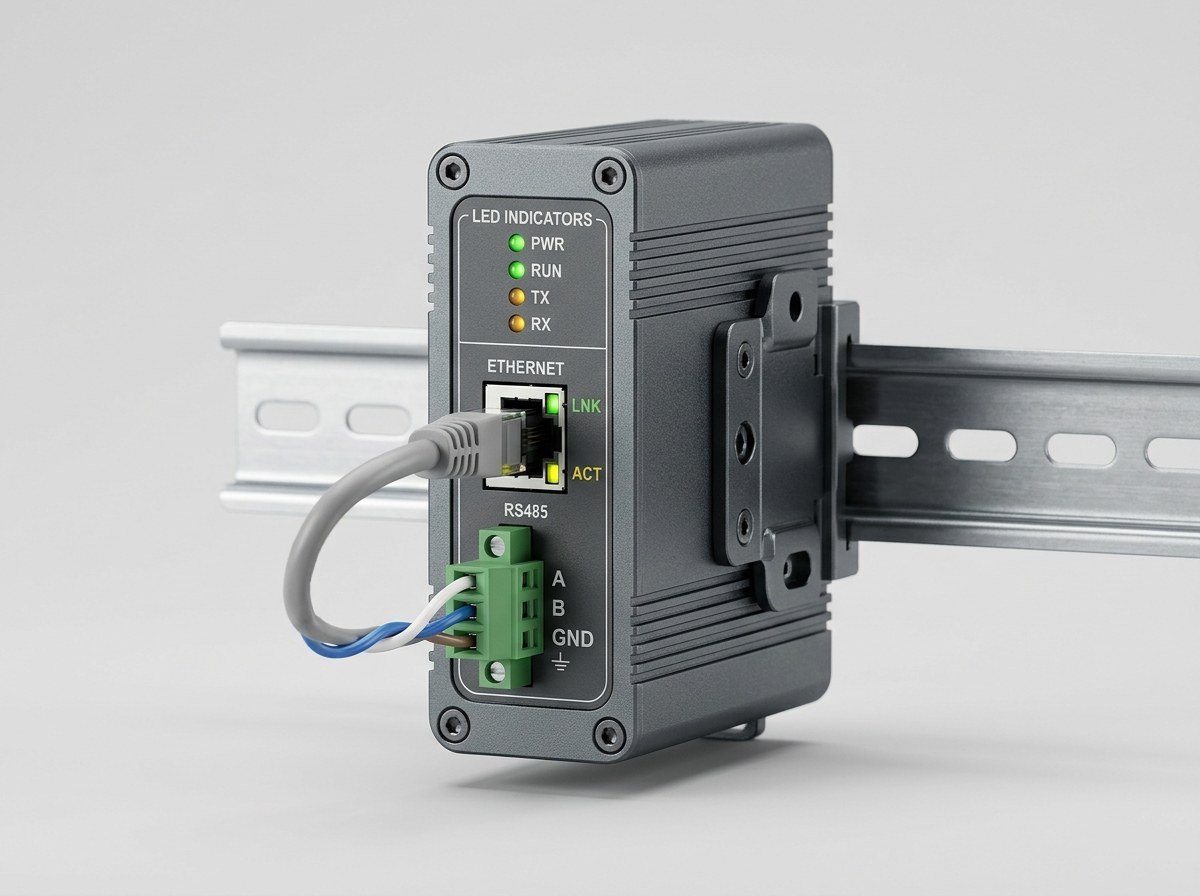
Comparing COTS (Commercial Off-The-Shelf) Gateways from brands like Moxa, USR-IOT, and 3Onedata against Custom Embedded Gateways involves analyzing critical engineering trade-offs: upfront hardware procurement costs ($45–$250 vs. custom NRE), protocol adaptability, 2.5kV galvanic isolation, hardware watchdog reliability, edge data filtering, and long-term 5-year Total Cost of Ownership (TCO).
This technical guide is part of DeviceLab's comprehensive engineering handbook on industrial Modbus RS485 gateway.
For plant managers, automation engineers, and System Integrators (SIs) deploying large-scale telemetry across hundreds of industrial machines, selecting between ready-made COTS units and custom-engineered gateways determines whether the system achieves 99.99% operational uptime or suffers perpetual communication bottlenecks.
15-Criteria Engineering Matrix: COTS Gateways vs. Custom Project Gateways
The matrix below presents an exhaustive engineering comparison across 15 operational criteria between standard off-the-shelf commercial gateways and custom-designed embedded gateways:
| Technical & Commercial Criteria | COTS Commercial Gateway (e.g. Moxa, USR-IOT) | Custom Embedded Gateway (DeviceLab Engineering) | Operational Impact on Factory Systems |
|---|---|---|---|
| 1. Initial Hardware Unit Cost (CapEx) | Fixed at $45 – $250 / unit depending on brand tier | $35 – $85 / unit (at batch volumes >50 units) | Custom hardware reduces unit procurement costs by 30%–60% on volume rollouts. |
| 2. Upfront NRE / Engineering Cost | $0 (Immediate off-the-shelf availability) | $1,500 – $4,000 one-time NRE engineering fee | COTS wins for small trials (<20 units); custom hardware achieves ROI beyond 50+ units. |
| 3. Proprietary Protocol Support | Locked to standard Modbus RTU, Modbus TCP, basic MQTT | Custom firmware parses any legacy serial protocol | Allows direct data extraction from legacy Japanese/German machinery without PLC code changes. |
| 4. Serial Polling Architecture | Sequential polling creates 300ms–800ms telemetry latency | Edge Multi-Master Caching delivers <10ms instant response | Prevents SCADA polling queue lockups and timeout alarms across dense multi-drop buses. |
| 5. Offline Data Buffering (Store & Forward) | Rarely supported; volatile RAM drops data during LAN failure | 16MB–64MB dedicated SPI NOR/NAND Flash storage | Preserves 100,000+ timestamped records locally; auto-backfills SCADA upon reconnection. |
| 6. Hardware Watchdog Architecture | Internal MCU software watchdog; prone to peripheral freeze | External dedicated hardware supervisory IC (e.g. TI TPS3823) | Hard power-cycles the MCU if firmware hangs, guaranteeing zero manual panel resets. |
| 7. Brown-Out & Power Loss Immunity | Abrupt power loss risks flash file system corruption | Supercapacitor hold-up circuit (2.7V 3.0F) | Provides 300ms–500ms grace period to flush data buffers and close file systems cleanly. |
| 8. Physical Galvanic Isolation | Absent on budget units; optional 2kV on high-end models | Standard 2,500Vrms optical isolation + 600W TVS on all serial ports | Immune to large VFD switching harmonics and ground potential equalizing currents. |
| 9. Industrial Form Factor & Enclosure | Fixed dimensions; plastic shells or generic metal boxes | Tailored CNC anodized aluminum DIN-rail or wall enclosure | Optimized footprint fits crowded legacy cabinets; superior thermal heat dissipation. |
| 10. Fail-Safe Remote Firmware Updates (FOTA) | Single-partition flashing; power cut during OTA bricks unit | A/B dual-partition memory with cryptographic boot verification | Automated rollback to working firmware if new image fails integrity check. |
| 11. Supply Chain & Long-Term Lifecycle | Subject to vendor EOL (End-of-Life) and component obsolescence | Guaranteed 10+ year availability; multi-source pinout layout | Eliminates forced system redesigns when foreign manufacturers discontinue modules. |
| 12. Cybersecurity & OT Network Protection | Hardcoded factory passwords; vulnerable closed-source firmware | Hardened Linux/FreeRTOS, JTAG locked, encrypted keys | Strict compliance with IEC 62443 industrial cybersecurity standards; zero backdoor risks. |
| 13. Brand Identity & Commercial OEM | Carries foreign manufacturer logo and default Web GUI | 100% White-Label with partner logo and custom UI | Protects System Integrator bid exclusivity and brand authority on client accounts. |
| 14. On-Site Field Commissioning Speed | Engineers manually configure IP and registers per device | Pre-flashed turnkey configurations; zero-touch deployment | Reduces on-site commissioning from 3 hours per panel down to under 15 minutes. |
| 15. Technical Support & Source Code Ownership | Email ticketing through overseas distributors (slow response) | Direct access to Principal Hardware/Firmware Design Engineers | Rapid modifications, driver adjustments, and field patches delivered within 24–48 hours. |
4 Inherent Bottlenecks of COTS Gateways in Large-Scale Industrial Plants
While COTS gateways serve single-machine prototyping well, deploying dozens of units across complex factory floors exposes four fundamental operational bottlenecks:
1. Serial Polling Bottlenecks and Telemetry Latency
Off-the-shelf converters operate as transparent protocol bridges. When an upper-level SCADA host queries 20 slave devices on an RS485 bus, it must send requests sequentially. If one slave experiences a communication delay (e.g., 500ms), the entire polling queue stalls, resulting in multi-second update delays. In contrast, custom gateways implement active autonomous background polling, caching all register values in local RAM. When SCADA requests data via Ethernet, the gateway serves cached values in under 2ms.
2. Inability to Interface with Legacy Proprietary Protocols
Older Japanese (Fanuc, Mitsubishi FX) and Taiwanese CNC or injection molding machinery communicate over proprietary ASCII or non-standard serial formats. Standard COTS gateways only understand vanilla Modbus RTU. Modifying legacy machine ladder logic is prohibited by plant warranties. Custom gateways solve this by implementing custom parser state machines in firmware, decoding proprietary frames non-invasively and exposing standard Modbus TCP or MQTT registers to the upper network.
3. Lack of True Offline Store-and-Forward Buffering
When plant Wi-Fi or Ethernet switches reboot during thunderstorms, standard commercial converters discard incoming serial packets. For environmental discharge compliance (Circular 10/2021/TT-BTNMT) and high-value energy accounting, unrecorded data triggers regulatory fines. Custom gateways feature onboard 16MB–64MB SPI Flash holding months of timestamped telemetry, ensuring zero packet loss during network outages.
4. OT Cybersecurity Vulnerabilities and Closed-Source "Backdoors"
Many low-cost imported gateways contain hardcoded root credentials, unpatched Telnet daemons, or closed-source firmware with unknown cloud telemetry. Connecting these devices to factory OT networks exposes industrial controls to ransomware. Custom gateways run stripped, cryptographically signed firmware with disabled debug ports, encrypted mTLS communication, and zero unauthorized external traffic.
Deep Circuit Architecture: Dual Hardware Watchdogs, Supercapacitors & Brownout Protection
The structural difference between a consumer-grade communication module and an industrial-grade embedded gateway lies in hardware power integrity and fault-recovery engineering:
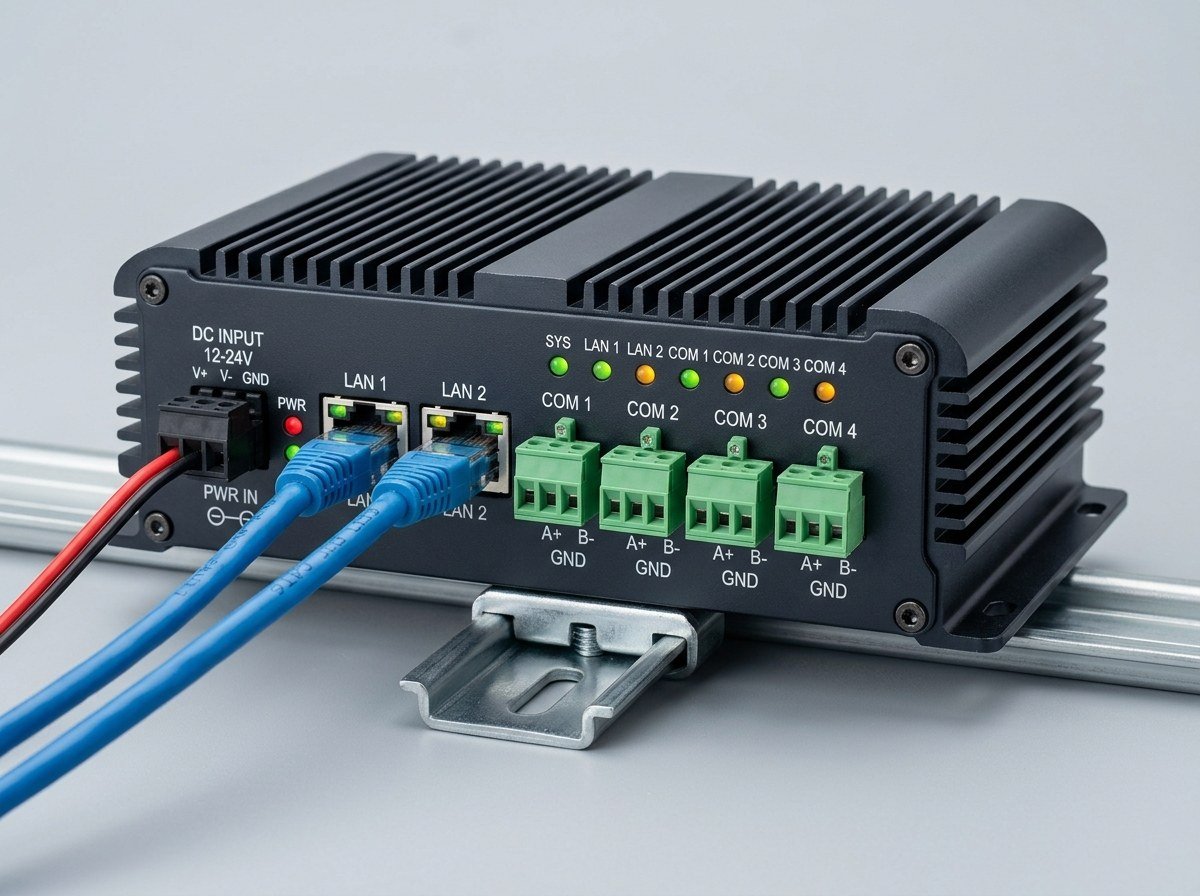
Key hardware circuit subsystems integrated into DeviceLab custom industrial gateways include:
- External Hardware Supervisory IC (TI TPS3823 / Analog Devices MAX823): Unlike internal microcontroller software watchdogs that freeze when the system clock hangs, external supervisors operate from an independent oscillator, physically cutting power to the MCU reset pin if a heartbeat pulse is missed within 1.6 seconds.
- Supercapacitor Power Hold-Up Circuit (2.7V 3.0F): When plant power sags or cuts abruptly, the supercapacitor provides over 350ms of sustained clean 3.3V power, allowing the CPU to finalize Flash writes, safely unmount file systems, and transmit a "Last Gasp" MQTT outage notification to the central server.
- Full Galvanic Isolation Barriers: Broadcom optical isolators and Mornsun isolated DC-DC converters eliminate ground potential loops and block electrostatic discharge transients up to 2,500Vrms.
Financial Modeling: Calculating the Break-Even Point Between COTS and Custom Gateways
Determining when to transition from purchasing imported COTS units to commissioning custom embedded hardware depends on production volume and operating maintenance costs:
Break-Even Volume Formula:
Q_breakeven = NRE_custom / (UnitCost_COTS - UnitCost_custom)

Example Industrial Scenario:
- Premium COTS Gateway (e.g. Moxa / Advantech):    $140 / unit
- Custom DeviceLab Gateway (Turnkey production):    $55 / unit
- One-time NRE Hardware & Firmware Engineering:     $3,400

Q_breakeven = $3,400 / ($140 - $55) = 40 units!
For projects requiring 40 or more gateways, commissioning custom hardware delivers immediate net capital savings while granting the enterprise 100% intellectual property ownership and tailored technical performance.
Factory Case Study: Custom Gateway Deployment for Electronics Manufacturer in Quang Chau (Bac Giang)
A multi-hectare precision electronics manufacturer in Quang Chau Industrial Park (Bac Giang) operated 120 Japanese CNC stamping and milling machines from mixed vintages (Brother, Fanuc, Miyano). The plant previously attempted to digitize machine runtime using standard imported Modbus gateways, but encountered severe operational hurdles: communication dropouts due to VFD electrical noise, lack of machine cycle state detection, and vendor refusal to support older serial handshake lines.

DeviceLab engineered and delivered a tailored hardware solution within 4 weeks:
- Custom Hardware Architecture: Engineered a compact DIN-rail gateway with dual opto-isolated RS485 ports, 4 isolated digital input (DI) channels capturing 24VDC cycle signals, and a 4G LTE cat-1 / Ethernet fallback uplink.
- Dedicated Edge Firmware: Custom firmware state machine processes continuous spindle current and optical proximity pulses, calculating machine cycle times and Run/Idle/Stop status directly at the machine.
- Measured Deployment Results:
- Unit hardware cost dropped from $155 (imported COTS) to $62 (DeviceLab custom), saving over $11,000 across 120 machines.
- Zero communication lockups or electrical burnouts over 14 months of 24/7 continuous operation.
- Machine cycle tracking accuracy reached 99.8%, enabling factory management to increase overall equipment effectiveness (OEE) by 14.2%.
Fail-Safe Remote Firmware Updates (FOTA): Dual A/B Partition Architecture
Deploying embedded devices across distributed industrial facilities requires an infallible remote firmware update mechanism. A failed OTA update that bricks a device requires sending field technicians to physically dismantle control cabinets.
DeviceLab custom gateways implement an enterprise-grade A/B dual-partition memory layout:
- Active vs. Passive Execution Slots: The microcontroller boots from Partition A (active slot). When a firmware update arrives via encrypted MQTT or HTTPS, the payload is written exclusively into Partition B (passive slot).
- Cryptographic SHA-256 & Signature Verification: Before booting the new image, the bootloader verifies the cryptographic checksum and RSA signature against public keys stored in secure hardware registers.
- Automated Hardware Watchdog Rollback: The gateway reboots into Partition B under a temporary probation flag. If the application firmware fails to successfully connect to the server and confirm health within 60 seconds, the hardware watchdog triggers a hard reset, and the bootloader automatically reverts to the proven Partition A image.
Decision Framework: When to Choose COTS vs. When to Commission Custom Gateways
Use the following operational framework to determine the optimal hardware path for your project:
| Select Standard COTS Gateways When: | Commission Custom Gateways When: |
|---|---|
| Project scope is small (<20 units) or in initial bench proof-of-concept. | Deployment volume exceeds 40–50 units, making unit cost reduction impactful. |
| Target machinery uses standard vanilla Modbus RTU / TCP with no custom protocols. | Machinery utilizes legacy, proprietary, or mixed serial protocols requiring edge translation. |
| Immediate delivery required within 24–48 hours for emergency replacement. | Project requires custom I/O integration (e.g. analog 4-20mA, digital inputs, relay outputs). |
| Environment has low electrical noise and mild ambient temperatures (<40°C). | Environment requires 2.5kV isolation, 20G vibration resistance, and wide temperature tolerance (-20°C to +70°C). |
| Intermittent network disconnections and minor data loss are commercially acceptable. | Zero data loss mandate (environmental monitoring, energy accounting, billing compliance). |
| No requirement for brand ownership or white-label partner customization. | System Integrators / OEMs requiring white-label branding and bid protection. |
Need expert advice evaluating your plant telemetry requirements or developing a custom industrial gateway tailored to your project? Contact the DeviceLab Engineering Team via Hotline: (+84) 982.503.355 or email your specifications to hi@devicelab.vn for an initial DFM and hardware architecture consultation within 24 hours.