
Shopfloor Machine Data Acquisition Hardware (IIoT Edge Gateways & Industrial Dataloggers) for MES, ERP, WMS, and OEE software companies serves as the critical physical-to-digital bridge converting raw industrial electrical signals—such as 24VDC production counter pulses, Red-Yellow-Green Andon tower light states, split-core CT motor currents, 4–20mA process transmitters, and Siemens/Mitsubishi/Omron/Fanuc PLC memory registers—into standardized IT payloads via MQTT TLS JSON, HTTP RESTful Webhooks, and OPC UA. By forming a strategic B2B2B alliance with a specialized hardware engineering partner like DeviceLab, MES and ERP software vendors eliminate the "shopfloor physical layer bottleneck" without maintaining an internal electronics R&D team or dispatching backend web developers to wire high-voltage factory cabinets.
B2B2B Strategic Hardware Alliance for MES/ERP Software Vendors & Smart Factory Consultants: This engineering guide belongs to our OEM Industrial Gateways for System Integrators & Software Companies and Industrial Fieldbus to MQTT/HTTP Protocol Conversion cluster. Review full hardware specifications for the DL-GW200 Industrial Edge Gateway, DL-GW400 Multi-Port IIoT Gateway, and DL-M400 / DL-LOG8 Shopfloor Data Acquisition Module.
⚡ Technical Quick Fact Sheet: Shopfloor Machine Data Acquisition Hardware for MES / ERP
- Core OEE & MES Telemetry Parameters Captured: Real-time machine operating state
Run / Idle / Setup / Fault, high-speed production countersTotal Cycles / Good Parts / Scrap Count, millisecond-accurate cycle durationActual Cycle Time (ms), unrecordedMicro-stoppages (<3 min), and process quality parameters (mold zone temperatures, hydraulic pressure, spindle RPM, and kWh per batch). - Multi-Generation Machine Interfacing (Greenfield & Brownfield):
- Modern PLC & CNC Equipment: Native non-intrusive read-only polling via
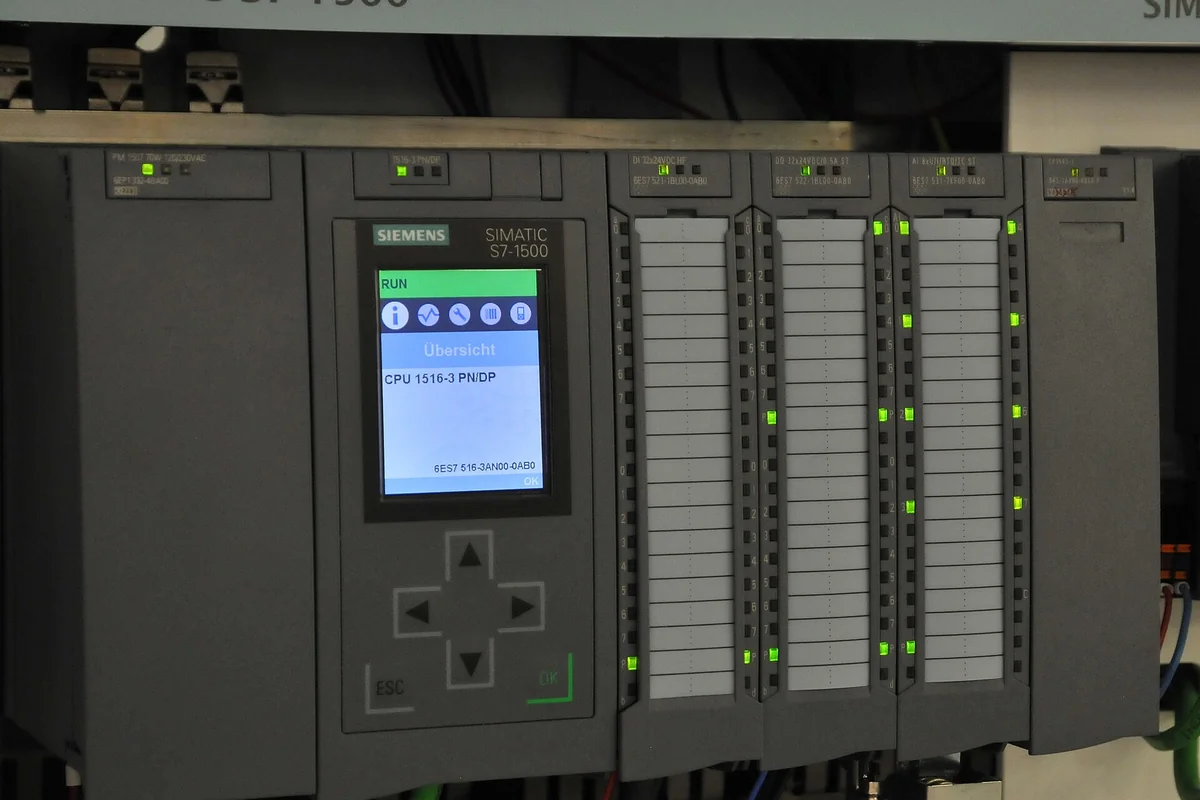
RS485 Modbus RTU, Ethernet Modbus TCP, Mitsubishi MELSEC MC Protocol, Siemens S7-1200/1500, Omron FINS, and OPC UA. - Legacy Relay Machines & Password-Locked PLCs (1995–2015): Non-invasive hardware retrofit via
3.0kV Opto-Isolated 24VDC Digital Inputs(tapping Andon tower lights + mold/press cycle relays) andSplit-Core 4–20mA / RS485 Current Transformers.
- Modern PLC & CNC Equipment: Native non-intrusive read-only polling via
- Northbound IT Developer Interfaces:
MQTT / MQTTS (TLS 1.3 with Custom JSON Schema or ISA-95 UNS Sparkplug B),HTTP/HTTPS RESTful Webhook POST, and localModbus TCP / OPC UA Server. - Industrial Immunity & Zero-Data-Loss Architecture:
3.0kVrmsgalvanic isolation, programmableHardware + Software Contact Debounce Filters (1ms–1000ms), non-volatile FRAM counter retention, and100,000-record Store-and-Forward NOR Flashbuffering.
📌 Why Leading MES & ERP Software Vendors Form a Hardware Alliance with DeviceLab:
- 100% Liberation of Your Backend & Cloud Developers from Industrial Electrical Headaches: Your software engineering team simply subscribes to a clean, documented MQTT JSON topic or REST Webhook endpoint; DeviceLab hardware handles all VFD noise suppression, 24VDC optical isolation, relay contact debouncing, and PLC register endianness decoding.
- End the Nightmare of Fragile DIY Raspberry Pi / Arduino / ESP32 Boards on Factory Floors: Permanently eliminate corrupted MicroSD cards after weekend factory power shutdowns, Wi-Fi lockups caused by heavy inverter EMI, and burned-out GPIO pins when plant maintenance electricians miswire 24VDC lines.
- Connect 100% of Factory Machinery Across Any Vintage: Solve the hardest barrier in Vietnamese manufacturing digital transformation—where a single shopfloor operates 5 to 7 different generations of machines (used Japanese presses, Taiwanese injection molders, Chinese packaging lines, and European CNC centers).
- Strict B2B2B Non-Competition Guarantee: DeviceLab designs and manufactures industrial Edge Gateways and Dataloggers exclusively; we never develop or sell competing MES/ERP software to your manufacturing clients.
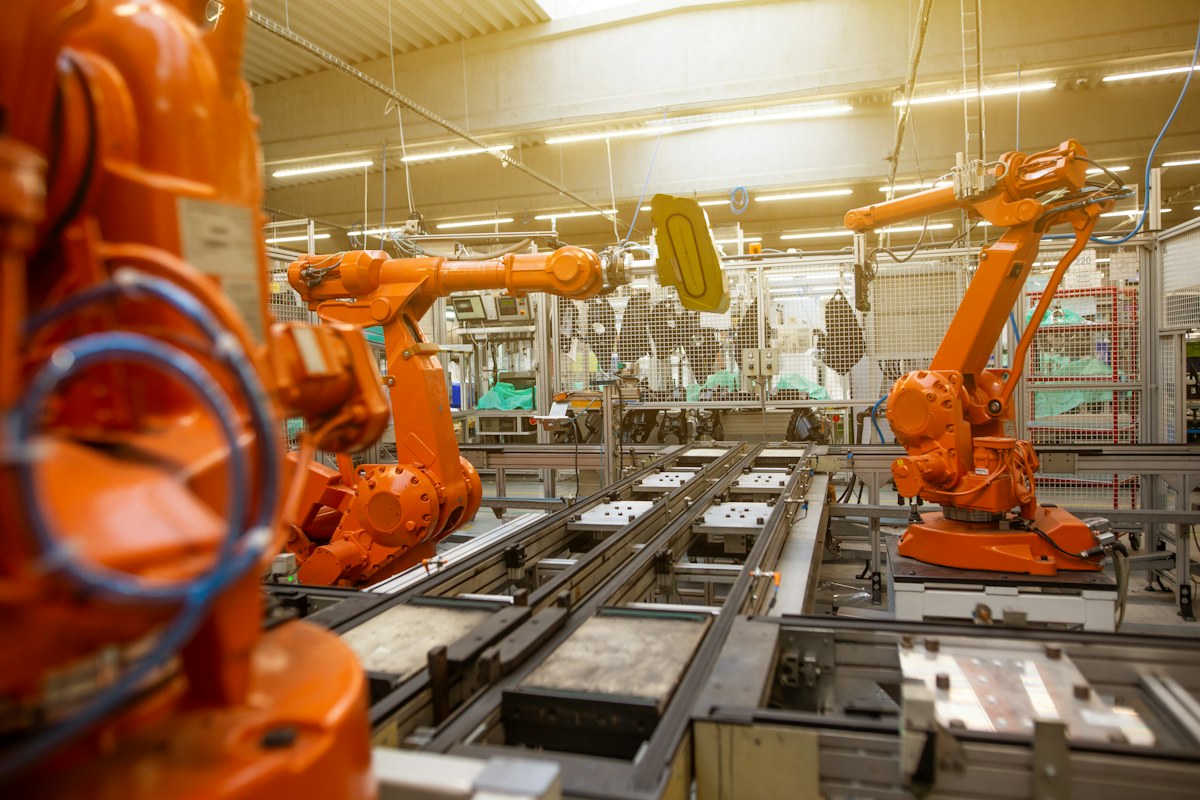
"The Shopfloor Data Gap" That Delays 70% of MES & ERP Implementation Projects
Software companies developing Manufacturing Execution Systems (MES), Enterprise Resource Planning platforms (ERP such as SAP, Oracle NetSuite, Odoo, Microsoft Dynamics, Bravo, Fast, and Digiwin), and Smart Factory consulting firms possess deep expertise in relational database architecture, Master Production Scheduling (MPS), Bill of Materials (BOM) explosion, barcode/QR warehouse traceability, and executive BI dashboards. However, the moment an implementation team steps onto a live manufacturing shopfloor to automate real-time Overall Equipment Effectiveness (OEE = Availability × Performance × Quality) and live Work Order progress tracking, the software project routinely hits three brutal physical-layer roadblocks:
- The Brownfield Multi-Vendor Machinery Wall: An injection molding, metal stamping, CNC machining, textile, or packaging factory in Vietnam rarely operates a homogeneous fleet of brand-new machines. Within a single production hall, an MES team often encounters a 2022 Fanuc CNC center alongside 2012 Haitian or Sumitomo plastic injection molding machines whose OEM controllers are password-locked, next to 1995 Komatsu or Aida mechanical stamping presses controlled entirely by hardwired 24VDC/220VAC electromagnetic relays. Expecting full-stack web developers to write and maintain dozens of low-level fieldbus drivers and electrical signal interfaces across these disparate machines brings software rollouts to a grinding halt.
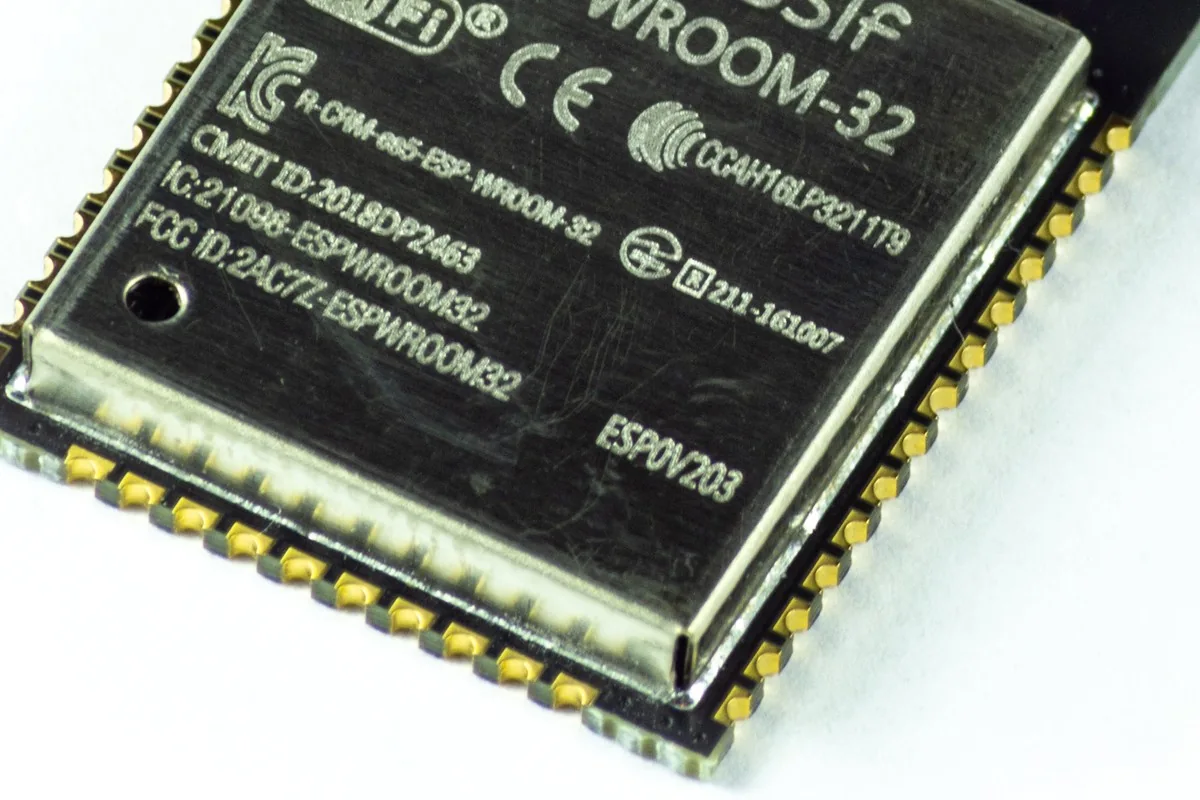
- The Hidden Trap of DIY Hardware Prototypes (Raspberry Pi, ESP32, or Hobbyist Relay Modules): To save initial hardware costs, many software teams attempt to build their own pulse counters using Raspberry Pi single-board computers or ESP32 Wi-Fi modules. While 1 or 2 units work fine on an air-conditioned office desk, deploying 50 units inside steel electrical cabinets at
45°C–55°Cnext to high-power Variable Frequency Drives (VFDs) and hydraulic solenoids triggers immediate chaos: (1) Factory Wi-Fi roaming dropouts cause lost production counts; (2) Electromagnetic interference (EMI) couples into unisolated 3.3V GPIO lines, causing a single press stroke to register 15 to 20 phantom parts; and (3) When the factory shuts off main breakers on Saturday evening, sudden power loss corrupts the Linux ext4 file system on the Raspberry Pi's MicroSD card, leaving dozens of machines dead on Monday morning. - Strict IT/OT Cybersecurity & Network Segmentation Policies at FDI Plants: Corporate IT security teams at Japanese, Korean, European, and US FDI factories strictly prohibit pulling internal office LAN cables down to legacy shopfloor machines or installing uncertified consumer IoT boxes on the corporate network—stalling MES user acceptance testing (UAT) for months.
End-to-End IT/OT Convergence Architecture for Shopfloor Machine Data Acquisition
To completely decouple the electrical harshness of Operational Technology (OT) from the clean API world of Information Technology (IT), DeviceLab's industrial edge architecture normalizes every generation of factory machinery into a unified, enterprise-grade JSON telemetry stream:
| SHOPFLOOR MACHINE DATA ACQUISITION ARCHITECTURE (IT/OT CONVERGENCE) FOR MES & ERP |
+--------------------------------------------------------------------------------------------------+
|
| [TIER 1: MULTI-GENERATION SHOPFLOOR PRODUCTION MACHINERY (BROWNFIELD & GREENFIELD)]
| +-------------------------------+ +-------------------------------+ +------------------------+
| | GROUP A: LEGACY RELAY MACHINES| | GROUP B: LOCKED-PLC MACHINES | | GROUP C: OPEN PLC / CNC|
| | • Andon Tower Light (R/Y/G) | | • Mold-Close / Cycle Relay Tap| | • RS485 Modbus RTU |
| | • 24VDC Part Counter Sensor | | • Split-Core CT Motor Current | | • Ethernet Modbus TCP |
| | • E-Stop / Fault Interlock | | • 4-20mA Temp/Pressure Sensor | | • Siemens S7 / MC Prot |
| +---------------+---------------+ +---------------+---------------+ +-----------+------------+
| | (3kV Isolated 24V DI) | (AI 4-20mA + DI) | (RS485/LAN)
| +==================================+==============================+
| |
| v
| [TIER 2: INDUSTRIAL EDGE DATA ACQUISITION & PROCESSING (DEVICELAB DL-M400 / DL-GW200 / DL-GW400)]
| +--------------------------------------------------------------------------------------------+
| | 1. Dual Hardware & Software Contact Debounce Filtering (Programmable 1ms – 1000ms) |
| | 2. Edge OEE Engine: Millisecond Cycle Time, Micro-stoppage Detection & State Duration |
| | 3. Offline Store-and-Forward Ring Buffer: 100,000 Timestamped Records in 32MB NOR Flash |
| | 4. Flexible Uplink: Isolated OT Ethernet VLAN or Independent 4G LTE Cat-1 Cellular |
| +--------------------------------------------------+-----------------------------------------+
| | (MQTT TLS 1.3 JSON / HTTP REST Webhook)
| v
| [TIER 3: PARTNER MES / ERP / OEE / WMS / SCADA BACKEND PLATFORM]
| +--------------------------------------------------------------------------------------------+
| | • Partner Message Broker / API Gateway (EMQX / Mosquitto / Apache Kafka / REST Webhook) |
| | • Automated Work Order Progress, Real-Time OEE (A × P × Q) & ERP Inventory Deduction |
| +--------------------------------------------------------------------------------------------+
+--------------------------------------------------------------------------------------------------+
Engineering Interfacing Matrix for the 3 Archetypes of Factory Machinery
When surveying a manufacturing plant to scope and quote the hardware data acquisition package for an MES or ERP deployment, solution architects simply classify the factory's machine list into three standardized technical groups:
| Machine Category | Existing Control Cabinet Characteristics | Non-Intrusive Physical Signal Tap Points | Recommended DeviceLab Hardware |
|---|---|---|---|
| Group 1: Legacy Plastic Injection Molders, Mechanical Stamping Presses & Packaging Lines (or Password-Locked PLCs) | No serial/Ethernet communication ports, or foreign OEM refuses to disclose PLC register addresses |
• DI1, DI2, DI3: Wired in parallel with the 24VDC Andon Tower Light terminals (Green = RUN, Yellow = IDLE, Red = FAULT).• DI4 (High-Speed Counter): Wired in parallel with the Mold-Close relay, cutter solenoid, or an external NPN/PNP optical part sensor. • AI1 / RS485 CT: Split-core Current Transformer clamped on the main motor power cable to verify loaded operation vs. idle standby. |
DL-M400 / DL-LOG8 paired with DL-GW200 (1 cluster aggregates 2–4 adjacent machines to cut per-machine CAPEX) |
| Group 2: Continuous Extrusion Lines, Heat-Treatment Ovens, Textile Dyeing & Powder Coating Lines | Controlled by discrete PID temperature controllers (Autonics, Omron, RKC), VFDs (ABB, Delta, Inovance), and panel power meters |
• RS485 Port 1: Daisy-chains all multi-zone PID temperature controllers and 3-phase digital kWh power meters (Selec, Schneider, Eastron). • RS485 Port 2: Daisy-chains Variable Frequency Drives (VFDs) to poll conveyor line speed (Hz / m/min), motor current, and VFD fault codes. |
DL-GW200 (Dual independent RS485 ports) or DL-GW400 (Quad 3kV isolated RS485 ports) |
| Group 3: Modern Automated Lines with Open PLCs (Siemens S7-1200/1500, Mitsubishi FX5U/Q-Series, Omron NX/CJ) | Equipped with native RJ45 Ethernet or RS485 ports and documented Data Block (DB) / D-Register memory maps | • Connects via an Industrial Ethernet Switch or RS485 in strictly Read-Only mode to poll Part Counters, active Mold/Recipe ID, detailed Alarm Codes, and Spindle/Line Speed without adding discrete I/O wiring. | DL-GW200 / DL-GW400 protocol converter streaming MQTT TLS JSON |

Standardized Unified Namespace (UNS) & OEE Event JSON Schema for MES Backend Developers
A critical architectural best practice when integrating hundreds of shopfloor machines into an MES database is combining instant Event-Driven state-transition messages with Periodic Telemetry summaries rather than relying on naive high-frequency polling. The real-time RTOS firmware inside the DeviceLab Edge Gateway measures exact cycle duration (last_cycle_time_ms) locally using 1-millisecond hardware timer interrupts, multiplies cycles by active mold cavities (cavities_per_cycle), and publishes a clean, self-describing JSON payload directly to the MES partner's broker:
// Standardized ISA-95 Unified Namespace (UNS) MQTT JSON Payload from DeviceLab DL-GW200 to MES Broker
// Topic: uns/factory-01/injection-molding/line-02/IMM-08/oee_telemetry
{
  "schema_version": "2.1",
  "gateway_id": "DL-GW200-MES-409",
  "machine_id": "IMM-HAITIAN-08",
  "timestamp_utc": "2026-10-18T08:15:30.250Z",
  "seq_id": 948210,
  "machine_state": {
    "status_code": 1,
    "status_label": "RUNNING",
    "andon_green": true,
    "andon_yellow": false,
    "andon_red": false,
    "state_duration_sec": 4820
  },
  "production_counter": {
    "total_cycles": 128450,
    "shift_cycles": 642,
    "cavities_per_cycle": 4,
    "shift_parts_produced": 2568,
    "last_cycle_time_ms": 18420,
    "avg_cycle_time_ms": 18510,
    "ideal_cycle_time_ms": 18000
  },
  "process_parameters": {
    "barrel_zone1_temp_c": 215.4,
    "hydraulic_pressure_bar": 84.2,
    "main_motor_current_a": 32.8,
    "active_power_kw": 16.4,
    "cumulative_energy_kwh": 14520.8
  }
}Classic Shopfloor Pitfall: Phantom Double-Counting from Relay Contact Bounce & VFD Switching Noise
During initial shopfloor commissioning on mechanical stamping presses, injection molding machines, or high-speed blister packaging lines, software teams frequently encounter a frustrating anomaly: the operator on the factory floor has physically produced only 500 stamped metal parts, yet the MES dashboard displays 1,850 parts!
🔍 Root-Cause Electrical Analysis & Dual-Stage Debounce Filtering on DeviceLab Hardware:
When an electromechanical auxiliary relay (such as an Omron MY2N 24VDC relay) or a mechanical limit switch closes to signal the completion of one molding or stamping cycle, its spring-loaded copper-alloy contacts do not make a single clean closure. Instead, they physically rebound (Contact Bounce) 3 to 10 times during the first 2ms to 15ms, generating a rapid burst of rising edges. Furthermore, signal cables routed inside the same metal tray as 380VAC VFD motor cables pick up inductive voltage spikes whenever hydraulic solenoid directional valves de-energize.
- Industrial IEC 61131-2 Type 1/3 24VDC Optical Isolation Threshold: Every Digital Input channel on the DL-M400 / DL-LOG8 and DL-GW200 incorporates a
3.0kVrmsoptocoupler front-end engineered to assert Logic 1 only when the input voltage exceeds> 11.0VDCwith a minimum wetting current of3.5mA—completely rejecting low-energy capacitive crosstalk induced along long cable runs. - Configurable Digital Debounce & Minimum Pulse-Width Deadband Filter: Via the gateway's web configuration or remote JSON provisioning, MES engineers can tune the exact
min_high_time_msparameter (e.g., setting100msfor a 15-second plastic injection cycle or20msfor a high-speed punch press) alongside a post-trigger re-arm deadband (holdoff_time_ms). Any contact bounce or EMI glitch shorter than the configured pulse window is 100% filtered out at the interrupt level before incrementing the production counter.

Strategic Comparison: 3 Hardware Approaches for MES / ERP Shopfloor Data Collection
The executive comparison matrix below helps Chief Technology Officers (CTOs), Solution Architects, and Project Managers (PMs) at MES/ERP software companies evaluate the Total Cost of Ownership (TCO) and operational risk of three shopfloor hardware strategies:
| Evaluation Criterion | In-House DIY Hardware (Raspberry Pi / ESP32 / Custom Breadboards) | Imported Industrial Boxes + Commercial OPC Server (Advantech / Moxa + Kepware) | B2B2B Hardware Alliance with DeviceLab (DL-GW200 / DL-GW400 / DL-M400) |
|---|---|---|---|
| 24/7 Reliability in High-EMI Factory Environments | Very Low (SD card corruption on power loss, Wi-Fi lockups near VFDs, false pulse counts) | High, industrial-grade reliability | High Industrial Grade (3.0kV optical isolation, external Hardware Watchdog, 32MB NOR Flash) |
| Integration Time into MES / ERP Backend | Takes 3–6 months of writing embedded firmware, debugging field dropouts, and manual maintenance | Requires complex middleware OPC Server licensing, Windows server maintenance, and manual tag mapping | 1–2 Days: Streams native MQTT TLS JSON or REST Webhooks formatted to match your exact MES API schema |
| Hardware CAPEX per Connected Machine | Cheap component cost upfront, but astronomically expensive in field warranty replacement trips | Very High ($600 – $1,400 USD per machine including I/O modules and OPC middleware licenses) | Saves 40–50% CAPEX via Make-in-Vietnam engineering and multi-machine I/O aggregation per gateway |
| Field Engineering Support & OEM Customization | Web developers are forced to troubleshoot 24VDC electrical panels on site | Distributors only ship catalog boxes (box-moving) with zero custom firmware or cabinet support | DeviceLab R&D engineers co-survey factory cabinets, customize JSON payloads, and provide OEM branding |
4-Step Joint Deployment Workflow Between MES/ERP Software Companies & DeviceLab
- Step 1 — Align Machine Asset List & Target JSON API Specification (Day 1): The MES/ERP project team shares the client factory's target machine list (e.g., 30 plastic injection molders, 15 mechanical stamping presses, 10 electrical distribution panels) along with the desired MQTT JSON topic structure or REST Webhook endpoint.
- Step 2 — Cost-Optimized Signal Aggregation Topology Design (Days 1–2): DeviceLab application engineers design a zone-based hardware layout—grouping 2 to 4 adjacent legacy machines into shared DL-M400 / DL-LOG8 + DL-GW200 nodes to dramatically lower per-machine hardware cost for the client's proposal.
- Step 3 — Factory Pre-Provisioning & Lab Loopback Verification: Before shipping hardware to the project site, every gateway is pre-flashed with the MES Broker URL, TLS client certificates, PLC register polling tables, and machine-specific debounce timings.
- Step 4 — Non-Intrusive Cabinet Installation, OEE Data Handover & 24-Month Warranty: Field installation is completed with less than 15 minutes of downtime per machine, handing over verified real-time JSON streams so the MES software team can immediately showcase live OEE dashboards to the factory management.
Form a B2B2B Hardware Alliance for Your Next MES / ERP / Smart Factory Deployment
Are you developing or implementing MES, ERP, WMS, or OEE software and looking for a dependable industrial hardware partner who speaks both shopfloor PLC/relay automation and modern MQTT/REST APIs? Connect with DeviceLab's R&D engineering team today to request a pre-configured evaluation kit streaming directly to your staging server.
Field Engineering Frequently Asked Questions (Technical FAQ & B2B2B Partnership)
❓ Why shouldn't MES and ERP software companies rely on shopfloor operators to manually enter production counts and machine downtime?
Manual data entry on shopfloor kiosks, tablets, or paper travelers introduces a 4-hour to 24-hour reporting lag (usually keyed in only at the end of a shift), suffers from a 5–12% human counting error rate, and completely fails to capture short, recurring stops (Micro-stoppages lasting 1 to 5 minutes) that typically account for 15–20% of Overall Equipment Effectiveness (OEE) loss. Deploying automated Shopfloor Data Acquisition Hardware from DeviceLab enables MES and ERP platforms to ingest real-time injection/stamping Cycle Time (in milliseconds), verified Good/Scrap part counts, and exact machine status transitions every second via MQTT TLS JSON or HTTP RESTful Webhooks.
❓ How can an MES software provider capture OEE data from legacy mechanical presses, injection molding machines, or stamping lines (built in 1995–2010) that have no PLC communication port?
For legacy industrial equipment without RS485/Ethernet ports—or foreign machines whose PLCs are password-locked by the original OEM—DeviceLab deploys a 100% Non-Intrusive Hardware Retrofit using the DL-LOG8 / DL-M400 Datalogger and DL-GW200 Edge Gateway: (1) Wire 3kVrms optically isolated 24VDC Digital Inputs in parallel with the machine's 3-color Andon Tower Light (Red = Fault/Alarm, Yellow = Idle/Starved, Green = Running) to track Availability to the exact second; (2) Tap into the mold-close relay, cutter solenoid valve, or add an industrial optical/inductive proximity sensor connected to a High-Speed Counter input with programmable debounce filtering to count every cycle and calculate millisecond Cycle Time; and (3) Clamp a split-core Current Transformer (CT) onto the main motor feeder to distinguish true loaded production from idle motor spinning.
❓ Which IT communication protocols do DeviceLab Edge Gateways use to push machine telemetry into MES and ERP platforms (SAP, Oracle, Odoo, Microsoft Dynamics, Custom MES)?
So that backend and full-stack software developers at MES/ERP companies can integrate shopfloor data immediately without learning embedded C programming or decoding raw PLC byte/word register maps, the DeviceLab DL-GW200 and DL-GW400 gateways normalize all field signals into modern IT-ready protocols: (1) MQTT / MQTTS (TLS 1.3) publishing flat JSON payloads or ISA-95 Unified Namespace (UNS / Sparkplug B) topic hierarchies; (2) HTTP/HTTPS RESTful Webhooks (pushing periodic JSON batches or instant event-driven POST requests upon machine state changes); and (3) Onboard OPC UA Server and Modbus TCP Server interfaces for on-premise factory SCADA/MES servers.
❓ If the factory Wi-Fi or internal Ethernet LAN drops—or when the MES server undergoes scheduled maintenance—will counted production units be lost?
Zero production cycles are ever lost. Unlike DIY Raspberry Pi single-board computers or hobbyist ESP32 boards that accumulate counts in volatile RAM, DeviceLab industrial hardware incorporates dual-layer non-volatile data protection: First, the hardware high-speed pulse counter commits cumulative cycle counts immediately to non-volatile FRAM/Flash memory that survives sudden power blackouts; Second, the onboard 32MB industrial NOR Flash executes autonomous Store-and-Forward ring buffering for up to 100,000 event records stamped with millisecond hardware Real-Time Clock (RTC) timestamps. The moment the MES Broker or API endpoint comes back online, the gateway replays the entire historical backlog in strict chronological order.
❓ Does the MES/ERP software company need to send its own software developers to the factory floor to wire electrical cabinets and map PLC registers?
Not at all. Under our B2B2B Hardware Alliance model, DeviceLab operates as the dedicated 'Hardware & Field Engineering Arm' for your MES/ERP software company. We ship industrial gateways pre-provisioned with your exact MQTT JSON Schema and TLS certificates, assist with brownfield machine cabinet surveys, provide detailed CAD wiring schematics for factory maintenance electricians, or deploy our own automation field engineers alongside your software implementation consultants to hand over clean, verified JSON data streams to your API within 1 to 2 days.
❓ How does DeviceLab's Make-in-Vietnam data acquisition hardware help MES/ERP software vendors win more enterprise factory tenders?
Many multi-billion-VND MES/ERP digital transformation projects stall or exceed budget because imported IIoT hardware and middleware licenses (such as Advantech, Moxa, or Kepware OPC servers) are prohibitively expensive per machine, whereas cheap DIY microcontroller boards freeze in high-EMI factory environments and damage the software vendor's reputation. DeviceLab's industrial-grade Make-in-Vietnam hardware cuts bottom-tier IIoT hardware CAPEX by 40–50% through multi-machine aggregation, includes a 24-month 1-to-1 replacement warranty, and guarantees 100% B2B2B channel protection so the software vendor owns the client relationship completely.
Related Technical Articles & Engineering Guides
Deepen your engineering knowledge with practical guides from DeviceLab engineers:

Recommended Industrial IoT Hardware & OEM Solutions
Standardized industrial-grade devices engineered and mass-produced by DeviceLab Vietnam:
Need custom Industrial IoT gateways or telemetry hardware?
Describe your field machinery, PLC signals, and required data streams. DeviceLab will determine the right path: COTS, Hybrid, or custom gateway development.
Start from PoC scope and architecture — no need to lock gateway models beforehand.