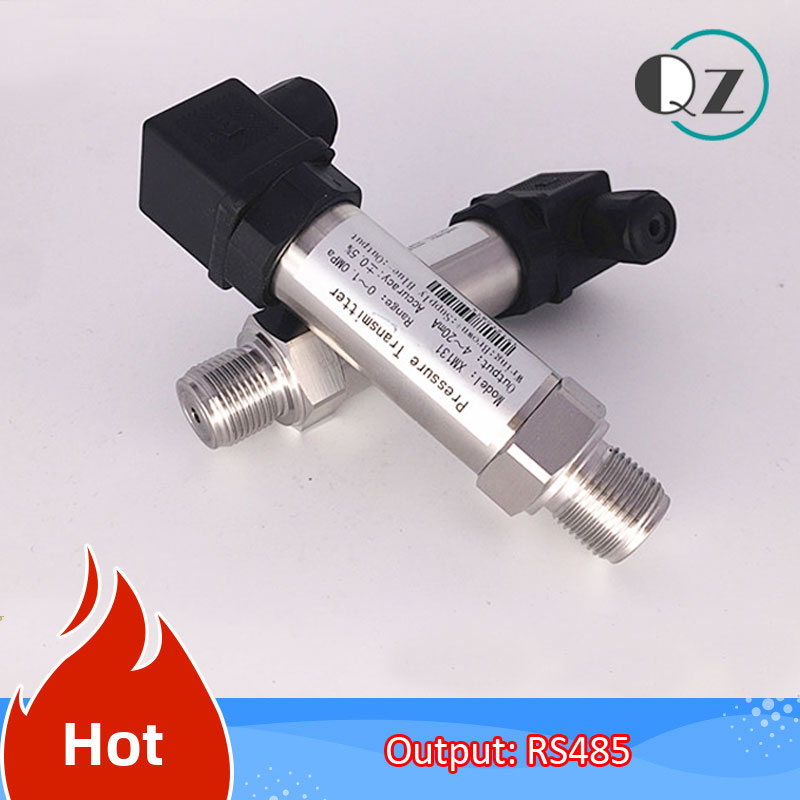
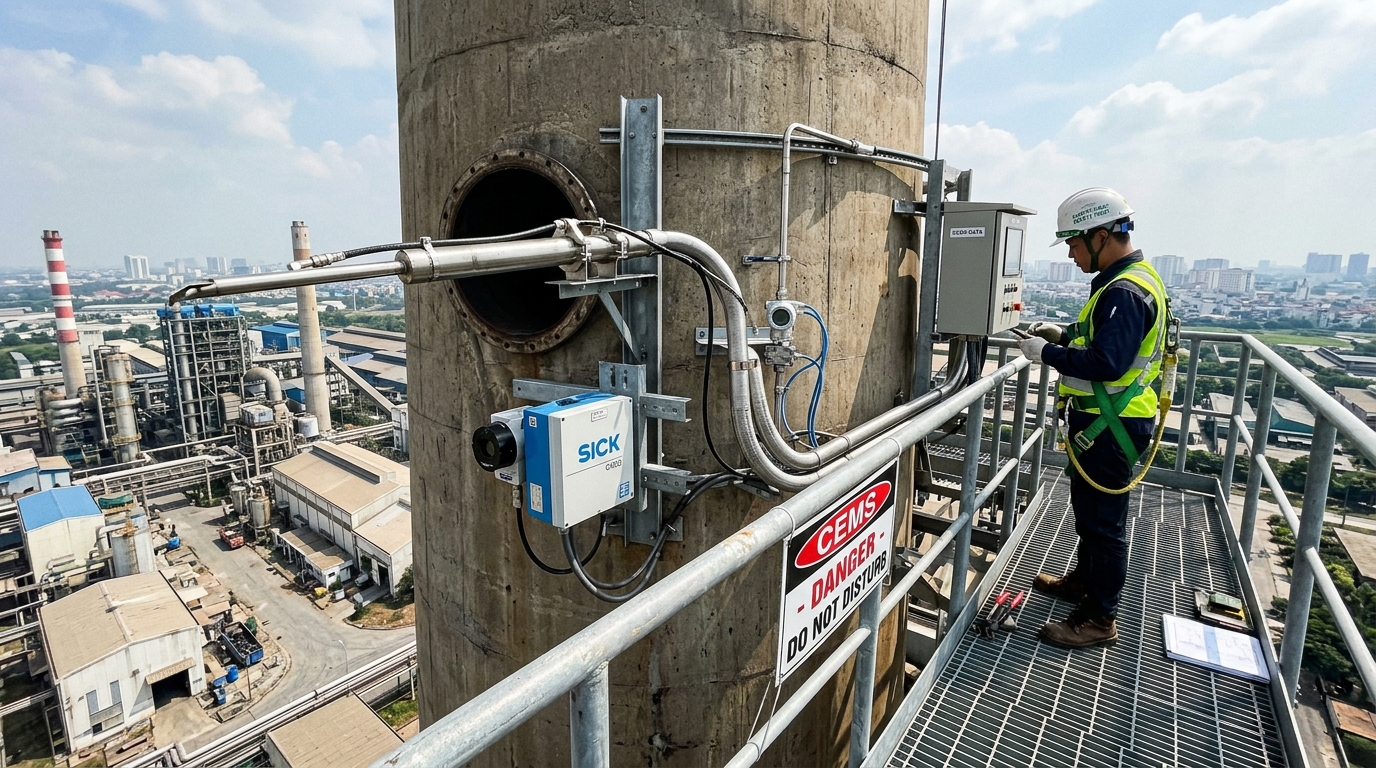
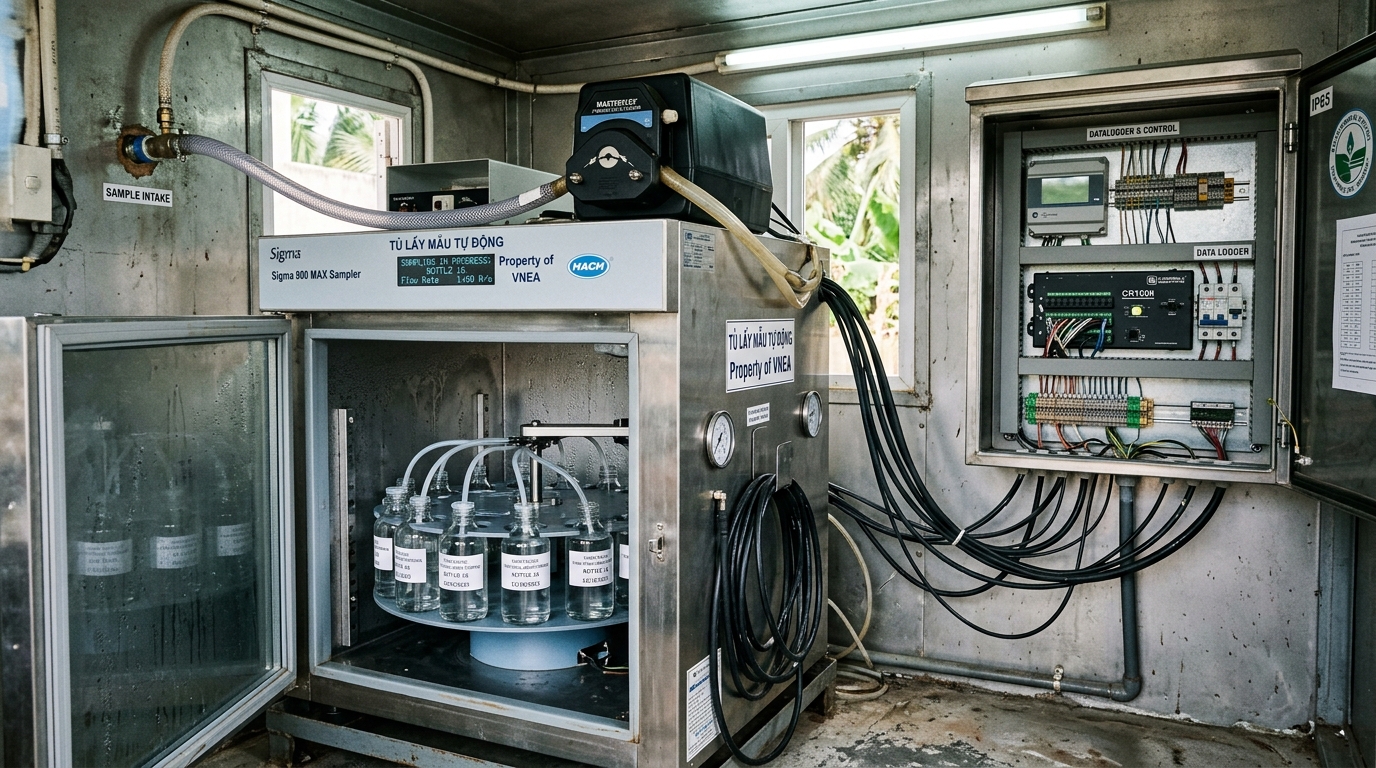
An industrial datalogger (data acquisition and logging device) is a specialized embedded electronic instrument engineered to automatically acquire, digitize, record, and transmit physical or chemical parameters (such as temperature, pressure, humidity, flow rate, electrical energy, pH, TSS, and COD) from field instrumentation over defined real-time intervals, guaranteeing data integrity without requiring human operational intervention.
This technical guide is part of DeviceLab's comprehensive engineering handbook on environmental monitoring datalogger compliant with Circular 10.
📌 Core Datalogger Architecture (Key Takeaways):
- Core Principle: Converting continuous analog signals (4-20mA, 0-10V, RTD PT100) via high-resolution ADC converters (16-bit to 24-bit) or querying digital fieldbus interfaces (Modbus RTU, Modbus TCP, SDI-12), attaching synchronized real-time clock (RTC) timestamps, and committing records to non-volatile local storage.
- 3 Primary Datalogger Paradigms: Standalone Embedded RTOS Dataloggers (highest MTBF and field reliability), PC-based Dataloggers (Windows IPC architecture), and Wireless IoT Edge Gateways (direct cellular 4G/NB-IoT cloud push).
- Secure Non-Volatile Storage: Leveraging industrial-grade NOR/NAND Flash or industrial SD cards, strictly avoiding volatile RAM buffers to guard against data loss during sudden brownouts.
- Primary Application Arenas: Continuous environmental wastewater and CEMS flue gas telemetry, industrial energy management systems (EMS), pharmaceutical/food cold chains, and municipal water distribution networks.
Hardware Architecture of a Modern Industrial Datalogger
An industrial-grade datalogger is far more than a basic microcontroller sampling pins. It represents a harmonized embedded system comprising 6 vital architectural functional blocks:
| INDUSTRIAL DATALOGGER HARDWARE BLOCK DIAGRAM |
+-----------------------------------------------------------------------------------+
| [FIELD INSTRUMENTATION] |
| - Analog 4-20mA / 0-10V -----> [16-bit Optically Isolated ADC Stage] |
| - Modbus RS485 / RS232 ------> [2.5kV Galvanically Isolated Transceiver] |
| - High-Speed Pulse / DI -----> [Optocoupled Counter Stage] |
| | |
| v |
| [CENTRAL PROCESSOR (MCU)] <----------> [DS3231 TEMPERATURE-COMPENSATED RTC] |
| - ARM Cortex-M4 (168MHz) |
| - Deterministic FreeRTOS Kernel |
| | |
| v |
| [POWER-SAFE FLASH STORAGE] [TELEMETRY & COMMUNICATION ENGINE] |
| - 32MB SPI NOR Flash / LittleFS - 4G LTE Cat 1 / NB-IoT Modem |
| - >180 Days Raw Record Retention - 10/100 RJ45 Industrial Ethernet |
| - Protocols: sFTP, MQTT, Modbus TCP |
+-----------------------------------------------------------------------------------+
1. High-Precision Analog Front-End (ADC Stage):
Industrial sensors (pressure transducers, ultrasonic level meters, pH probes) typically output 4-20mA current loops or 0-10V signals. A high-grade datalogger incorporates an onboard 16-bit to 24-bit Sigma-Delta or SAR ADC backed by active low-pass RC filtering and high-precision 0.05% tolerance shunt resistors, capturing microscopic environmental variations without thermal drift.
2. Central Processor & Real-Time Operating System (RTOS):
At the heart of the device is a dedicated microcontroller (such as an ARM Cortex-M4 core from STM32 or NXP) running a deterministic real-time operating system (FreeRTOS). The RTOS guarantees that sensor sampling and file generation routines execute down to the exact millisecond, immune to the background task scheduling latencies typical of desktop operating systems.
3. Temperature-Compensated Real-Time Clock (RTC):
Every logged record requires a certified chronological timestamp. Industrial dataloggers deploy high-stability RTC chips (such as the DS3231) featuring integrated temperature-compensated crystal oscillators (TCXO), maintaining an accuracy drift within ±2 minutes per year under completely offline field operation.

Comparison of 3 Dominant Datalogger Architectures
Depending on application requirements, automation engineers select among three primary architectural classes:
| Technical Characteristic | Embedded RTOS Datalogger (DL-ENV10) | Industrial PC (IPC) + SCADA | Cloud IoT Gateway |
|---|---|---|---|
| Operating System | FreeRTOS (Deterministic, zero virus risk) | Windows 10/11 IoT (Frequent OS patch crashes) | Embedded Linux or lightweight RTOS |
| Power Consumption | Ultra-low (2W - 5W), ideal for solar setups | High (40W - 80W), demands stable AC grid | Low (3W - 8W) |
| Offline Network Buffering | Onboard Flash > 180 days (100% fail-safe) | SSD disk (Prone to bad sectors upon sudden blackouts) | Small RAM buffer; easily drops data during prolonged disconnects |
| Cold Boot Time | Under 2 seconds upon power application | 45 - 90 seconds (Windows boot & services init) | 15 - 30 seconds |
| Optimal Use Case | Circular 10 environmental stations, ISO 50001 energy EMS | Central plant control rooms, server installations | Standalone machine monitoring, smart agriculture |
4 Mission-Critical Industrial Applications Demanding High-Reliability Dataloggers
- 1. Continuous Environmental Monitoring (Wastewater & CEMS Stacks): Dispatches 5-minute periodic data to DONRE servers via sFTP under Circular 10/2021/TT-BTNMT. The datalogger functions as the legal "black box" archiving enterprise discharge metrics.
- 2. Factory Energy Management Systems (EMS): Continuously measures voltage, current, active power (kW), power factor (Cos Phi), and energy consumption (kWh) from hundreds of power meters to audit efficiency and track carbon inventories.
- 3. Pharmaceutical & Food Cold Chain Logistics: Logs temperatures across cryogenic ranges (-80°C to +50°C) within vaccine cold rooms and refrigerated transport containers, dispatching instantaneous SMS/Email threshold breach alerts.
- 4. Municipal Water Distribution & Leakage Detection (DMA Monitoring): Deployed inside flooded underground street valve chambers, running for 3-5 years on internal primary lithium battery packs, tracking flow and line pressure to isolate concealed pipe bursts.
Custom Datalogger R&D Tailored to Your Application
Require a custom-engineered datalogger for water management, power metering, or agricultural IoT bearing your corporate brand? DeviceLab provides complete PCB engineering, firmware programming, and turnkey PCBA manufacturing services.
Technical Hotline: (+84) 982.503.355