OPC Unified Architecture (OPC UA) is the vendor-neutral, cross-platform industrial communication standard engineered by the OPC Foundation to establish secure, reliable, and semantically rich data exchange from field automation controllers (PLCs, RTUs, CNCs) up to enterprise IT supervisory software (SCADA, MES, Cloud ERP).
This technical guide is part of DeviceLab's comprehensive engineering handbook on industrial IoT for machinery and equipment.
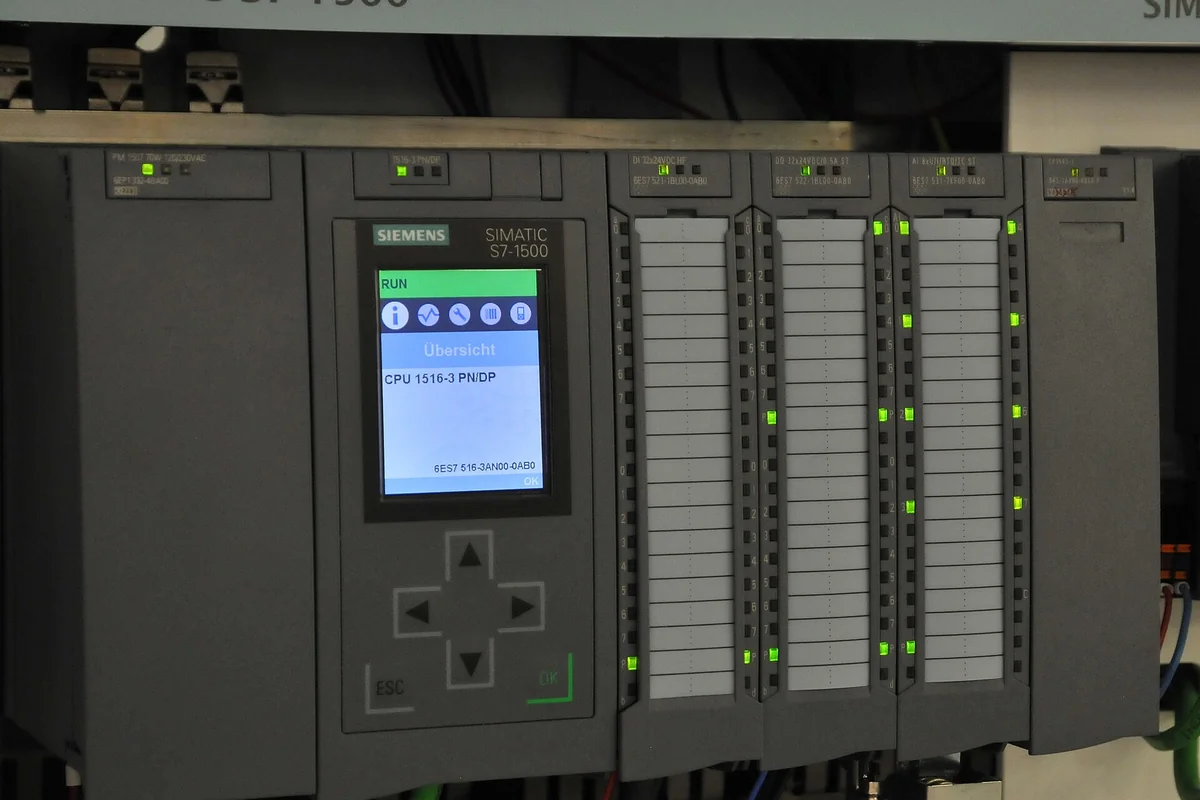
In modern industrial facilities across Vietnam, smart factory initiatives frequently stall due to protocol fragmentation: shop floors operate heterogeneous automation controllers from Siemens (Profinet/S7), Mitsubishi (CC-Link/MELSEC), Omron (HostLink), and Schneider (Modbus), each speaking incompatible proprietary languages. Legacy industrial protocols lack native cybersecurity, discard data contextual meaning (leaving raw register addresses without units or timestamps), and cannot traverse modern enterprise IT firewalls safely.
This technical guide analyzes the architectural differences between OPC UA, Modbus TCP, and MQTT, details the 3 breakthrough capabilities of OPC UA, and presents DeviceLab's edge gateway solutions for bridging legacy factory machinery into modern Industry 4.0 platforms.
What is the OPC UA Protocol?
OPC UA (IEC 62541) replaces legacy Windows-dependent OPC DA (Data Access) with an open, platform-independent architecture executing natively on embedded Linux microcontrollers, edge gateways, cloud servers, and industrial PLCs.
[Enterprise IT / MES / ERP Cloud]
            │ (OPC UA Client / TLS 1.3 / X.509 Authentication)
[Factory Industrial Ethernet Backbone]
            │
[DeviceLab Industrial IoT Gateway (OPC UA Server)]
 ┌──────────┴──────────────┬──────────────────┬─────────────────┐
 ▼                         ▼                  ▼                 ▼
[Siemens S7 PLC]     [Mitsubishi PLC]   [Modbus RS485]     [Analog Sensors]
(Profinet / S7comm)  (MELSEC / MC-Proto)(Modbus RTU / 24V) (4-20mA / 0-10V)
Unlike simple transport protocols that merely move raw byte streams, OPC UA embeds structural context, engineering units, access permissions, and historical event definitions directly into every data point.
Technical Comparison: OPC UA vs. Modbus TCP vs. MQTT
Understanding where OPC UA excels alongside complementary protocols is critical for smart manufacturing architecture:
| Engineering Criteria | Modbus TCP (Legacy Automation) | MQTT (Message Queuing Telemetry Transport) | OPC UA (Unified Architecture) |
|---|---|---|---|
| Underlying Architectural Model | Simple Client/Server (Master/Slave polling) | Publish/Subscribe via Central Message Broker | Comprehensive Client/Server & PubSub (IEC 62541 standard) |
| Data Semantic Context | None; raw 16-bit register numbers (e.g., Register 40001 = 2355 without unit or timestamp) | Flexible payload format; typically custom JSON or binary payload without standardized data model | Rich object-oriented Information Model (NodeID, variable names, engineering units, min/max limits, RTC timestamp) |
| Built-in Cybersecurity | Zero native security; transmits plaintext over port 502; vulnerable to packet spoofing | Relies on external network transport layer (TLS/SSL encryption and username/password tokens) | Multi-layer built-in security: X.509 digital certificates, user role authorization, and AES-256 message encryption |
| Communication Efficiency | Low; requires constant cyclic polling of holding registers, wasting network bandwidth | Very high; lightweight publish-on-change push model, ideal for cellular networks | High; supports Monitored Items (subscribing to change events) and historical buffer recovery |
| Target Application Domain | Basic field device polling (power meters, VFD drives, remote RTU modules) | Cloud data ingestion, mobile apps, wide-area IoT telemetry over cellular links | Plant-wide interoperability, SCADA/MES integration, machine-to-machine (M2M) automation |
Which Industrial Protocol Should Your Factory Deploy?
Apply this decision framework based on your factory's technical assets and operational goals:
| Plant Infrastructure Status | Observed Operational Challenge | Recommended Protocol Solution |
|---|---|---|
| Legacy Single-Vendor Machine Cells | Reading raw electrical parameters and motor frequency from nearby digital meters | Deploy Modbus RTU / Modbus TCP for basic, cost-effective field register polling |
| Distributed Wide-Area Assets | Sending telemetry from water pump stations or pipeline valves over unstable 4G LTE | Deploy MQTT / TLS to minimize cellular data bandwidth and handle connection drops |
| Multi-Vendor Factory Digitalization | Integrating Siemens, Omron, and Mitsubishi PLCs into a unified SCADA/MES platform | Deploy OPC UA Architecture to standardize data naming and eliminate custom protocol conversion drivers |
| Regulated High-Security Industries | Pharmaceutical, chemical, and precision semiconductor plants requiring audit trails and OT firewall compliance | Deploy OPC UA with X.509 Mutual Certificate Authentication and AES message signing |

3 Breakthrough Capabilities That Make OPC UA the Industry 4.0 Standard
OPC UA is more than a communication pipe; it is an object-oriented data modeling language:
1. Address Space & Object-Oriented Information Models
In legacy protocols, a temperature reading is an isolated 16-bit integer in Register 40012. In OPC UA, each data variable is a fully qualified hierarchical object Node:
Plastic_Injection_Molding_Machine_01
  ├── Machine_Status (String: "Running")
  ├── Active_Alarm_State (Boolean: False)
  └── Barrel_Heating_Zone_1
        ├── Current_Temperature (Float: 235.5)
        ├── Engineering_Units (String: "°C")
        ├── High_Alarm_Limit (Float: 280.0)
        └── Source_Timestamp (Timestamp: 2026-10-02T14:30:00Z)
SCADA and MES applications simply browse the server's node tree to discover all machine telemetry automatically without manual tag addressing.
2. Built-in Multi-Tier Cybersecurity
OPC UA enforces robust security independently of external network firewalls: * Mutual X.509 Certificate Authentication: The OPC UA Server accepts connections only from authorized client computers possessing verified digital certificates. * Cryptographic Message Signing & Encryption: Utilizing modern cipher suites (Basic256Sha256, Aes128_Sha256_RsaOaep) to prevent eavesdropping and man-in-the-middle command injection. * Granular User Role Authorization: Maintenance technicians are granted Read-Only visibility, while Senior Automation Engineers hold authenticated Write permissions to modify process setpoints.
3. Native Support for Events, Alarms & Historical Data
OPC UA incorporates standardized Alarms & Conditions. When a sensor breaches critical safety thresholds, the gateway pushes an immediate prioritized alarm event with millisecond timestamps, eliminating wasteful high-frequency SCADA polling.
DeviceLab Edge-to-Cloud OPC UA Conversion Solutions
DeviceLab delivers turnkey Industrial Edge-to-Cloud Bridging Hardware: * High-Performance Embedded OPC UA Server: Our industrial IoT edge gateways come pre-installed with optimized OPC UA servers, polling legacy machines via RS485/Modbus/Profinet and exposing standardized OPC UA node trees. * Universal SCADA/MES Interoperability: Seamless plug-and-play integration with major industrial software platforms: Siemens WinCC, Ignition SCADA, Wonderware, GE Digital Proficy, and custom ERP systems. * Air-Gapped OT/IT Firewall Isolation: Dual-Ethernet physical hardware isolation ensures corporate office traffic cannot directly route into sensitive machine control subnets.
Frequently Asked Questions (FAQ)
1. Can older machinery with only RS485 serial ports connect to an OPC UA system?
Yes, 100%. By installing a DeviceLab Industrial IoT Gateway in the machine electrical cabinet, the gateway polls serial Modbus RTU registers over RS485 and automatically maps variables into an standardized OPC UA Server node tree accessible over Ethernet.
2. Does the OPC UA protocol require recurring software licensing fees?
The core OPC UA technical standard and open-source implementations (such as open62541, Eclipse Milo) are completely open and license-free. However, proprietary commercial conversion suites (such as Kepware KEPServerEX) require tag-based software licenses.
3. Is OPC UA fast enough for hard real-time motion control?
Standard Client/Server OPC UA over TCP/IP operates with deterministic sampling cycles between 10ms and 100ms—ideal for SCADA, MES, and supervisory monitoring. For sub-millisecond motion control, the OPC Foundation established OPC UA over TSN (Time-Sensitive Networking).
4. Can a single IoT Gateway act simultaneously as both an OPC UA Server and Client?
Yes. A gateway can act as an OPC UA Client to collect data from newer factory PLCs, while simultaneously serving as an OPC UA Server to aggregate and expose plant-wide data to central SCADA and MES software.
5. Is configuring X.509 digital certificates in OPC UA difficult?
During initial laboratory commissioning, systems can operate in auto-trust mode. For production deployment, DeviceLab engineers guide your IT team through managing Certificate Trust Lists (CTL) to permanently lock out unauthorized endpoints.
6. Can OPC UA connect directly into AWS IoT or Microsoft Azure cloud platforms?
Yes. Both AWS IoT SiteWise and Microsoft Azure IoT Edge provide certified native OPC UA connectors, automating real-time industrial telemetry ingestion into cloud data lakes and predictive AI analytics.
7. Does DeviceLab configure custom OPC UA node data trees for client factories?
Yes. Our automation engineering team conducts detailed on-site surveys, maps tag lists across all machinery, models the complete OPC UA address space, and delivers validated turnkey systems.
Modernize Your Plant Connectivity with DeviceLab
Planning an enterprise SCADA/MES integration or seeking to standardize data protocols across heterogeneous machinery?
👉 Request an OPC UA Integration Consultation
Consult directly with DeviceLab's Industrial Automation Architects via Hotline/WhatsApp/Zalo: 0982.503.355.