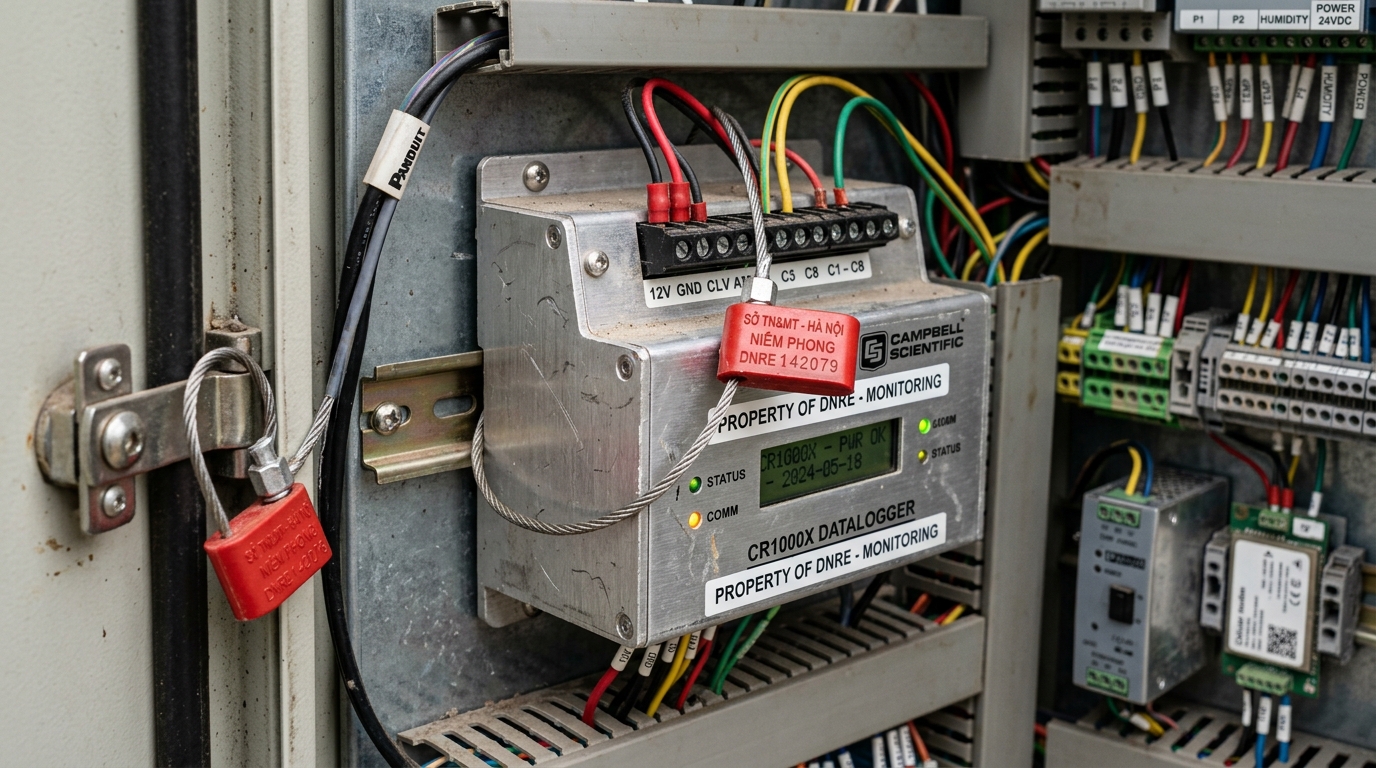
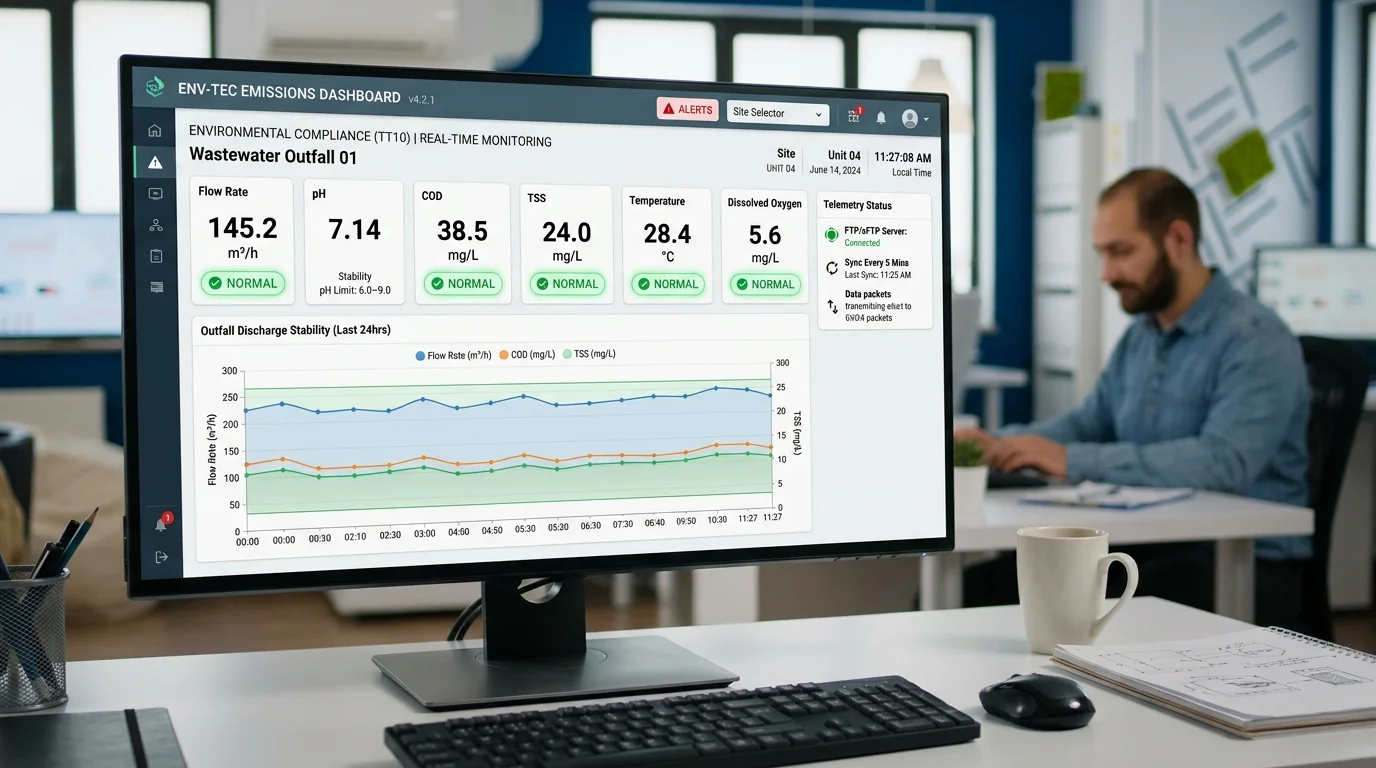
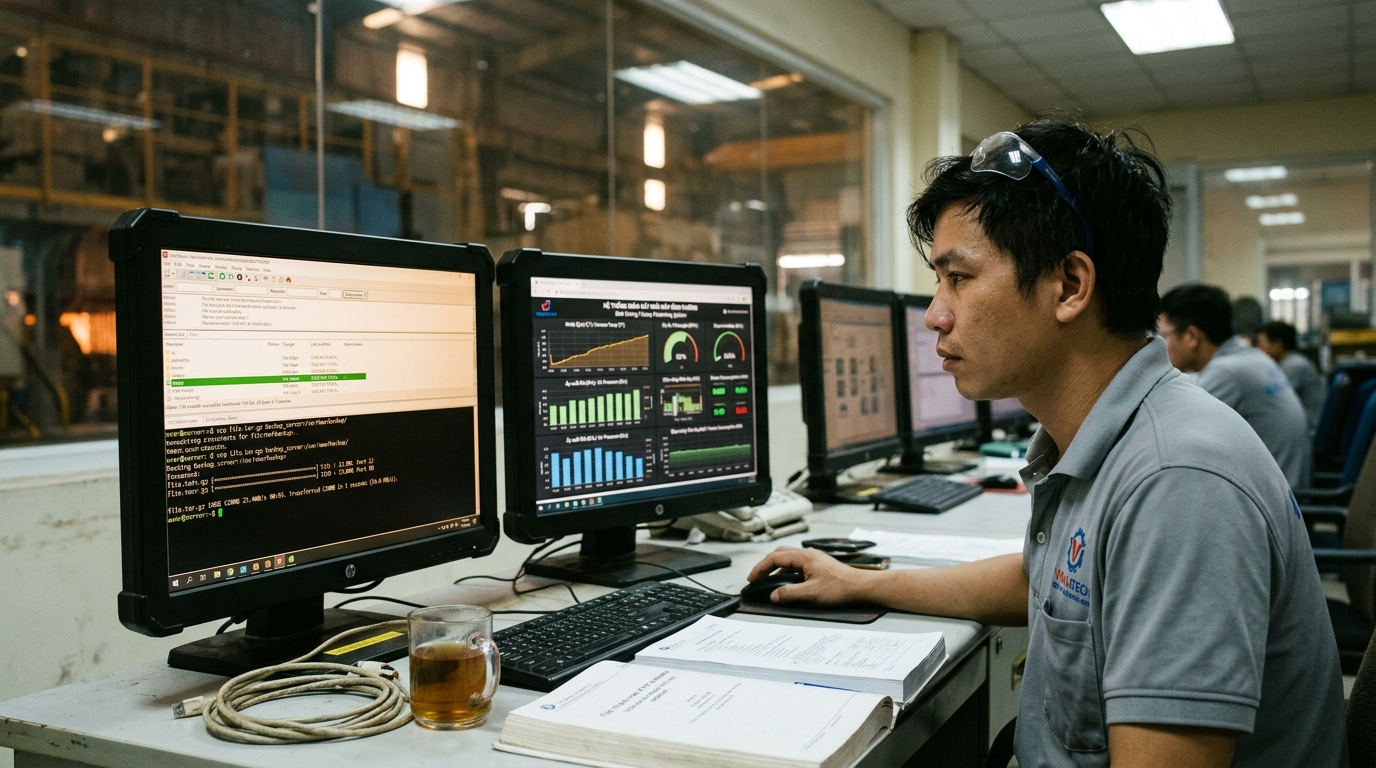
Cellular telecommunication networks (4G/3G/GPRS) are vulnerable to environmental disruptions: base station maintenance, torrential thunderstorms, SIM account suspensions, and localized cell congestion. In environmental monitoring under Circular 10/2021/TT-BTNMT and Circular 17/2021/TT-BTNMT, any prolonged data transmission blackout creates critical legal liabilities for enterprises. To ensure zero data loss under any operational condition, an environmental datalogger must incorporate industrial non-volatile Flash ring buffering and intelligent automated backfill transmission algorithms.
This technical guide is part of DeviceLab's comprehensive engineering handbook on environmental monitoring datalogger compliant with Circular 10.
Many low-cost IoT gateways on the market utilize volatile RAM buffers or cheap consumer micro-SD cards. When sudden power cuts occur, volatile data is obliterated; consumer SD cards frequently suffer catastrophic sector corruption from continuous writing cycles in hot industrial enclosures. This engineering whitepaper examines the 4-step Store-and-Forward architecture, compares industrial SPI NOR Flash against SD cards, and explains how the DeviceLab DL-ENV10 Datalogger guarantees 100% data integrity.
Key Technical Standards for Data Buffering (Circular 10/2021/TT-BTNMT):
- Mandatory Store-and-Forward: The datalogger must continuously write structured text records to non-volatile local memory regardless of network connection state.
- Automatic Backfilling: Once 4G connectivity restores, the system must autonomously transmit all cached historical files in chronological sequence without human intervention.
- Storage Endurance: Minimum 30 to 60 days of continuous local data retention without overwriting un-transmitted records.
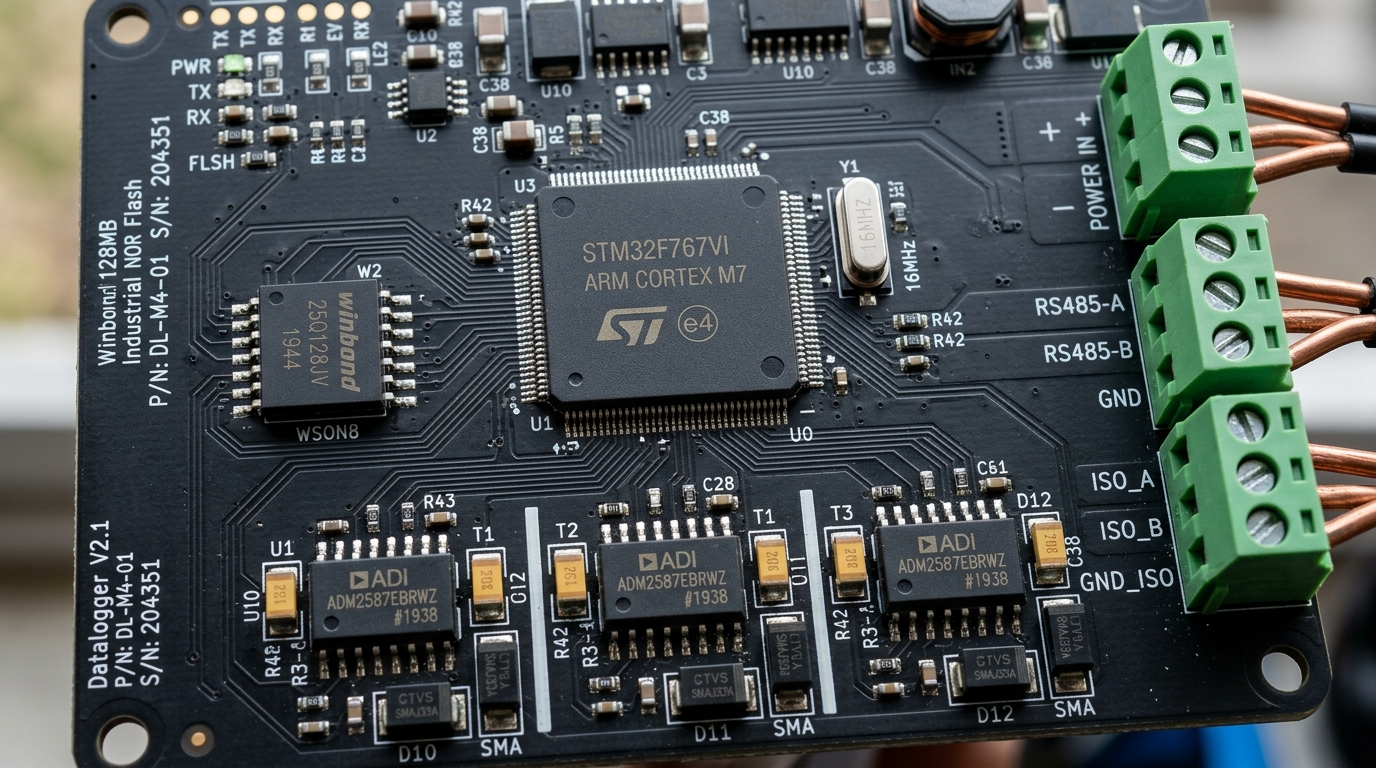
- Hardware Architecture: DeviceLab DL-ENV10 equipped with 128MB SPI NOR Flash rated for 100,000 write/erase cycles and 20-year data retention.
📑 Table of Contents
What Happens to Cheap Gateways When 4G Cellular Signals Drop?
Standard commercial IoT gateways are built with temporary volatile RAM queues. When a cellular network disconnects:
- The RAM buffer rapidly overflows within hours, dropping all subsequent data samples.
- If a localized power outage occurs, all buffered RAM data vanishes immediately.
- When network connection restores, the gateway only transmits the current instantaneous sample, creating a massive permanent data gap in the DONRE database that triggers official regulatory audit citations.
4-Step "Store-and-Forward" Architecture on DeviceLab DL-ENV10
The DeviceLab DL-ENV10 implements a fail-safe four-step data preservation architecture:
2.1. Step 1: Direct Non-Volatile Flash Persistence
Every 5-minute sampling file is compiled and written immediately to physical NOR Flash memory sectors before any network transmission is attempted. Even if main 24VDC power is cut mid-cycle, the file remains 100% intact.
2.2. Step 2: Transmission Handshake & ACK Verification
The datalogger initiates an FTP/SFTP upload to the DONRE server. It checks for official server acknowledgment codes (226 Transfer complete). Only after receiving verified confirmation does the internal database flag the file as SENT = 1.
2.3. Step 3: Priority-Based Auto Backfill Scheduling
When the 4G network reconnects after an outage, the DL-ENV10 launches a background backfill worker. To prevent choking cellular bandwidth, the engine prioritizes the latest real-time file first, followed by historical backfill files uploaded sequentially at throttled intervals.
2.4. Step 4: Circular Ring Buffer Overwrite Protection
With 128MB of storage, the DL-ENV10 stores over 100,000 text files. If memory ever reaches maximum capacity, it overwrites the oldest confirmed-sent files while strictly protecting un-transmitted records.
Performance Benchmark: Industrial SPI NOR Flash vs. Consumer SD Cards
| Evaluation Parameter | Consumer Micro-SD Card | Industrial SPI NOR Flash (DeviceLab DL-ENV10) |
|---|---|---|
| Mounting & Vibration Resilience | Mechanical push-spring slot (Vibrates loose easily) | Surface-mount soldered chip (Immune to vibration) |
| Power-Loss Immunity | High risk of FAT32 file system corruption | 100% Power-loss safe journaling architecture |
| Operating Temperature Range | -10°C to +60°C | -40°C to +85°C (True Industrial Grade) |
| Write / Erase Endurance | 3,000 – 10,000 cycles | 100,000 cycles (20+ years lifespan) |