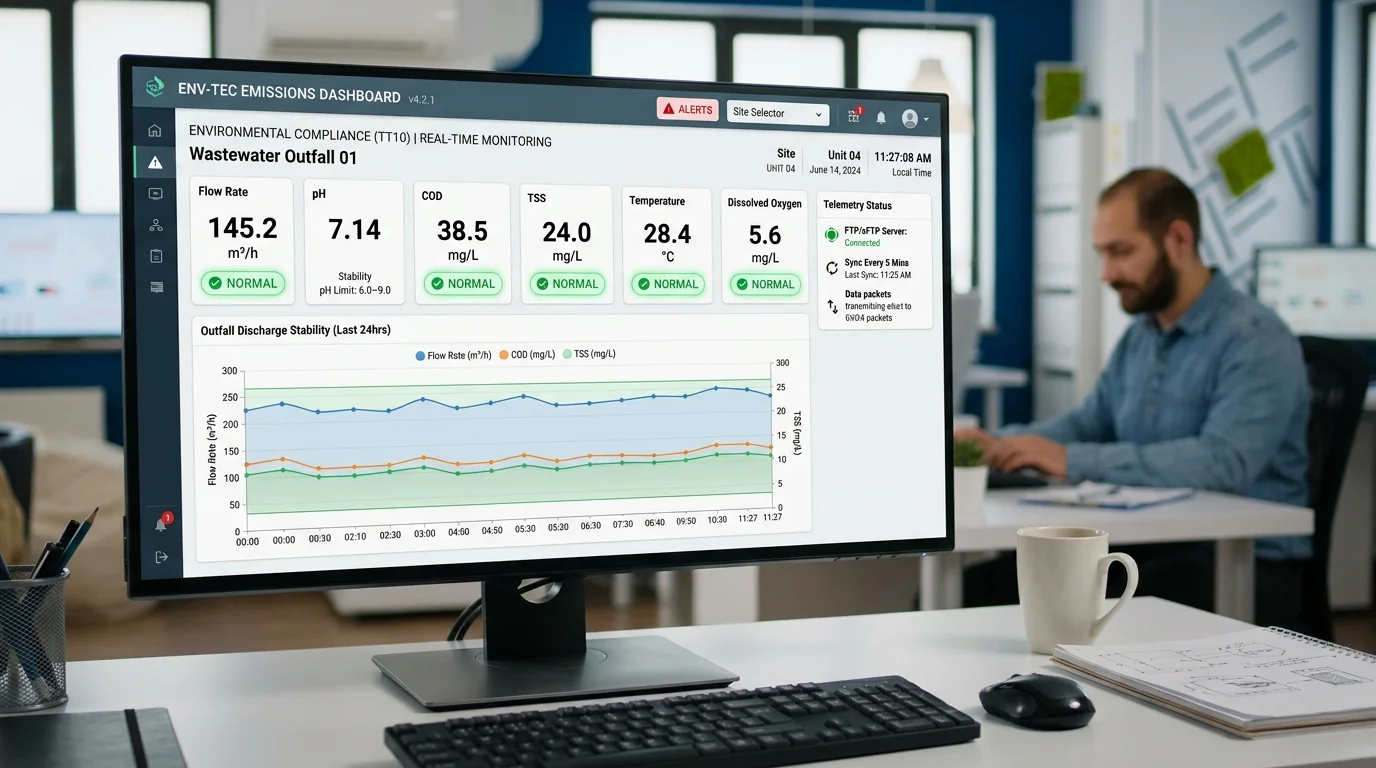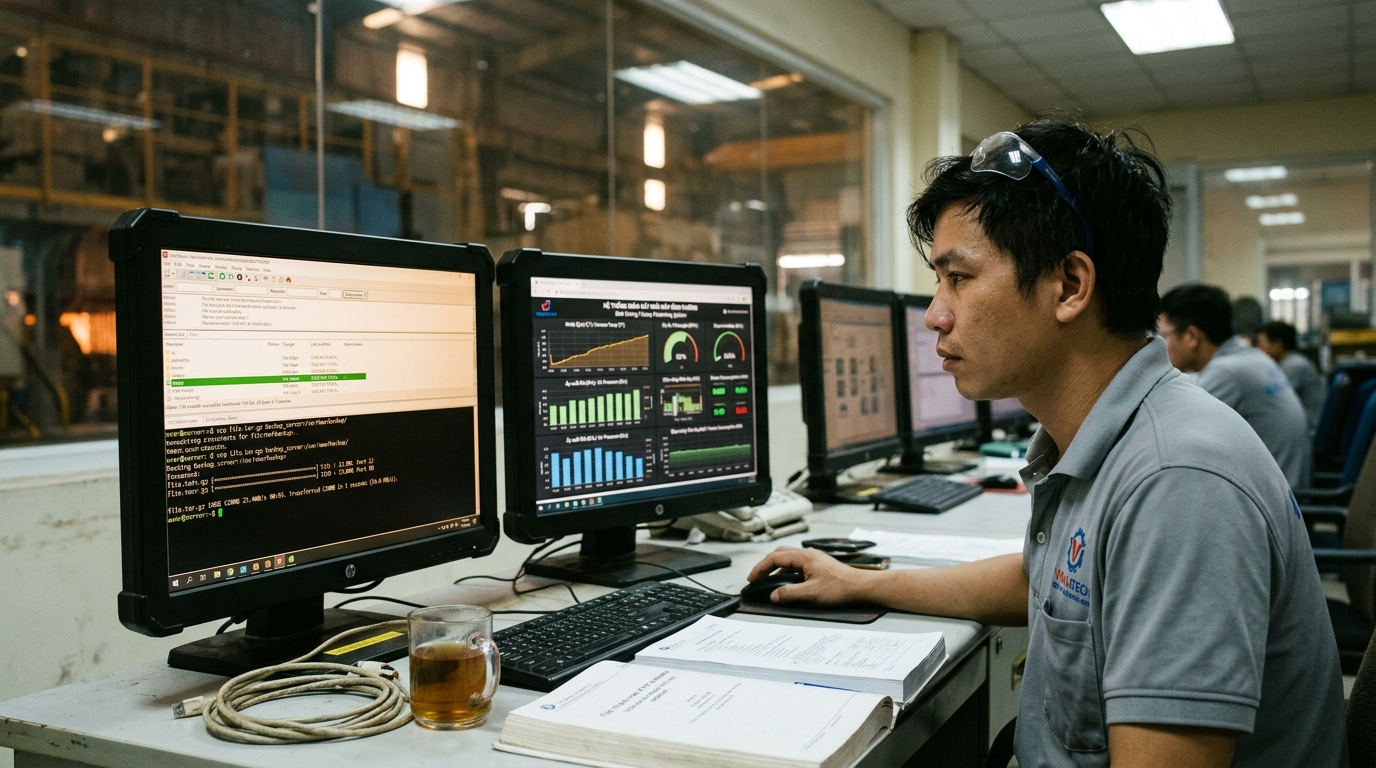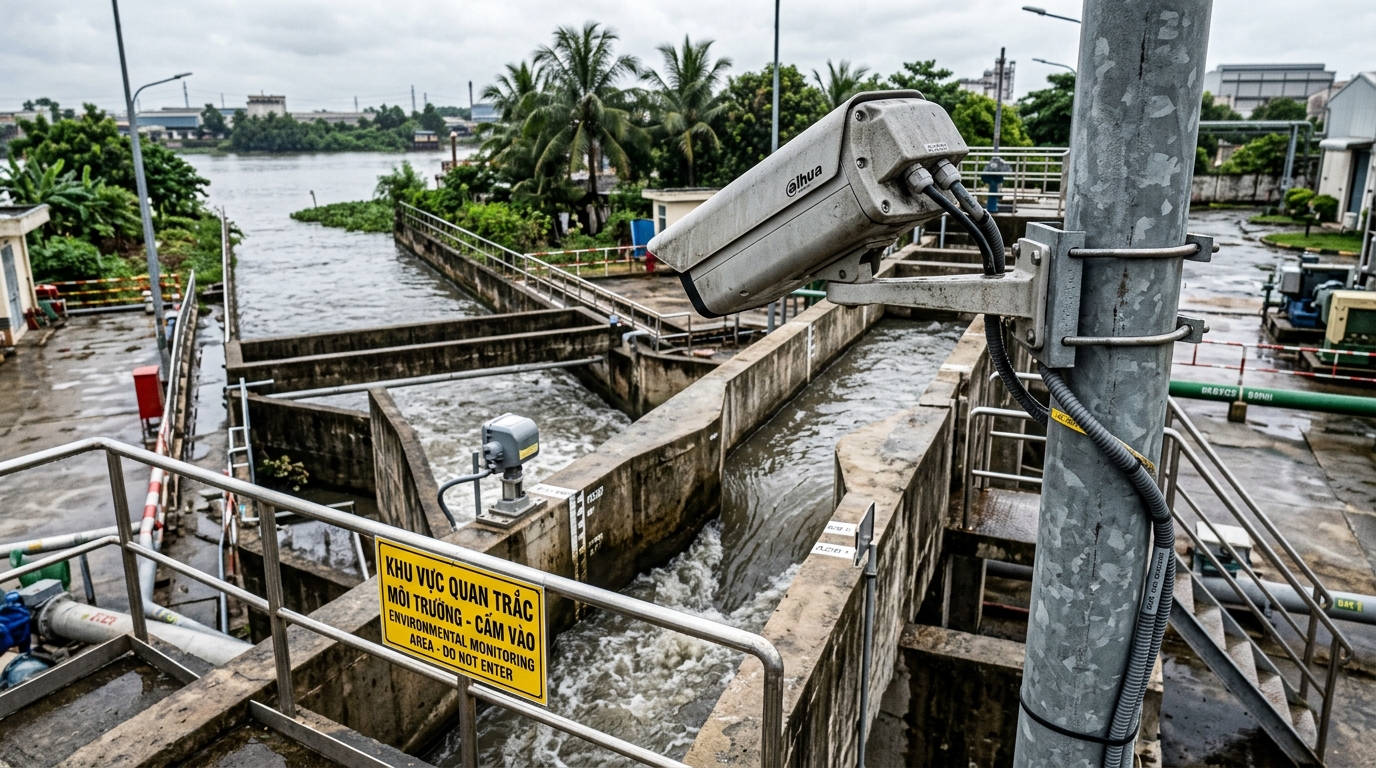
Article 39 of Circular 10/2021/TT-BTNMT establishes the definitive mandatory technical criteria for all Data Acquisition and Handling Systems (Dataloggers / DAS) deployed across automated wastewater, surface water, ambient air, and industrial flue gas emission monitoring stations in Vietnam. Any monitoring station whose central datalogger fails to fulfill 100% of these statutory criteria will be strictly rejected during official commissioning inspections by the Department of Natural Resources and Environment (DONRE).
This technical guide is part of DeviceLab's comprehensive engineering handbook on environmental monitoring datalogger compliant with Circular 10.
Many plant operators and environmental contractors mistakenly assume that any mini-PC or industrial box running Windows can serve as an environmental datalogger. In reality, over 65% of failed station inspections stem from central telemetry shortcomings: lack of non-volatile local data buffering, missing lead seals, inability to append standardized calibration status codes (00, 01, 02), or operating systems crashing during power outages. This technical analysis provides an itemized compliance audit against the eight statutory requirements of Article 39 and highlights why the DeviceLab DL-ENV10 Datalogger is the leading purpose-built choice in Vietnam.
8 Statutory Requirements of Article 39 Circular 10/2021/TT-BTNMT:
- Input Interfacing: Direct connection to all analytical devices via standard industrial interfaces (RS232, RS485 Modbus, 4–20mA, 0–10V, Ethernet TCP/IP).
- Continuous Logging & Storage: Non-volatile local storage retaining raw and averaged data files for a minimum of 30 to 60 days (DL-ENV10 provides 12 months).
- Data Formatting: Structured plain text files (.txt) utilizing standardized delimiters (tab or semicolon), recording exact time, measurement values, and data status codes (00, 01, 02).
- Transmission Protocol: Automated transmission to DONRE via FTP or SFTP protocol in Passive Mode once every 5 minutes (for wastewater/emissions) or 1 hour (for water resources).
- Store-and-Forward Backfill: Automated caching during network outages and chronological re-transmission upon reconnection.
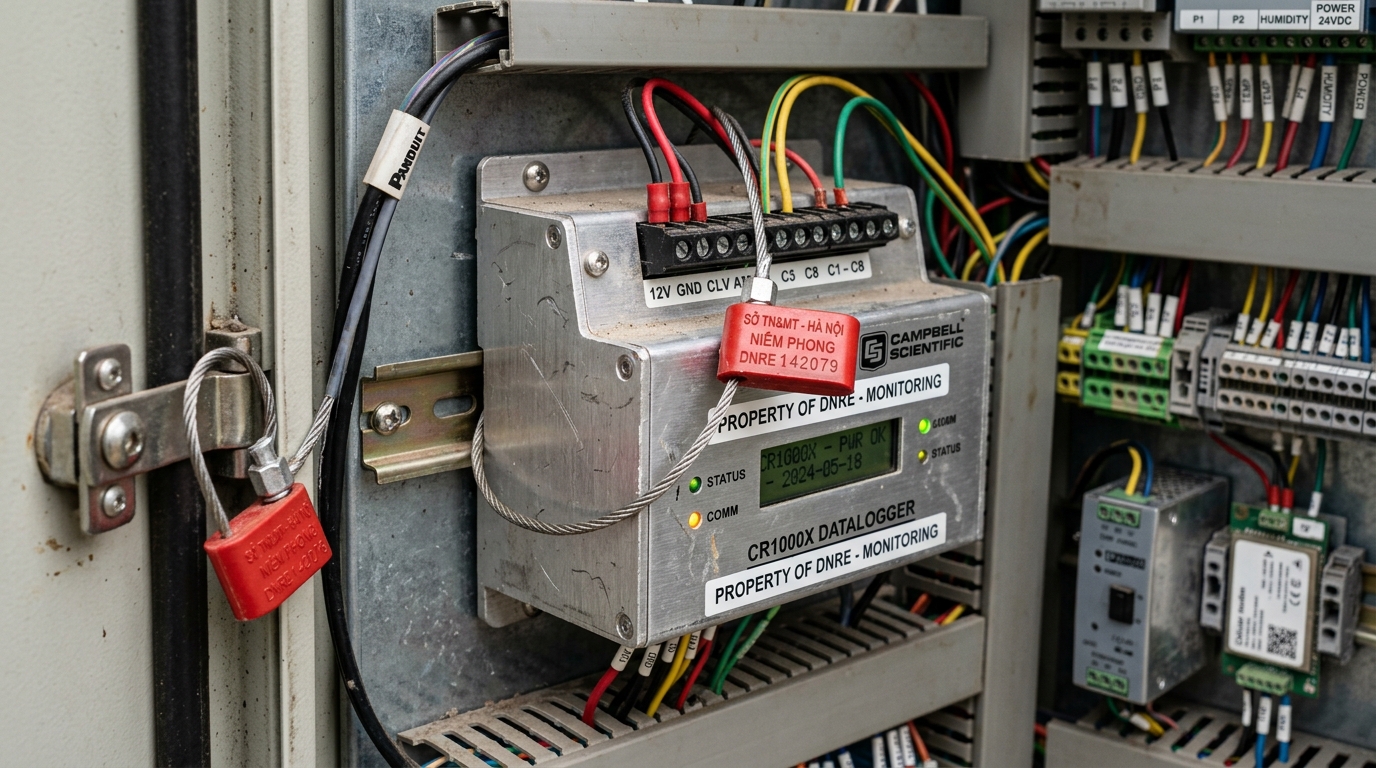
- Security & Tamper Sealing: Physical lead seal brackets, multi-level password protection, and cryptographic audit logging preventing manual data falsification.
📑 Table of Contents

Compliance Audit Matrix: Article 39 Circular 10 vs. DeviceLab DL-ENV10
| Article 39 Clause | Statutory Regulatory Requirement | DeviceLab DL-ENV10 Implementation | Audit Verdict |
|---|---|---|---|
| Clause 1 | Hardware interfaces supporting all analytical instruments (analog, digital, pulse) | Dual RS485 Modbus, 4x 4–20mA/0–10V, 2x Digital Inputs, 2x Relay Outputs | 100% Fully Compliant |
| Clause 2 | Minimum 30-day non-volatile local data storage capacity | 128MB Industrial NOR Flash ring buffer storing up to 365 days of continuous logs | Exceeds Standard (12x) |
| Clause 3 | Standardized text file (.txt) output with Tab/Semicolon formatting | Automatic generation of Circular 10 / Circular 17 text files with strict delimiters | 100% Fully Compliant |
| Clause 4 | Real-time status code tagging: 00 (Normal), 01 (Fault), 02 (Calibration) | Automated status code evaluation via hardware switches and Modbus diagnostic bits | 100% Fully Compliant |
| Clause 5 | Automated transmission to DONRE via FTP/SFTP once every 5 minutes | Integrated 4G LTE Cat 1 modem with active cron upload engine supporting FTP/SFTP | 100% Fully Compliant |
| Clause 6 | Automatic backfill transmission of cached files upon network recovery | Intelligent FIFO/LIFO backfill scheduler preventing network bandwidth congestion | 100% Fully Compliant |
| Clause 7 | Physical lead tamper seal preventing unauthorized access to memory | Dedicated stainless steel lead seal bracket securing terminal blocks and case | 100% Fully Compliant |
| Clause 8 | Local display screen or web dashboard for on-site diagnostic inspection | Built-in responsive Web UI accessible via local WiFi, Ethernet, or USB console | 100% Fully Compliant |
Mandated Structure of the .txt Telemetry File Transmitted to DONRE
In accordance with Circular 10/2021/TT-BTNMT and Government Decree No. 08/2022/ND-CP, continuous environmental monitoring data must be packaged strictly as plain text files (.txt format) encoded in standard UTF-8 without Byte Order Mark (BOM). The file naming architecture and data payload formatting must adhere strictly to the following standards:
File Naming Architecture:
Example: An automated wastewater monitoring station with the assigned regulatory code KCN_ABC_NT01 transmitting data recorded at 14:05:00 on October 12, 2026, will generate the file name: KCN_ABC_NT01_20261012140500.txt.
Data Payload String Format Inside the File:
Each line within the text file represents an environmental monitoring parameter measured at that exact sampling interval, with data fields separated strictly by Tab characters (t) or commas (,):
20261012140500 pH 7.35 - 00
20261012140500 COD 45.2 mg/L 00
20261012140500 TSS 28.6 mg/L 00
20261012140500 Flow 120.5 m3/h 00
20261012140500 Temp 29.8 oC 00
Status Code Definitions:
00: Normal measurement state (Valid data).01: Sensor or analytical instrument currently undergoing calibration (Calibration mode).02: Measurement instrument or transducer malfunction / out-of-range error (Sensor error).03: Primary AC power outage or sensor communication loop disconnected (Power / signal loss).
Automated Data Transmission Protocol: FTPS / FTP & Local Store-and-Forward Buffering
Telemetry generated by the on-site Datalogger must be automatically pushed to the FTP/FTPS receiving server operated by the provincial DONRE at a legally mandated frequency of once every 5 minutes. To guarantee data packet integrity, non-repudiation, and cybersecurity, transmission protocols must support FTPS (FTP over TLS/SSL explicit or implicit encryption) authenticated via dedicated credentials provisioned by DONRE specifically for each licensed production facility.
Mandatory On-Premise Buffering Requirements (Store & Forward)
Among the most critical technical stipulations of Circular 10 is edge data persistence: The Datalogger must incorporate non-volatile internal storage capable of holding a minimum of 30 days of complete raw measurement data and computed averages (many provincial authorities recommend 60 days). When unexpected network disruptions occur (such as severed fiber LAN connections or cellular 4G signal loss), the Datalogger must seamlessly continue recording data into its local FIFO buffer and automatically backfill all missing historical files to the DONRE server chronologically as soon as network connectivity is restored.
Why DIY Windows Computers Consistently Fail Regulatory Acceptance
Assembling monitoring systems using commercial mini-PCs running desktop Windows operating systems introduces chronic failure vectors:
2.1. OS Instability & Forced Windows Updates
Consumer Windows systems periodically restart to install forced updates, killing background polling scripts. During restarts, monitoring stations drop data files, violating the 5-minute transmission mandate.
2.2. Hard Drive File System Corruption During Power Cuts
Station shelters frequently experience localized power flickers. Sudden power loss while Windows is writing to an NTFS SSD corrupts master file tables, causing boot-loop failures. The DL-ENV10 runs bare-metal FreeRTOS with power-loss protected SPI NOR Flash memory.
2.3. Lack of Certified Physical Lead Tamper Sealing
Article 39 strictly demands that datalogger enclosures provide dedicated brackets for environmental inspectors to clamp official lead seal wires (Dây chì niêm phong). Windows desktop towers have open USB ports and unsealable chassis that immediately disqualify them during DONRE physical audits.
Frequently Asked Questions (FAQ)
Step-by-Step 72-Hour DONRE Commissioning & Acceptance Procedure
- Step 1: Instrumentation Survey & Station Registration: Survey all on-site analytical instruments and submit station parameter declarations to the provincial Department of Natural Resources and Environment to obtain official FTPS server credentials.
- Step 2: Datalogger Network Configuration: Set server IP addresses, ports, FTP/FTPS modes, user credentials, transmission cycles, and parameter tag tables via the embedded Web GUI interface of the DL-ENV10.
- Step 3: 72-Hour Continuous Trial Run: Execute continuous 72-hour transmission trials and cross-verify sensor data against certified third-party laboratory test results to ensure accuracy within permissible regulatory tolerances.
- Step 4: Commissioning Protocol Sign-Off & Handover: Draft official inspection records, obtain connectivity verification from DONRE's IT monitoring division, and formally commission the automated station for legal commercial compliance.