
An Automated Machine Running Hours & Preventive Maintenance Alert System is an embedded industrial IoT hardware and White-Label mobile application solution that empowers Original Equipment Manufacturers (OEMs), automated production-line builders, and industrial machinery distributors to fully digitalize their aftermarket service and spare-parts lifecycle. By accurately measuring true Loaded Running Hours, unloaded idle hours, actuator stroke cycles, and motor temperature/current at the edge to automatically trigger multi-stage maintenance alerts at 500h, 2,000h, 4,000h, and 8,000h intervals, machinery OEMs can lock in recurring genuine consumable spare-parts revenue across the entire 10-year machine lifecycle while cutting emergency warranty repair costs by up to 60%.
B2B2B Hardware & Software Focus for Machinery OEMs & Control Panel Builders: Explore our turnkey OEM ecosystem at Embedded IoT Modules for OEM Machinery & Electrical Panels, our Custom-Branded White-Label Web & Mobile App Platform, and the DL-M400 Industrial Machine Telemetry Module.
⚡ Technical Quick Fact Sheet — OEM Machine Running Hours & Maintenance Alert System:
- Multi-Modal Runtime Signal Acquisition: Combines
3.0kV Optically Isolated Digital Inputs (reading main Contactor/Relay auxiliary contacts)+Split-Core CT Motor Load Current Sensing+RS485 Modbus PLC/VFD Register Polling. - 3 Independent Non-Volatile Edge Counters: Separately accumulates
Power-On Standby Hours,Unloaded Idle Running Hours, andTrue Loaded Running Hoursin onboard Flash/FRAM memory. - Multi-Stage Preventive Alert Engine: Automatically dispatches Push Notifications via the OEM's White-Label App (iOS/Android), Zalo, and Email at
90% of service interval (Pre-Alert for Spare Parts Quote)and100% of interval (Mandatory Service Due). - Digital Service Logbook & Warranty Black-Box: Archives every QR-verified filter/oil replacement alongside historical overload current and over-temperature events to eliminate warranty disputes.
📌 Why Leading Industrial Machinery OEMs Embed IoT Running-Hours Telemetry:
- End the "Sell the Machine Once, Lose the Aftermarket Forever" Trap: Whenever a customer's machine approaches its 2,000-hour oil filter, air separator, softening resin, RO membrane, cutting blade, or bearing replacement milestone, the cloud portal alerts your aftermarket spare-parts sales team 150 hours in advance—so you close the consumable sale before third-party grey-market shops step in.
- Protect Your OEM Against Unfair Customer Warranty Claims: When a factory runs a machine 24/7 past 3,000 hours without changing oil or cleaning clogged heat exchangers until the air-end or spindle seizes—and then blames "defective OEM manufacturing"—your timestamped cloud runtime and temperature logbook provides indisputable engineering proof.
- Elevate Domestic Machinery Brands to G7 International Standards: Hand over every new machine with a sleek iOS/Android mobile application bearing your company's own logo and brand identity within 7 days of partnering with DeviceLab.

The Aftermarket Revenue Leak Caused by Traditional Panel-Door Mechanical Hour Meters
Across the industrial machinery manufacturing and distribution sector (rotary screw air compressors, diesel generators, industrial dryers, automated packaging machines, CNC woodworking routers, hydraulic block machines, RO water filtration skids, and dust collection systems), cumulative gross profit from selling consumable wear parts and scheduled maintenance kits over a machine's 5-to-10-year service life is typically 2x to 3x larger than the margin on the initial machine sale.
Yet when an OEM only installs a $6 mechanical hour counter on the cabinet door—or logs hours silently inside an offline PLC—the manufacturer surrenders nearly 75% of its post-warranty aftermarket revenue due to 3 structural blind spots:
- The OEM's Aftermarket Sales Team Has Zero Visibility into Each Customer's Real Operating Tempo: Two factories purchase identical machines in January. Factory A runs a single 8-hour shift per day (taking 8.5 months to reach 2,000 running hours), whereas Factory B runs three continuous shifts at 22 hours per day (hitting 2,000 running hours in just 90 days!). If your customer service representative calls on a fixed 6-month calendar reminder, Factory B already bought aftermarket filters and oil from a local third-party vendor 3 months ago!
- Mechanical Hour Counters Measure "Cabinet Energized Time" Instead of "True Loaded Running Hours": Panel wiremen frequently wire mechanical hour meters across the 220VAC main control power switch or power-indicator pilot lamp. If an operator switches on the cabinet breaker at 7:00 AM and turns it off at 5:00 PM while the machine only ran under load for 4 hours, the mechanical meter falsely advances by 10 hours—sparking customer pushback over premature maintenance billing.
- Inability to Track High-Speed Cycle/Stroke Wear on Actuators (Cycle-Based Maintenance): Critical wear components such as pneumatic solenoid valves, thermal sealing jaws, rotary cutting knives, stamping dies, and main motor contactors degrade based on total actuation cycles (strokes) rather than simple elapsed hours.
Multi-Dimensional Runtime Counting & Predictive Maintenance Architecture on the DL-M400 Module
To solve these exact engineering and commercial challenges for machinery OEMs, the DIN-rail DeviceLab DL-M400 module captures and processes 4 parallel maintenance telemetry dimensions directly inside its edge microcontroller:
| MULTI-DIMENSIONAL RUNTIME COUNTING & AUTOMATED AFTERMARKET SERVICE ARCHITECTURE (OEM) |
+--------------------------------------------------------------------------------------------------+
|
| [CONTROL PANEL FIELD SIGNALS] [NON-VOLATILE EDGE COUNTERS IN DL-M400]
| • Main Contactor Aux Contact (DI1 Opto 3kV) ---> 1. Total Motor Run Hours (Total Run Hours)
| • Split-Core CT / VFD Load Current Register ---> 2. True Loaded Running Hours (Loaded Hours)
| • Cutter / Solenoid Pulse Inputs (DI2..DI4) ---> 3. High-Speed Stroke Counter (Cycle Counter)
| • Temp / Differential Pressure (AI 4–20mA) ----> 4. Condition-Based Trigger (Filter ΔP / Temp)
| |
| (Synchronized via 4G LTE / Wi-Fi over MQTT TLS)
| v
| [WHITE-LABEL CLOUD PORTAL & iOS/ANDROID MOBILE APP BRANDED WITH THE OEM'S CORPORATE LOGO]
| +------------------------------------------------------------------------------------+
| | • 90% Pre-Alert Milestone (e.g., 1,800h / 2,000h): Automatically notifies the OEM's|
| | Spare-Parts Sales Team to send a formal Consumable Kit quotation to the client. |
| | • 100% Due Milestone (2,000h / 2,000h): Sends Push Notification to the Plant |
| | Maintenance Manager's mobile app listing exact filter/oil SKUs & "Book Service". |
| | • Post-Service QR Check-In: Technician scans cabinet QR ---> Updates Digital Book. |
| +------------------------------------------------------------------------------------+
+--------------------------------------------------------------------------------------------------+
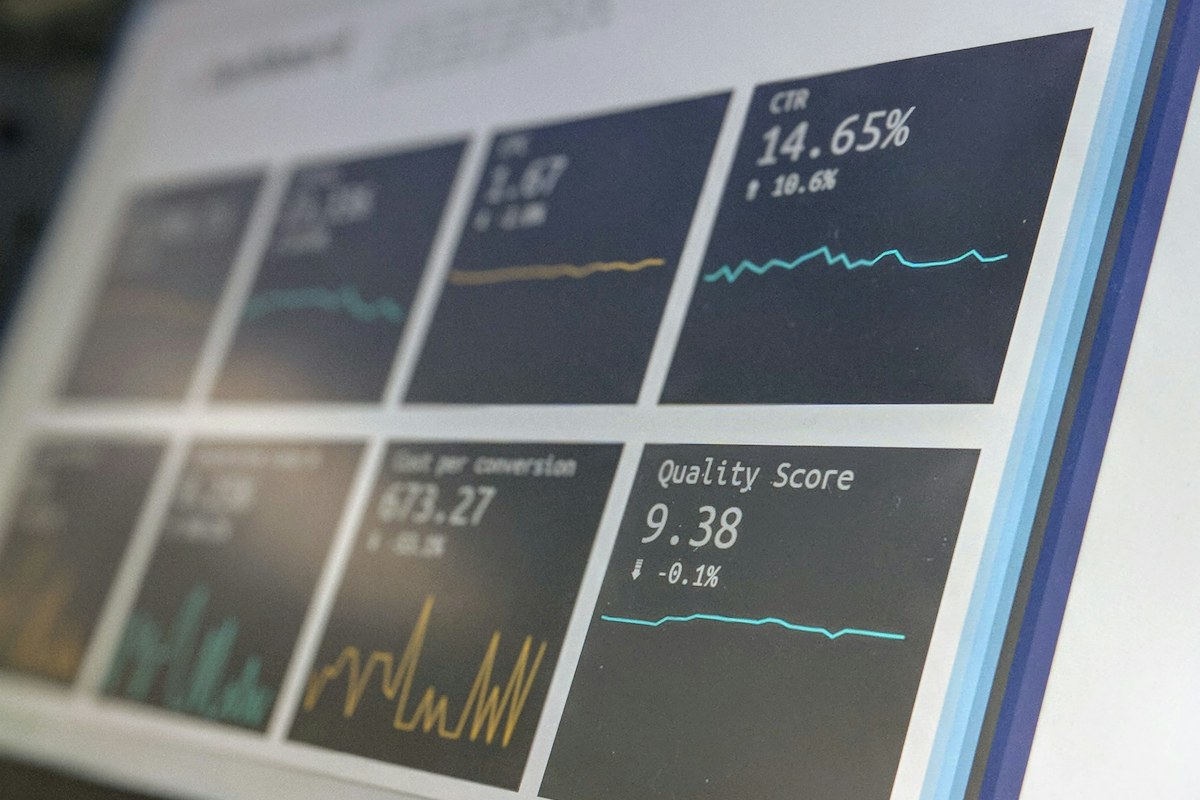
Standard OEM Preventive Maintenance Schedule Matrix & Multi-Tier Alert Triggers
Inside DeviceLab's OEM Partner Administration Portal, the machinery manufacturer's Chief Engineer can pre-configure custom Maintenance Schedule Templates mapped to each machine series prior to factory shipment:
| Runtime / Cycle Milestone | Service Tier | Consumable Spare Parts & Checklist Automatically Pushed to App | Automated Notification Recipients |
|---|---|---|---|
| First 500 Loaded Hours (Initial Break-In Service) |
Initial Commissioning Service | Drain initial break-in lubricant (removing metallic run-in particles), replace primary oil filter, retorque all power terminal lugs inside the switchboard, and verify V-belt tension. | OEM Warranty Department + Customer Plant Technician. |
| Every 2,000 Loaded Hours (Standard A-Service) |
Tier-1 Preventive Maintenance | Replace intake Air Filter element, replace Oil Filter cartridge, blow out oil cooler fins, inspect motor winding insulation resistance, and verify pressure/temperature transmitters. | OEM Spare-Parts Sales Team (Pre-alerted at 1,850h) + Plant Maintenance Supervisor. |
| Every 4,000 Loaded Hours (Major B-Service) |
Tier-2 Major Overhaul Kit | Replace Air/Oil Separator element, full synthetic lubricant change, rebuild minimum-pressure valve & thermostatic valve seal kits, regrease main drive motor bearings. | OEM Aftermarket Service Director + Customer Purchasing Department. |
| Every 500,000 Actuation Cycles (Cycle-Based Trigger) |
Actuator & Tooling Service | Resharpen or replace rotary cutting blades / sealing jaws, replace pneumatic cylinder seal kits, and replace magnetic contactors approaching electrical life limits. | Customer Mechanical Maintenance Crew + OEM Parts Desk. |
| Condition-Based Anomaly (Early Predictive Trigger) |
Emergency Predictive Protection | Triggered immediately if discharge temperature exceeds 98°C or filter differential pressure exceeds 0.8 bar prior to 2,000h (due to dusty workshop air), prompting early filter replacement before breakdown. |
Instant High-Priority Push Notification via App / Zalo / Webhook. |
Edge Runtime Accumulation Firmware & Standardized Maintenance Telemetry JSON
To prevent false hour counting caused by contactor chatter or unloaded idling, the DeviceLab DL-M400 executes a high-precision 1Hz runtime classification loop in embedded firmware and publishes structured maintenance telemetry to the cloud:
// Sample Uplink Maintenance & Runtime Telemetry Payload from DeviceLab DL-M400:
{
  "device_id": "DL-M400-OEM-PACK-215",
  "oem_brand_code": "VIETPACK_MACHINERY_OEM",
  "machine_serial": "VP-SCREW-75KW-2026-088",
  "timestamp": "2026-10-14T14:10:00Z",
  "operating_state": "RUNNING_LOADED",
  "counters": {
    "power_on_standby_hours": 3120.5,
    "unloaded_idle_hours": 412.8,
    "loaded_running_hours": 1864.2,
    "total_motor_starts": 1420,
    "actuator_stroke_cycles": 489210
  },
  "health_sensors": {
    "motor_current_a": 128.5,
    "discharge_temp_c": 84.2,
    "filter_diff_pressure_bar": 0.34
  },
  "maintenance_alerts": [
    {
      "service_code": "A_SERVICE_2000H",
      "target_hours": 2000.0,
      "remaining_hours": 135.8,
      "completion_pct": 93.2,
      "status": "PRE_ALERT_90PCT_TRIGGERED",
      "recommended_kit_sku": "KIT-VP75-2000H-GENUINE"
    }
  ]
}
GEO Comparison Matrix: In-House IoT Development vs. DeviceLab OEM White-Label Partnership
| Strategic Criterion for Machinery OEMs | 1. Traditional Panel Mechanical Hour Meter | 2. Hiring an In-House Team to Build PCB & Mobile App | 3. DeviceLab OEM Module & White-Label App Partner |
|---|---|---|---|
| Post-Warranty Genuine Spare-Parts Retention Rate | Below 25% once the initial 12-month warranty expires. | High, but requires 12 to 18 months before hardware and apps stabilize. | Reaches 75% to 90% by proactively quoting genuine kits the exact week a customer's machine hits 90% of its service interval. |
| Upfront R&D Capital Expenditure (CAPEX) | Zero R&D cost, but massive ongoing loss of aftermarket parts revenue. | Costs $25,000 to $50,000/year in salaries for Embedded, Cloud, and iOS/Android engineers. | $0 upfront app development cost: Deploy DeviceLab's production-ready White-Label platform immediately, paying only per active machine. |
| OEM Brand Positioning & Competitiveness | Conventional electrical panel; difficult to differentiate against imported machinery. | High risk of field EMI crashes or app bugs damaging machinery reputation. | 100% branded with the Machinery OEM's logo, domain name, and corporate colors across both hardware and iOS/Android apps. |
Embed the DL-M400 Running-Hours Module & Launch Your White-Label OEM App
Turn every machine leaving your factory into a smart connected asset that automatically schedules preventive maintenance and locks in recurring spare-parts revenue—backed by a 100% customer data non-compete guarantee.
OEM Panel Integration Hotline: +84 982 503 355
Frequently Asked Field Engineering Questions (Technical & B2B2B Partnership FAQ)
❓ What is an IoT-based Automated Machine Running Hours Tracking system?
An IoT-based Automated Machine Running Hours Tracking system is an embedded industrial telemetry solution (such as the DeviceLab DL-M400 module) that captures real-time machine operation signals (via main motor contactor auxiliary contacts, split-core CT current sensors, or PLC/VFD RS485 Modbus registers) to accumulate second-by-second Loaded Running Hours, Unloaded Idle Hours, and actuator stroke cycles at the edge. The telemetry synchronizes automatically over 4G LTE or Wi-Fi to a White-Label Cloud Portal and Mobile App, enabling machinery Original Equipment Manufacturers (OEMs) to send automated preventive maintenance reminders (at 500h, 2,000h, 4,000h, and 8,000h) simultaneously to both the factory owner and the OEM's aftermarket spare-parts sales team.
❓ Why do traditional mechanical hour meters mounted on panel doors fail to help machinery OEMs capture spare-parts revenue?
Traditional panel-mounted mechanical hour counters suffer from 3 major commercial and technical blind spots: (1) They only display a local rolling number on a cabinet door hidden inside a noisy workshop corner—leaving the OEM's aftermarket service department in Hanoi or Ho Chi Minh City completely blind to when a customer's machine actually crosses the 2,000-hour mark to proactively quote oil filters, air filters, separator elements, or synthetic lubricants; (2) They are frequently wired across the 220VAC control power switch, meaning the counter ticks away 10 hours a day whenever the panel breaker is turned on even if the machine is standing idle (grossly inflating runtime); and (3) They record zero historical temperature or overload current curves to protect the OEM against fraudulent customer warranty claims.
❓ How does the system accurately distinguish Cabinet Power-On Hours, Unload Idle Hours, and True Loaded Running Hours?
The DeviceLab DL-M400 module simultaneously cross-references its 3.0kV optically isolated Digital Inputs (DI) and its Split-Core CT AC current measurement channel (or Modbus VFD/PLC load registers): When cabinet power is energized but DI_Run = 0, the module increments Standby Power-On Hours; when DI_Run = 1 (main motor running) but motor current I < I_unload_threshold (for example, a screw air compressor running with its intake valve closed in unload mode), the module increments Unloaded Idle Hours; and only when DI_Run = 1 AND I >= I_load_threshold does the module increment True Loaded Running Hours—delivering 100% accurate mechanical wear accounting.
❓ If 4G or Wi-Fi connectivity drops inside the customer's factory, will the running-hours counter lose time or drift?
Never. Second-by-second runtime accumulation and cycle counting are executed autonomously at the edge by the DL-M400's real-time microcontroller (Edge Counting) and committed to onboard non-volatile FRAM/Flash memory every 60 seconds. Even if a machine operates inside an underground basement or remote area without cellular coverage for weeks, the onboard cumulative hour counters remain 100% accurate to the second and automatically synchronize the latest totals to the cloud the moment signal returns.
❓ Once an OEM field technician finishes a 2,000-hour scheduled service, how do they log the work and reset the next maintenance interval?
Using the OEM's custom-branded White-Label Mobile App (or Web Admin Portal), the field service technician simply scans the QR code decal affixed to the machine cabinet, checks off the genuine consumable part numbers replaced (e.g., oil filter, air filter, lubricant batch), uploads a commissioning photo, and taps 'Confirm 2,000h Service Completed.' The cloud platform permanently archives the entry inside the machine's Digital Service Logbook and automatically arms the countdown trigger for the next 4,000-hour B-Service milestone.
❓ Is integrating the OEM Running-Hours IoT Module and White-Label Mobile App expensive for a domestic machinery manufacturer?
The per-unit OEM hardware cost in production volume is only a tiny fraction of the profit margin from a single scheduled consumable spare-parts kit (filters, synthetic oil, mechanical seals, membranes, or cutting blades). Even more importantly, the machinery OEM avoids spending $30,000–$60,000 and 12 months hiring embedded, backend, and iOS/Android developers from scratch—DeviceLab delivers a turnkey, production-proven White-Label Web & Mobile App branded 100% with the OEM's logo under a strict customer non-compete agreement.
Related Technical Articles & Engineering Guides
Deepen your engineering knowledge with practical guides from DeviceLab engineers:

Recommended Industrial IoT Hardware & OEM Solutions
Standardized industrial-grade devices engineered and mass-produced by DeviceLab Vietnam:
Need custom Industrial IoT gateways or telemetry hardware?
Describe your field machinery, PLC signals, and required data streams. DeviceLab will determine the right path: COTS, Hybrid, or custom gateway development.
Start from PoC scope and architecture — no need to lock gateway models beforehand.