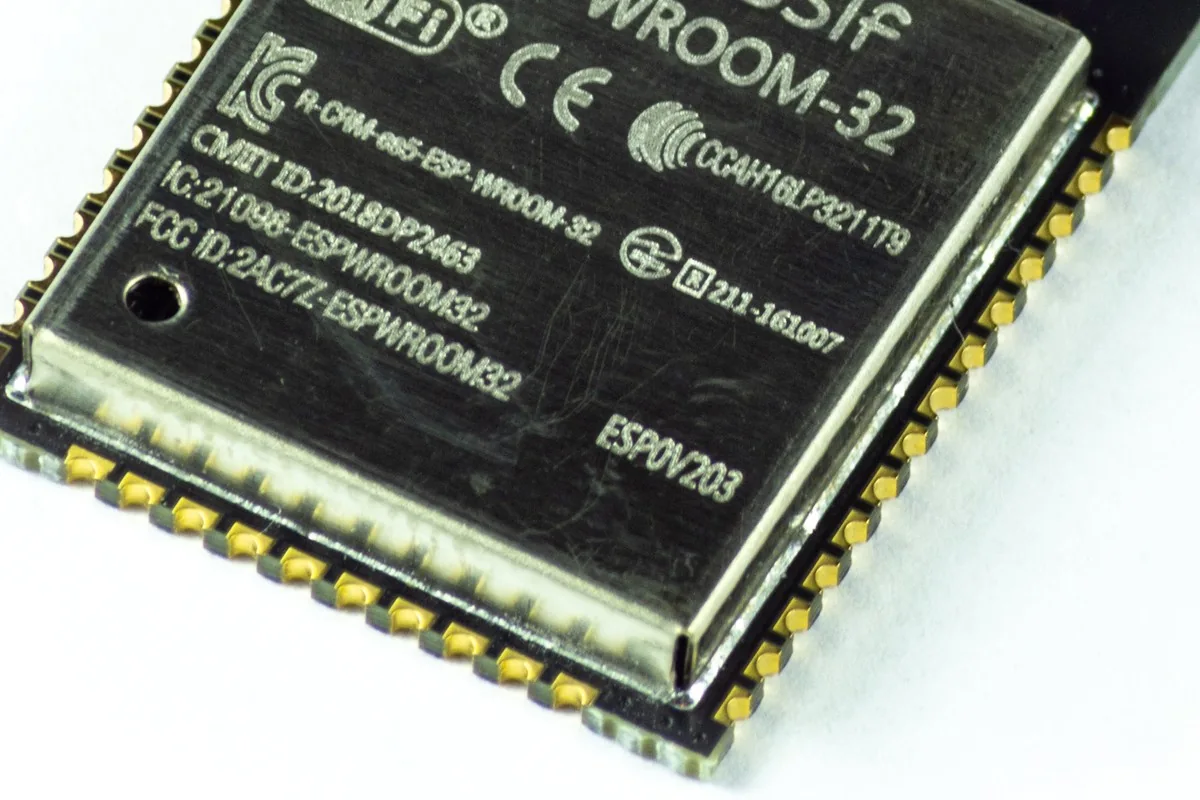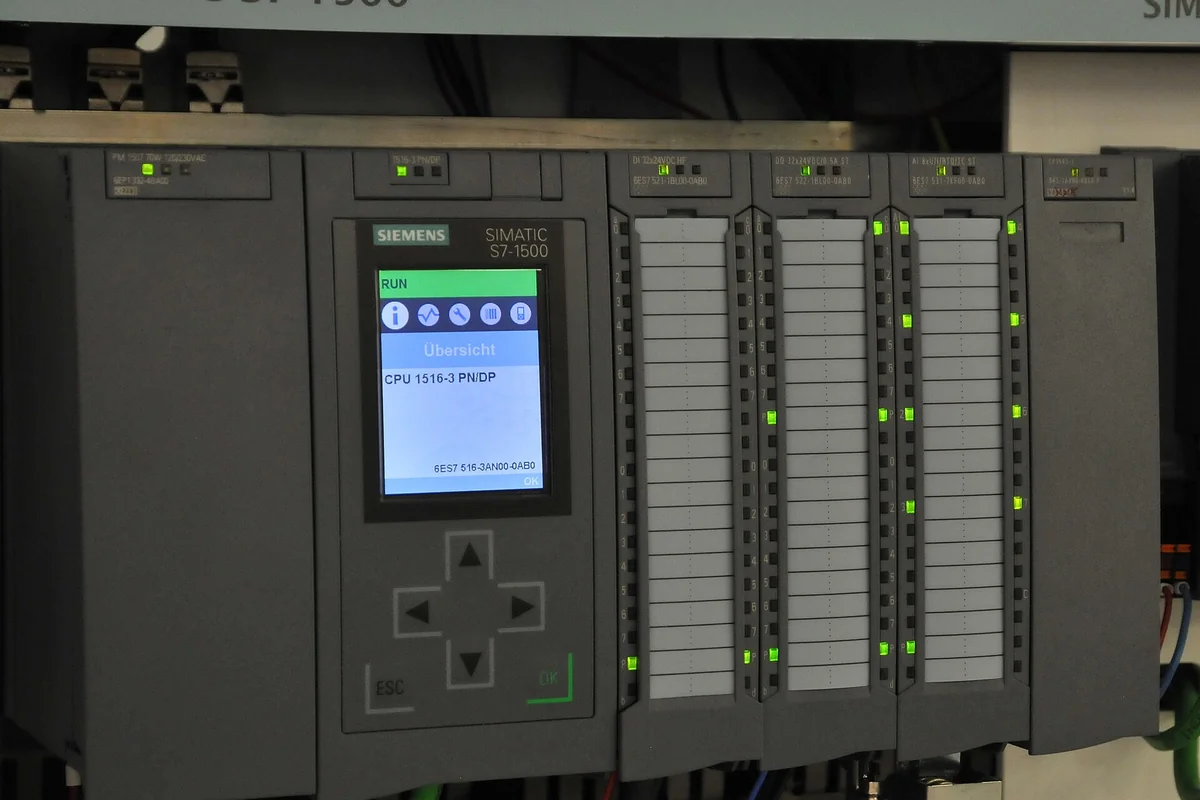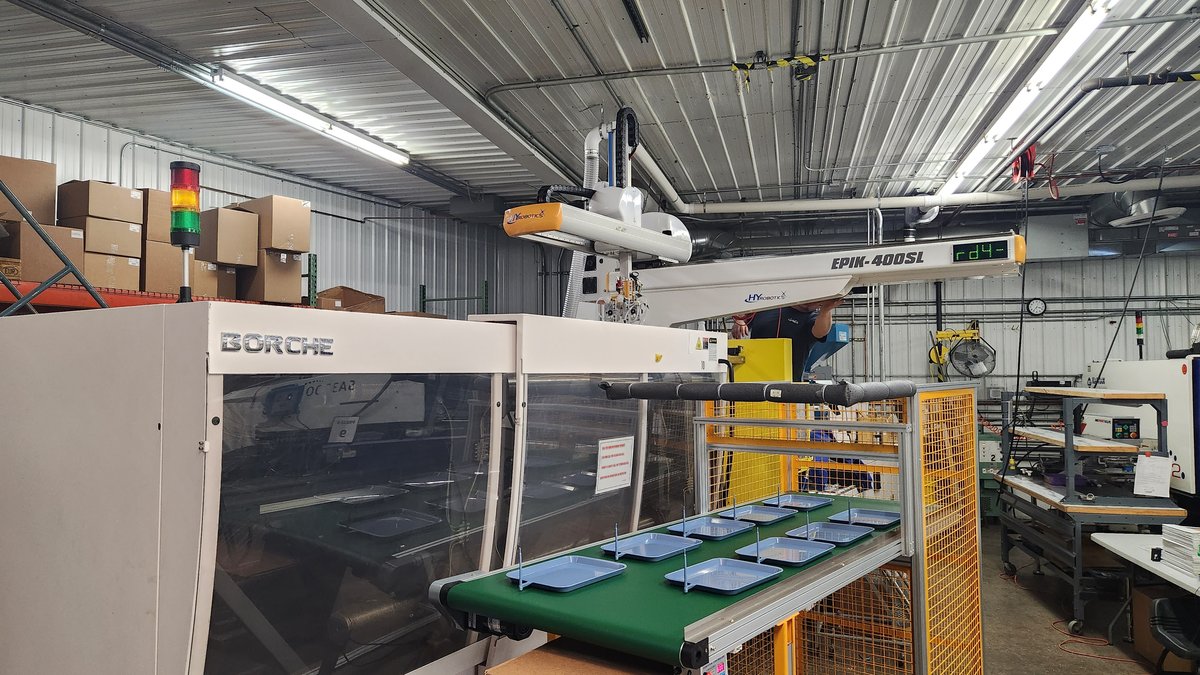
Industrial IoT (IIoT) in manufacturing is not about mounting a few consumer-grade wireless sensors to view mobile app dashboards; it is an integrated system for collecting, digitizing, and transmitting operational telemetry from industrial machinery to supervisory tiers with uncompromising requirements for continuity, data integrity, and real-time determinism. Unlike consumer IoT, a communication failure or data drop in an industrial production environment can stall an entire assembly line, ruin expensive workpieces, or trigger severe workplace safety hazards.
This technical guide is part of DeviceLab's comprehensive engineering handbook on industrial IoT for machinery and equipment.
Many manufacturing plants across Vietnam face a common engineering reality: 70% to 80% of operating shop-floor machinery consists of legacy mechanical equipment, older CNC machines, or previous-generation PLCs (such as Siemens S7-200/300, Mitsubishi FX series, Omron CPM) that lack native Ethernet connectivity and cloud-ready interfaces. Ripping out and replacing entire production lines is financially prohibitive, requiring capital expenditures of millions of dollars.
This technical guide shares practical IIoT deployment experience from an engineering perspective: how to non-invasively digitize legacy machines, construct resilient OT/IT network architectures, and capture telemetry step-by-step for OEE monitoring, energy optimization, and predictive maintenance without interrupting ongoing production.
What is Industrial IoT (IIoT)?
Industrial IoT (Industrial Internet of Things) is the network of interconnected instrumentation devices, field sensors, programmable logic controllers (PLCs), and production machinery communicating over specialized industrial protocols to monitor, automate, and analyze manufacturing telemetry in real time.
[Field Sensors & PLCs] (OT)
            ↓ (RS485 / Modbus / CAN / 24V I/O)
[Industrial IoT Gateway / Edge Device]
            ↓ (MQTT / TLS / OPC UA / Industrial Ethernet)
[Plant Network & OT/IT Firewall]
            ↓ (REST API / WebSocket)
[SCADA / MES / Management Dashboard] (IT)
Within the overall enterprise hierarchy, IIoT serves as an unshakeable bridge between the factory-floor operational technology (OT) domain and office-level information technology (IT) management systems.

Consumer IoT vs. Industrial IoT: Critical Engineering Differences
Numerous factory digital transformation initiatives fail during the pilot stage because implementation teams apply consumer smart-home concepts, consumer chips, and cloud-first mentalities to demanding factory floor environments.
| Evaluation Criteria | Consumer IoT (Residential / Smart Home) | Industrial IoT (Manufacturing / Factory Automation) |
|---|---|---|
| Operating Environment | Indoors, climate-controlled 20–35°C, clean air | Metallic dust, oil mist, high humidity, -20°C to +70°C, heavy mechanical shock and vibration |
| Electromagnetic Immunity (EMC) | Low, connected to stable residential AC mains | Extremely harsh due to Variable Frequency Drives (VFDs), high-power inductive motors, and relay switching surges |
| Reliability & Uptime | Occasional device freezes and manual reboots tolerated | Strict 99.99% availability (24/7/365), autonomous hardware recovery via multi-stage Hardware Watchdog |
| Communication Protocols | Wi-Fi, Zigbee, BLE, consumer HTTP JSON | Modbus RTU/TCP, Profinet, EtherCAT, OPC UA, CAN bus |
| Product Lifecycle Expectancy | 2 to 3 years (rapid consumer obsolescence) | 7 to 10+ years with long-term guaranteed component availability |
| Failure Impact | Minor user inconvenience | Halted production lines, millions in scrap, severe safety and compliance risks |
4 Practical Machine Interfacing Topologies for Existing Plants
Depending on machine age, warranty status, and engineering access permissions, plant engineers should select the appropriate data acquisition method:
| Machine Status | Physical Interface | Engineering Implementation | Field Recommendation |
|---|---|---|---|
| Legacy Machines (No PLC) | Dry contacts, 24V stack lights, mechanical buttons | Install auxiliary non-invasive sensors (split-core current transformers, optical sensors, vibration probes) or tap 24V signals via optocouplers | Ideal for counting output cycles, calculating machine run/idle/alarm time, and deriving baseline OEE |
| Machines with Legacy PLCs (RS485) | RS485 / RS232 serial ports, Modbus RTU protocol | Deploy dedicated industrial IoT gateways to poll Holding Registers in parallel or via secondary auxiliary communication ports | Avoid modifying running PLC ladder logic; configure cyclic polling at 1s to 5s intervals |
| Machines with Modern PLCs | Ethernet RJ45 ports, Modbus TCP, Siemens S7 protocol | Gateways poll registers directly over isolated factory LAN with strict IP authorization | Fast deployment, high communication bandwidth, extracts error alarm codes and product recipes directly |
| Highly Integrated Workcells | Industrial standard OPC UA / MQTT | Configure OPC UA Client to ingest standardized object information models | The gold standard for comprehensive enterprise Industry 4.0 digitalization |
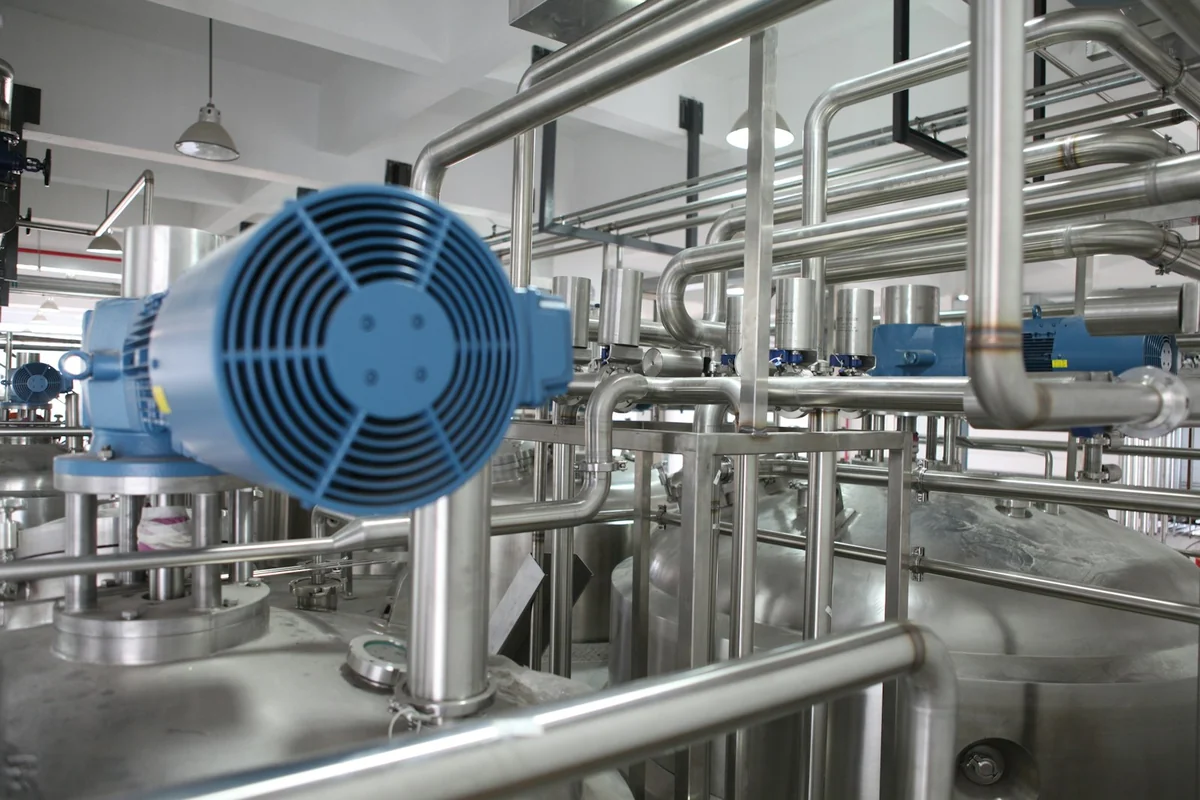
Standard 4-Tier Industrial IoT Network Architecture
A resilient plant architecture segregates operational technology (OT) from corporate IT networks across four distinct layers to ensure network security and maximum availability:
Tier 1: Field Level (Sensors & Actuators)
Encompasses pressure transmitters, temperature RTDs, split-core current transformers (CTs), motor vibration sensors, and raw machine digital I/O. Operating directly in hostile physical environments, these components require rugged mechanical construction and IP65/IP67 ingress protection.
Tier 2: Edge & Gateway Level
This is where industrial IoT gateways operate, performing mission-critical edge tasks: * Protocol conversion from physical field buses (Modbus, CAN, Profibus) to network standards (MQTT, OPC UA). * Edge filtering and anomaly detection: stripping noise, transmitting only deadband changes or threshold alarms to minimize network bandwidth consumption. * Store-and-Forward data buffering: logging telemetry to onboard non-volatile Flash during network blackouts and automatically backfilling servers upon reconnection.
Tier 3: Network & OT/IT Security Layer
Enforces strict physical and logical isolation between factory machine control networks (OT) and corporate office networks (IT) utilizing industrial hardware firewalls and Layer 2/3 managed switches with VLAN segmentation. External Internet traffic is never permitted direct routing into the PLC subnet.
Tier 4: Application & MES/Cloud Tier
On-premise central servers or cloud platforms ingest incoming MQTT/REST data streams, persist records into high-performance time-series databases (such as InfluxDB, TimescaleDB), and render real-time supervisory dashboards for plant management.

Practical IIoT Implementation Roadmap: From PoC to Plant-Wide Scale
Field experience at DeviceLab demonstrates that factories should never attempt overnight plant-wide deployment. A structured 3-phase progression maximizes return on investment while mitigating technical risks:
- Field Survey & Proof of Concept (PoC) on 1–3 Bottleneck Machines:
- Identify the primary production bottleneck machines where downtime causes the greatest economic loss.
- Install stand-alone gateways, clamp split-core CTs, and log product counts for 2 to 4 weeks.
- Validate data communication reliability and benchmark automated counts against manual operator tally sheets.
- Standardize Network Infrastructure & Core Software:
- Deploy shielded industrial Ethernet cabling (Cat6e STP) or dedicated industrial-grade Wi-Fi access points.
- Build supervisory dashboards tracking real-time OEE, historical downtime categorization, and energy consumption.
- Plant-Wide Rollout & MES/ERP Integration:
- Replicate telemetry hardware across all factory production lines and utility facilities.
- Interface telemetry data directly into enterprise resource planning (ERP) systems to automate production work orders and inventory forecasting.
DeviceLab Industrial IoT Engineering Capabilities
DeviceLab does not resell generic consumer modules in plastic enclosures. We are an OEM/ODM hardware R&D engineering firm specializing in bespoke industrial hardware: * Engineering and manufacturing rugged industrial IoT gateways equipped with surge protection, 2.5kVrms optical isolation, 9–36VDC wide input power, and standard DIN-rail enclosures. * Developing custom firmware to interface with rare legacy protocols and undocumented CNC machines. * Delivering end-to-end solutions spanning custom edge hardware, embedded firmware, industrial plant networking, and standard software APIs for system integrators (SI) and factory owners.
Frequently Asked Questions (FAQ)
1. Does deploying IIoT require shutting down factory production lines?
No. By utilizing non-invasive signal acquisition methods (split-core current transformers clamped around exterior power cables, standalone optical sensors) or connecting to secondary communication ports on existing PLCs, all wiring and calibration work occurs during normal production without powering down machinery.
2. Will factory production data be exposed to the public Internet?
Complete security is guaranteed. IIoT architectures can be deployed 100% on-premise entirely within the factory's private local area network (LAN), requiring zero outbound Internet connection. When remote monitoring is requested, all communication is secured via TLS 1.3 encryption over dedicated IPsec/WireGuard VPN tunnels.
3. What information does a factory need to prepare before installing IIoT?
You only need to prepare: a list of machines requiring monitoring, PLC brand and model numbers (if applicable), target measurement parameters (unit output, electrical energy, pneumatic pressure, operating temperature), and the approximate distance from the machine electrical cabinet to the nearest network drop.
4. What is the typical investment for an initial IIoT pilot system?
A turnkey Proof-of-Concept (PoC) pilot package covering 1 to 3 critical machines generally ranges in modest engineering costs, covering industrial edge gateways, precision sensors, on-site commissioning, and basic OEE dashboard configuration.
5. Can IIoT equipment withstand hot, humid, and dirty factory environments?
All hardware engineered by DeviceLab utilizes genuine industrial-grade components rated for continuous operation from -20°C to +70°C, housed in heavy-duty anodized aluminum enclosures, with circuit boards treated with conformal coating to prevent moisture, dust, and corrosive chemical degradation.
6. Will telemetry data be lost during Internet outages or LAN cable breaks?
No. Industrial gateways incorporate local non-volatile Flash storage buffers. During communication disruptions, telemetry records are safely preserved onboard with precise RTC timestamps and automatically backfilled to central servers the moment network connectivity recovers.
7. Does DeviceLab build factory supervisory management software?
DeviceLab focuses specialized engineering expertise on hardware R&D, edge gateways, and OT signal conditioning. We deliver standardized, open APIs (MQTT broker, RESTful JSON endpoints, Webhooks) allowing your internal software team or third-party software partners to display operational data on any preferred interface.
Launch Your Factory Industrial IoT Initiative
If your manufacturing facility requires reliable machine data acquisition, energy monitoring, or production line digitization:
👉 Submit Technical Requirements & Schedule an On-Site Survey
Or consult directly with DeviceLab's Lead Systems Engineer via Hotline/WhatsApp/Zalo: 0982.503.355 to evaluate the optimal technical architecture for your plant's existing machinery.