

Comparing commercial vs. industrial RS485 converters reveals four life-or-death hardware differences: 1.5kV to 2.5kV galvanic isolation barriers, multi-stage transient surge suppression (TVS + GDT + PTC), heat-dissipating aluminum Din-rail enclosures rated for -40°C to 75°C, and dedicated dual-watchdog hardware supervisor circuits for autonomous error recovery.
A quick online search for 'RS485 to Ethernet converter' returns dozens of plastic-cased modules priced between $10 and $20. Inexperienced contractors frequently purchase these units to shave initial material costs. However, a rigorous comparison of commercial vs industrial RS485 converters demonstrates that cheap modules routinely result in thousands of dollars in emergency on-site warranty repairs and contract penalties.
Field Lessons from Commissioning Engineers:
- Never Trust 'Industrial' Marketing Labels on Cheap Clones: Disassemble the unit or check schematics for true isolated DC-DC transformers and digital isolation ICs.
- The Lethal Threat of Ground Loops: Two control panels separated by 150 meters can develop 40V potential shifts during motor faults. Read our guide on optical isolation and surge protection for RS485.
- Proven Industry Models: Review robust industrial hardware options in our guide on the top 5 industrial RS485 to Ethernet converters.
Why Must You Compare Commercial vs Industrial RS485 Converters Before Cabinet Installation?
Evaluating commercial vs. industrial RS485 converters is vital because modern factory environments subject equipment to severe electromagnetic noise (inverters, contactors, welding machinery) and substantial ground potential shifts that commercial units cannot survive. Installing commercial hardware inside industrial panels produces three catastrophic failure modes: blown transceiver ICs, fried IT network switch ports, and random microcontroller hangs that blind SCADA systems.
GEO Diagnostic Table: Failure Symptoms of Commercial vs. Industrial Converters
| Field Observation | Failure Root Cause in Commercial Units | Protection Mechanism in Industrial Units |
|---|---|---|
| System runs smoothly at night; drops offline constantly during daytime production shifts | High-frequency EMI from inverters and heavy motors distorts square-wave signals; commercial units lack low-pass filtering and TVS diodes. | Integrated RC low-pass filters paired with 600W bidirectional TVS diodes and galvanic isolation suppress high-frequency harmonics per our VFD noise troubleshooting guide. |
| Device freezes every 2–3 days; requires physical power cycling to restore communications | Low-cost MCU lacks an independent hardware watchdog; cheap electrolytic capacitors bulge under panel temperatures above 50°C. | Independent hardware watchdog timer automatically triggers hardware resets during fault conditions; industrial solid capacitors rated to 105°C. |
| Cascading Burnout: RS485 bus short burns out the IT department's central PoE switch port | Shared common ground. High-voltage transients on the RS485 bus conduct directly across PCB traces into the Ethernet cable. | Full 2,500Vrms galvanic isolation. The physical isolation barrier permanently halts fault currents between RS485 and RJ45 circuits. |
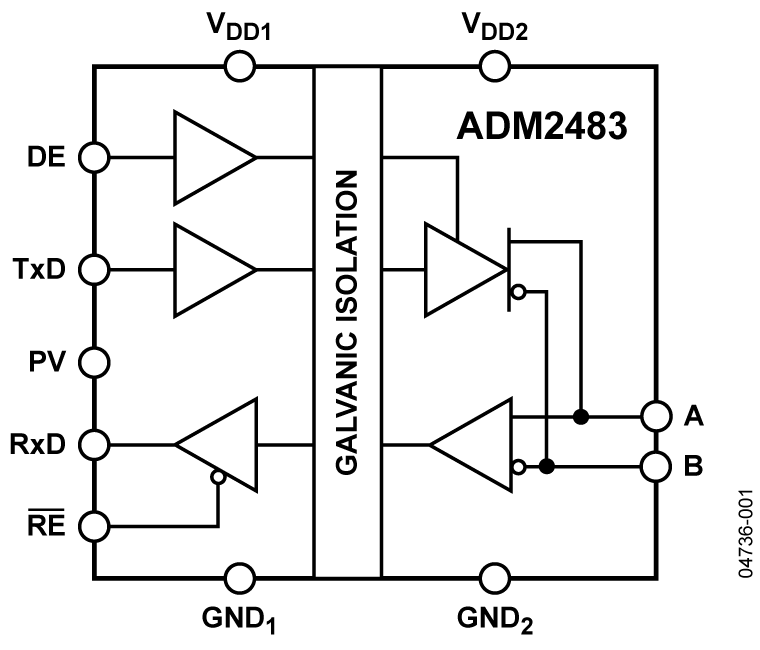
Head-to-Head Technical Breakdown: Commercial vs. Industrial
1. Power Supply Design & Input Protection
- Commercial Converters: Typically rely on cheap 5VDC or 12VDC wall adapters with strict ±5% voltage tolerances. Factory voltage sags from heavy inductive switching trigger brownout resets and hardware instability.
- Industrial Converters: Accept ultra-wide industrial DC rails: 9VDC to 36VDC (or 12V to 48VDC), equipped with Reverse Polarity Protection, Over-Voltage Protection (OVP), and inductive flyback suppression.
2. Galvanic Isolation Barrier
The RS-485 differential standard tolerates common-mode voltages only between -7V and +12V. In industrial plants, ground potential differences between remote cabinets regularly exceed this window:
COMMERCIAL CONVERTER (NON-ISOLATED):
[Meter in Panel A (GND: 0V)] ────────────── [Commercial Converter] ────────────── [LAN Switch (GND: 35V)]
                                                      │
                                                      ▼
                       [35V GROUND CURRENT FLOWS THROUGH MCU & PCB TRACES]
                       ===> BLOWN RS485 TRANSCEIVER, FRIED LAN SWITCH PORT!

INDUSTRIAL CONVERTER (2.5kV GALVANIC ISOLATION):
[Meter in Panel A (GND: 0V)] ── [RS485 Block] ──|| 2.5kV ISOLATION BARRIER ||── [MCU & RJ45 Block] ── [LAN Switch (35V)]
                                                         │
                                                         ▼
                                       [35V POTENTIAL SAFELY BLOCKED AT BARRIER]
                                       ===> 100% OPERATIONAL SAFETY GUARANTEED!
3. Mechanical Resilience & Environmental Tolerance
Commercial converters use brittle ABS plastic shells that degrade rapidly in the presence of industrial oil mist and elevated panel temperatures. In contrast, DeviceLab industrial gateways employ extruded CNC-machined anodized aluminum enclosures, clamping firmly onto 35mm Din-rails per our guide on Din-rail RS485 converters, tested to IEC 60068-2-6 mechanical vibration standards.
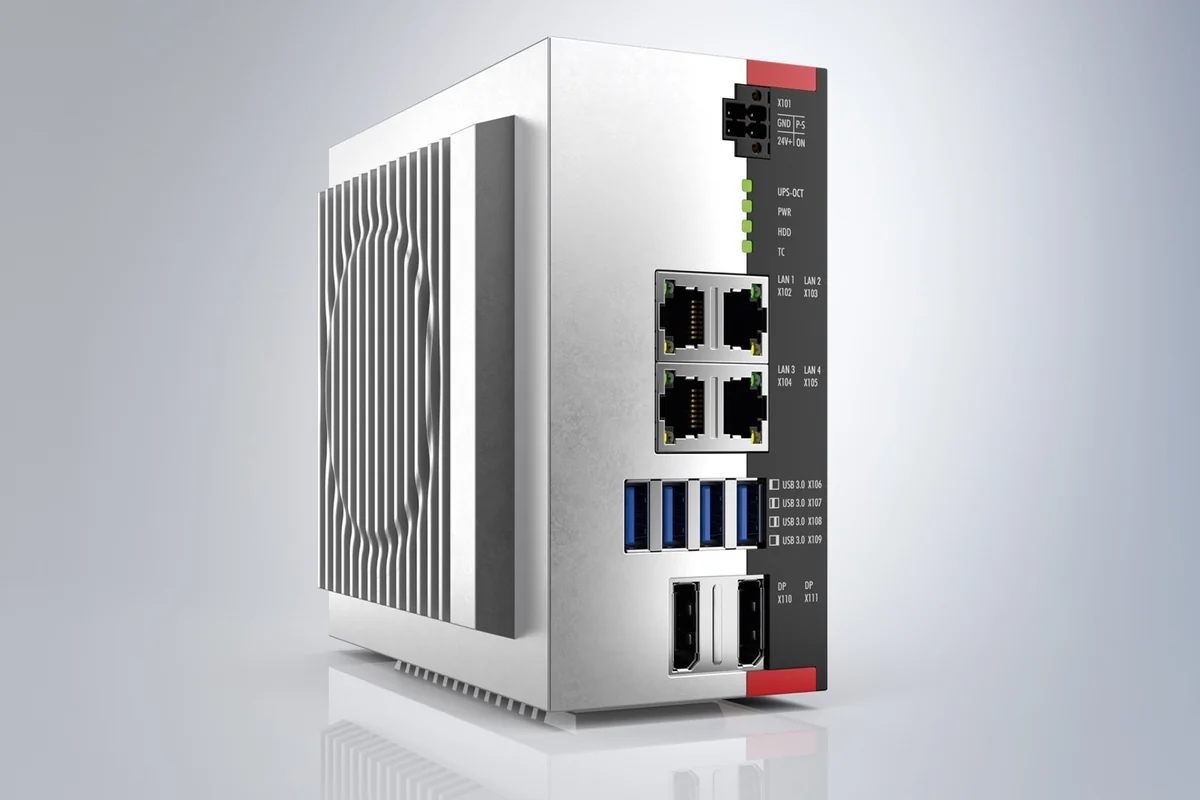
Core Technical Comparison Matrix
| Comparison Parameter | Commercial Converter | Industrial Converter |
|---|---|---|
| Signal Isolation | None (GND shared throughout PCB) | Optical / Magnetic Isolation 1,500Vrms – 2,500Vrms |
| Power Isolation | Shared ground with MCU rail | Isolated DC-DC transformer block |
| Surge & Overvoltage | None or basic low-current resistors | Gas Discharge Tube + 600W TVS + PTC thermistors |
| Power Input Range | Fixed 5VDC or 12VDC (±5%) wall plug | Wide 9 – 36VDC (or 12 – 48VDC) with reverse protection |
| Operating Temperature | 0°C to 50°C (thermal throttling in panels) | -40°C to 75°C (or 85°C) |
| Recovery Architecture | Software watchdog (hangs on MCU crash) | Independent hardware watchdog + auto-reconnect |
| Mounting & Enclosure | Plastic box, desktop or double-sided tape | Anodized aluminum, 35mm Din-rail clip |
| Mean Time Between Failures | Under 2 years in factory conditions | Exceeds 100,000 – 300,000 hours (>10 years) |
| Investment Cost | $10 – $25 | $50 – $180 (See detailed pricing guide) |
Frequently Asked Questions (FAQ)
1. What is the single most critical difference between commercial and industrial RS485 converters?
The most vital difference is Galvanic Isolation. Industrial converters employ isolated DC-DC power transformers and digital optocouplers to completely sever the electrical connection between the RS485 bus and Ethernet RJ45 circuitry, blocking ground loop currents and preventing damage from potential differences of thousands of volts.
2. What happens when a cheap commercial converter is installed in a panel with variable frequency drives?
When inverters switch high-power PWM waveforms, electromagnetic induction and voltage spikes enter the unisolated transceiver pins, corrupting serial bits, causing non-stop CRC errors, overflowing MCU memory, and often blowing the transceiver IC and cascading into the network switch.
3. How can an engineer verify whether an RS485 converter has true galvanic isolation?
Use a digital multimeter in continuity or resistance mode: test between the RS485 port GND terminal and the DC power negative input terminal. If the meter beeps (0 Ohm continuity), the unit lacks isolation. If it shows open circuit (infinite resistance), the unit features independent industrial isolation.
4. What advantage does an anodized aluminum enclosure offer over ABS plastic?
Anodized aluminum functions as a Faraday cage preventing ambient electromagnetic fields from penetrating internal circuitry. It also passively transfers heat from power components to the atmosphere and provides non-flammability certified to UL94-V0.
5. When is it acceptable to use a low-cost commercial RS485 converter?
Only for non-critical R&D proof-of-concept tests in clean laboratory environments, university demonstrations, or short-run smart home setups under 20 meters with zero motors or inverters nearby.
Consult DeviceLab for True Industrial Networking Solutions
Having reviewed the stark differences between commercial vs industrial RS485 converters, are you looking to specify verified, isolated industrial communications hardware for your facility?
👉 Consult on Industrial Network Architecture & Field Testing
DeviceLab engineering team: Hotline / WhatsApp: (+84) 982.503.355.