

What Is AIoT? The Convergence of Artificial Intelligence and Industrial IoT
AIoT (Artificial Intelligence of Things) is the evolutionary convergence of the Internet of Things (IoT) and Artificial Intelligence (AI) — where IoT hardware acts as the digital nervous system collecting telemetric data, and AI serves as the autonomous brain that analyzes, predicts, and executes real-time control decisions. While traditional IoT systems merely aggregate and display raw sensor readings on cloud dashboards, AIoT systems possess adaptive intelligence, identifying complex multidimensional anomalies and triggering actuators in milliseconds without continuous human supervision.
Over the past decade, billions of connected sensors were deployed worldwide, producing a torrential flood of industrial telemetry. However, more than 90% of collected data languishes unanalyzed in cloud data lakes. AIoT resolves this bottleneck by shifting computation to where data is born, transforming passive monitoring into proactive, autonomous operations.
This guide explores the multi-tier system architecture, edge vs. cloud workloads, and mission-critical enterprise use cases driving AIoT adoption.
Architectural Evolution: Traditional IoT vs. Intelligent AIoT
The shift from first-generation IoT to AIoT represents a fundamental paradigm shift in data processing and decision latency:
| System Dimension | Traditional IoT Architecture | Intelligent AIoT Architecture |
|---|---|---|
| Core Function | Passive data telemetry collection and remote visualization | Active autonomous perception, continuous pattern recognition, and edge control |
| Data Processing Location | Centralized Cloud data servers or on-premise SCADA servers | Hybrid: Distributed across Edge AI accelerators and Cloud platforms |
| Decision Latency | Seconds to hours (requires human operator verification) | Sub-second (<10ms at edge, <500ms at supervisory gateway) |
| Bandwidth Requirements | High: continuous streaming of raw, uncompressed telemetry | Ultra-low: transmits only compressed inference results, anomalies, and metadata |
| Offline Resilience | Fails completely when Internet or cellular connectivity drops | Fully autonomous local operation and safety shutdown capabilities |
| Value Creation | Reactive: alerts operators after a failure threshold is breached | Predictive: forecasts impending failures and automatically mitigates risk |
The 3-Tier AIoT Computing Architecture
An enterprise-grade AIoT infrastructure balances computational workload across three interconnected tiers:
+-------------------------------------------------------------------------------+
|                           TIER 3: ENTERPRISE CLOUD AI                         |
|   - Big Data Lake / Fleet Health Monitoring / Global Model Retraining         |
|   - Multi-tenant Dashboards & ERP Integration / Non-real-time Latency (>1s)   |
+-------------------------------------------------------------------------------+
                                    ^   |
         Encrypted Telemetry (MQTT) |   | OTA Model Updates / Policy Sync
                                    |   v
+-------------------------------------------------------------------------------+
|                       TIER 2: ON-PREMISE EDGE GATEWAY / NPU                   |
|   - Multi-channel Video Analytics / Complex Multi-sensor Fusion               |
|   - Local Data Caching & SCADA Gateway (<50ms Latency)                        |
+-------------------------------------------------------------------------------+
                                    ^   |
      Modbus / CAN / BLE / LoRaWAN  |   | Hardware Actuator Commands
                                    |   v
+-------------------------------------------------------------------------------+
|                   TIER 1: SENSOR-ADJACENT TINYML NODES                        |
|   - Low-power Microcontrollers (Cortex-M4/M33/M55) with DSP                   |
|   - Real-time Vibration FFT / Acoustic Anomaly Detection (<5ms Latency)       |
+-------------------------------------------------------------------------------+
Tier 1: Sensor-Adjacent Edge Intelligence (TinyML)
Microcontrollers (MCUs) running bare-metal C or FreeRTOS embedded directly inside the physical enclosure of pumps, valves, and energy meters. Using lightweight neural networks (<250KB RAM), these devices perform sub-millisecond filtering, Fourier analysis, and transient spike suppression without waking their primary radio.Tier 2: Supervisory Edge Gateways (Edge AI)
Industrial single-board computers (equipped with 2–16 TOPS NPUs) installed inside factory electrical cabinets. These gateways aggregate telemetry from dozens of Tier 1 nodes via isolated RS485 / Modbus or Ethernet, execute multi-camera visual inspection, and immediately actuate local PLC safety interlocks.Tier 3: Centralized Cloud Intelligence
High-performance cloud servers (AWS, Azure, Google Cloud) aggregating anonymized fleet metadata across multiple facilities. Cloud AI identifies macro degradation trends, conducts hyperparameter tuning, and orchestrates over-the-air (OTA firmware and model updates) back to edge hardware.
4 High-Impact Enterprise AIoT Deployments
1. Smart Campus & Building Automation
Integrating ambient environmental sensing with occupancy tracking and HVAC modulation. Rather than relying on simple calendar schedules, AIoT nodes continuously predict thermal load based on weather forecasts and dynamic room occupancy, slashing building HVAC energy expenditures by 25–40%.2. Industry 4.0 Smart Manufacturing
Synchronizing Industrial AI Cameras with acoustic and temperature sensors along assembly lines. If an injection molding press drifts out of thermal equilibrium, the AIoT gateway adjusts nozzle temperature and cycle timing before out-of-tolerance parts are fabricated.3. Smart Grid & Renewable Energy Storage
Distributed AIoT controllers deployed across solar arrays and battery energy storage systems (BESS). Embedded controllers analyze real-time grid frequency fluctuations and battery cell temperatures, dynamically balancing charging cycles and curtailing power to maximize cell lifespan.4. Cold Chain & Pharmaceutical Logistics
Cellular-connected AIoT trackers equipped with multi-axis accelerometers and precision temperature sensors. Instead of simply logging excursions, embedded algorithms detect handling abuse, predict refrigerant phase loss, and reroute consignments before expensive vaccines spoil.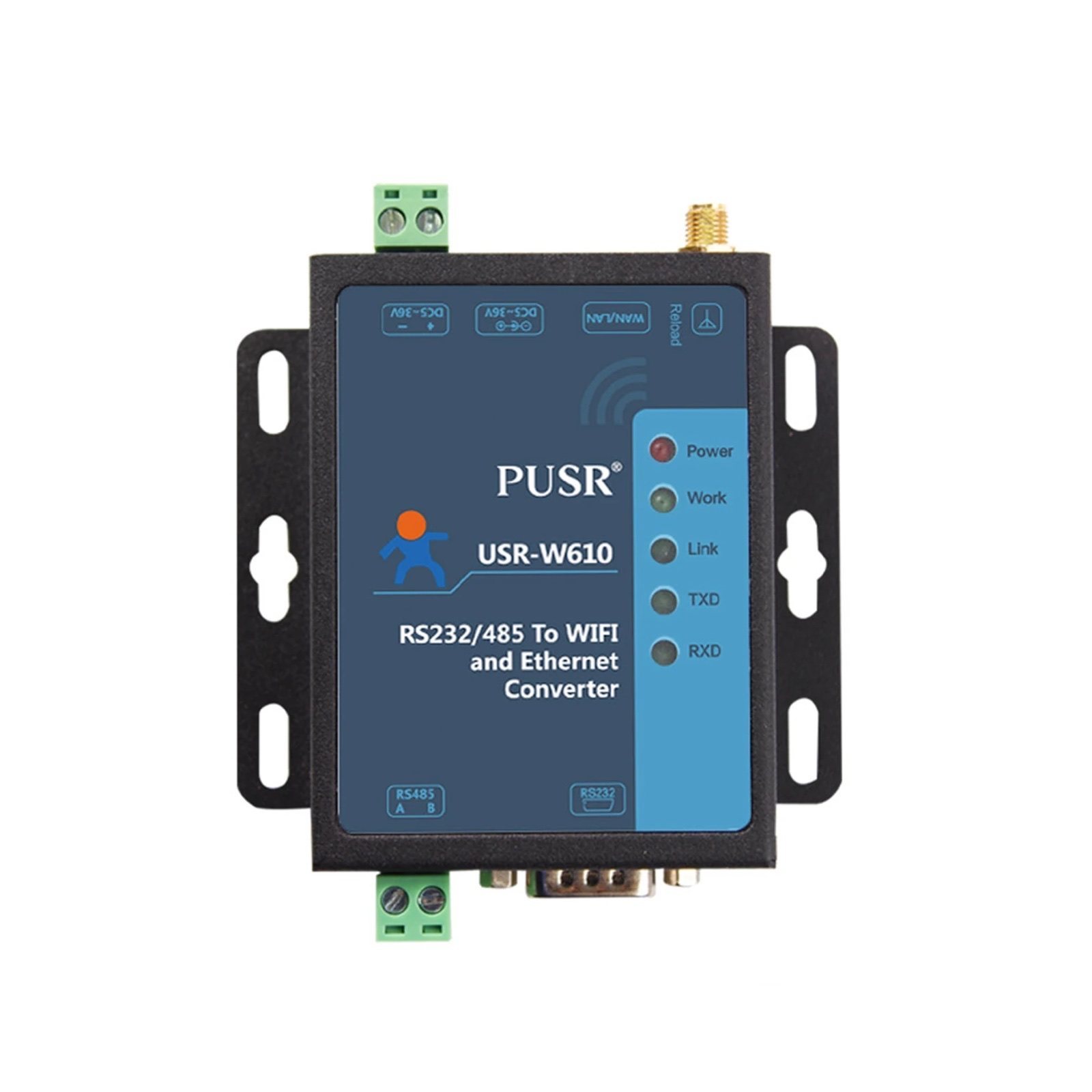
Turnkey AIoT Hardware Engineering at DeviceLab
Deploying reliable AIoT solutions requires specialized expertise spanning physical electronics design, sensor calibration, embedded systems programming, and machine learning quantization. DeviceLab provides complete lifecycle engineering:
- Custom Hardware Design: Multi-layer PCBA engineering incorporating low-noise analog sensor front-ends, edge NPUs, and industrial communication interfaces (RS485, CAN FD, Ethernet, Cellular LTE-M/NB-IoT).
- Embedded Neural Optimization: Quantizing complex PyTorch and TensorFlow models into optimized C++ kernels utilizing INT8 precision for ARM CMSIS-NN and dedicated NPU toolchains.
- Ruggedized Enclosures & Thermal Management: Designing IP67/IP68 sealed, passively cooled aluminum chassis capable of operating in extreme ambient temperatures (-40°C to +85°C).
- Secure Cloud Integration: Implementing end-to-end mutual TLS authentication, zero-trust device identities, and automated OTA firmware deployment architectures.
Build Your Enterprise AIoT Solution Today
Empower your industrial machines and commercial infrastructure with autonomous, real-time intelligence. Contact DeviceLab's senior engineering team to discuss feasibility, hardware architecture, and pilot prototyping.
- Explore custom device development: Hardware R&D Services
- Learn about edge machine learning: What Is Edge AI?
- Request an engineering consultation: Submit Project Requirements