
What Is Edge AI? Embedded Machine Learning, NPU Accelerators & Architecture
Edge AI (Edge Artificial Intelligence) is the deployment and execution of pre-trained Machine Learning (ML) and Deep Learning (DL) models directly on physical embedded hardware located at the point of data origination — without relying on cloud infrastructure for real-time inference. By combining dedicated silicon accelerators such as Neural Processing Units (NPUs), embedded GPUs, and vector-extended microcontrollers (DSP/SIMD), Edge AI devices can analyze high-resolution computer vision streams, vibration spectra, and acoustic waveforms in under 10 milliseconds.
In traditional cloud-centric IoT architectures, high-definition video feeds or high-frequency accelerometer streams (10–50 kHz) are continuously transmitted over cellular or Wi-Fi networks to central data centers. In industrial environments, this paradigm creates four critical bottlenecks: unacceptable latency (preventing emergency stop activation), massive bandwidth consumption (saturating plant networks), escalating cloud SaaS costs, and severe data security liabilities.
This technical guide analyzes the internal architecture of Edge AI hardware, neural network quantization pipelines, silicon accelerator selection, and practical industrial deployment frameworks.
Architectural Comparison: Cloud AI vs. Edge AI vs. TinyML
The AI deployment spectrum spans high-power cloud clusters down to micro-watt embedded controllers. Understanding their tradeoffs dictates hardware selection.
| Technical Metric | Centralized Cloud AI | Industrial Edge AI (Gateway/SBC) | TinyML (Microcontroller) |
|---|---|---|---|
| Hardware Platform | NVIDIA H100/A100 server clusters | Rockchip RK3588, NXP i.MX8M Plus, Jetson | ARM Cortex-M4/M33/M55, ESP32-S3 |
| Compute Capacity | 1,000+ TFLOPS (FP32/FP16) | 1.0 to 32 TOPS (INT8) | 0.01 to 0.5 GMACs (INT8) |
| Power Consumption | 300W – 10,000W+ per rack | 5W – 30W (Fanless convection) | 10mW – 500mW (Battery viable) |
| Inference Latency | 150ms – 2,000ms (network-dependent) | 5ms – 30ms (Deterministic local bus) | 1ms – 50ms (Deterministic register) |
| WAN Bandwidth Need | Continuous high-bandwidth uplink | Zero (telemetry metadata only) | Zero (infrequent state changes) |
| Primary Use Cases | Global model training, LLMs, historical big-data analytics | High-speed visual inspection, multi-stream CCTV, robotic guidance | Vibration anomaly detection, acoustic keyword spotting, predictive maintenance |
Inside Edge AI Silicon: Why NPUs Outperform Embedded CPUs
At the silicon level, deep neural networks (CNNs, Transformers, MLPs) consist predominantly of linear algebra computations: repeated Multiply-Accumulate (MAC) calculations:
$$Y = \sum_{i=1}^{n} (W_i \times X_i) + B$$
Where $W$ represents pre-trained synaptic weights, $X$ represents input activations (pixels, sensor values), and $B$ represents bias.
  Standard Embedded CPU (Sequential)             Dedicated NPU / Systolic Array (Parallel)
+-----------------------------------+       +-----------------------------------------------+
| Fetch -> Decode -> ALU -> Write   |       | Data Inputs (X0, X1, X2, ... Xn)              |
| [Executes 1 to 4 MACs per cycle]  |       |       |       |       |                       |
| High memory cache thrashing       |       |   [PE] - [PE] - [PE] - [PE] (Processing Elem) |
| Power: ~100-300 mW per GFLOPS     |       |   [PE] - [PE] - [PE] - [PE] (Weight Stationary)|
+-----------------------------------+       |   Thousands of MACs per single clock cycle    |
                                            |   Energy efficiency: >2-5 TOPS/Watt           |
                                            +-----------------------------------------------+
- CPUs (Central Processing Units): General-purpose execution engines with deep pipeline stages and complex out-of-order execution logic. Executing a 2D convolution requires massive instruction overhead and high cache miss penalties.
- GPUs (Graphics Processing Units): Highly parallel SIMD architectures capable of massive floating-point matrix math. However, embedded GPUs consume significant dynamic power (15–50W), requiring active fan cooling that is unacceptable in dusty factory environments.
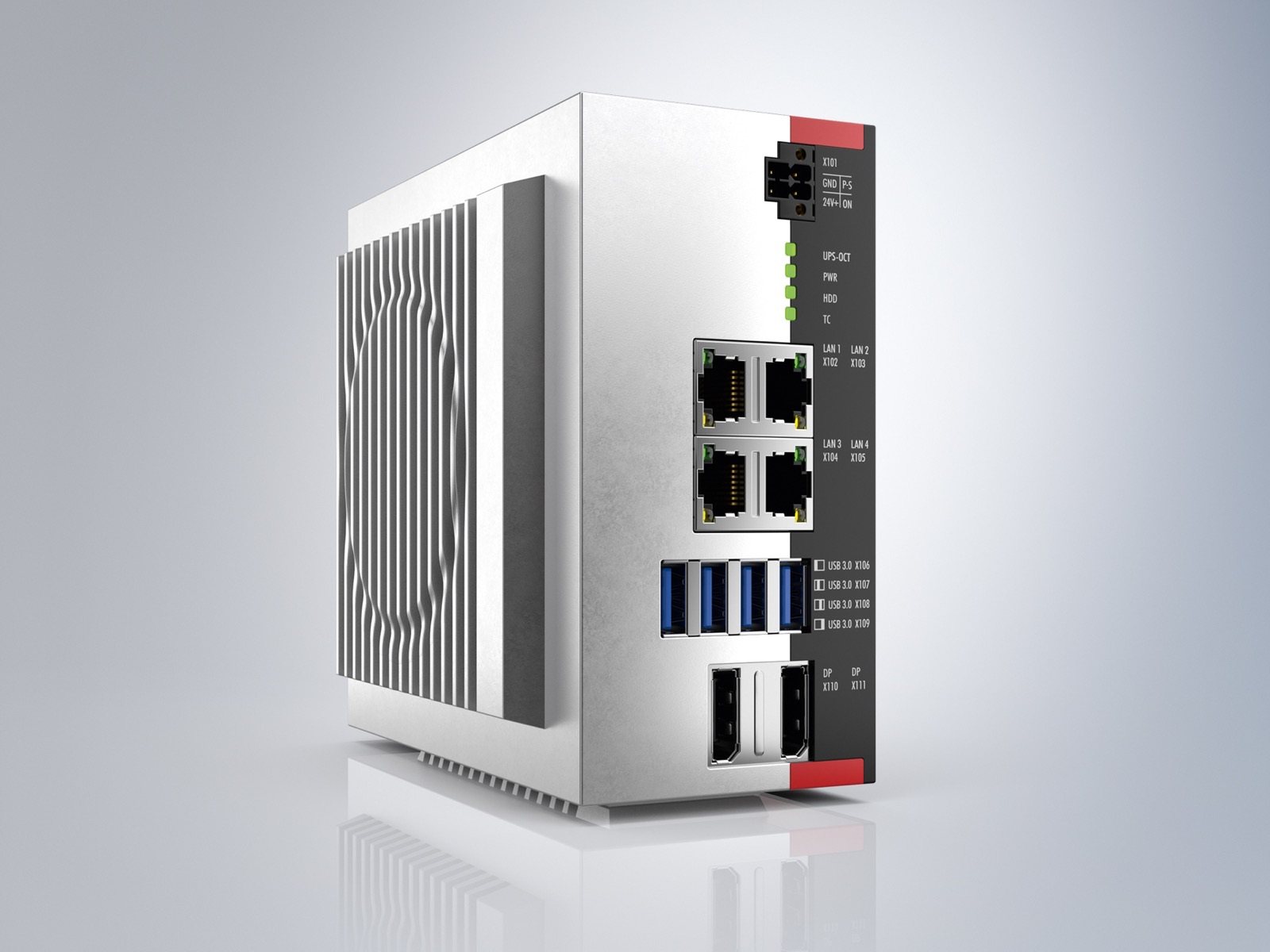
- NPUs (Neural Processing Units): Purpose-built silicon utilizing systolic arrays where data flows directly between neighboring processing elements without repeatedly accessing external LPDDR RAM. By freezing weights in local SRAM (Weight-Stationary architecture), NPUs achieve power efficiencies exceeding 3 to 6 TOPS/Watt, enabling fanless conduction cooling inside sealed IP67 enclosures.
The 4-Step Edge AI Optimization Pipeline
Standard deep learning models (PyTorch, TensorFlow) cannot be loaded directly onto embedded edge silicon without systematic quantization and compiler optimization:
Step 1: Model Pruning and Architecture Search
Redundant weights and non-critical neural pathways are pruned (structured pruning), removing 30–50% of parameters with negligible accuracy degradation. Lightweight backbones such as MobileNetV3, YOLOv8-Nano, or EfficientNet-Lite are prioritized.Step 2: INT8 Post-Training Quantization (PTQ)
Floating-point weights ($FP32$, 4 bytes per parameter) are quantized to signed 8-bit integers ($INT8$, 1 byte per parameter): $$q = \text{round}\left(\frac{r}{S}\right) + Z$$ Where $S$ is the scale factor and $Z$ is the zero-point offset. INT8 quantization reduces the model footprint by 75%, cuts DDR memory bandwidth pressure in half, and leverages hardware-accelerated integer tensor cores.Step 3: Graph Optimization & Operator Fusion
The compiler fuses consecutive layers (e.g., `Conv2D + BatchNorm + ReLU`) into a single hardware execution kernel. This eliminates unnecessary roundtrips to system RAM, maximizing local L1/L2 cache utilization.Step 4: Hardware-Specific Code Generation
The optimized graph is compiled into hardware-specific binaries: - For Rockchip NPUs: Compiled via RKNN-Toolkit2 - For NXP i.MX8: Compiled via eIQ / TIM-VX - For ARM Cortex-M: Compiled via CMSIS-NN / TensorFlow Lite for Microcontrollers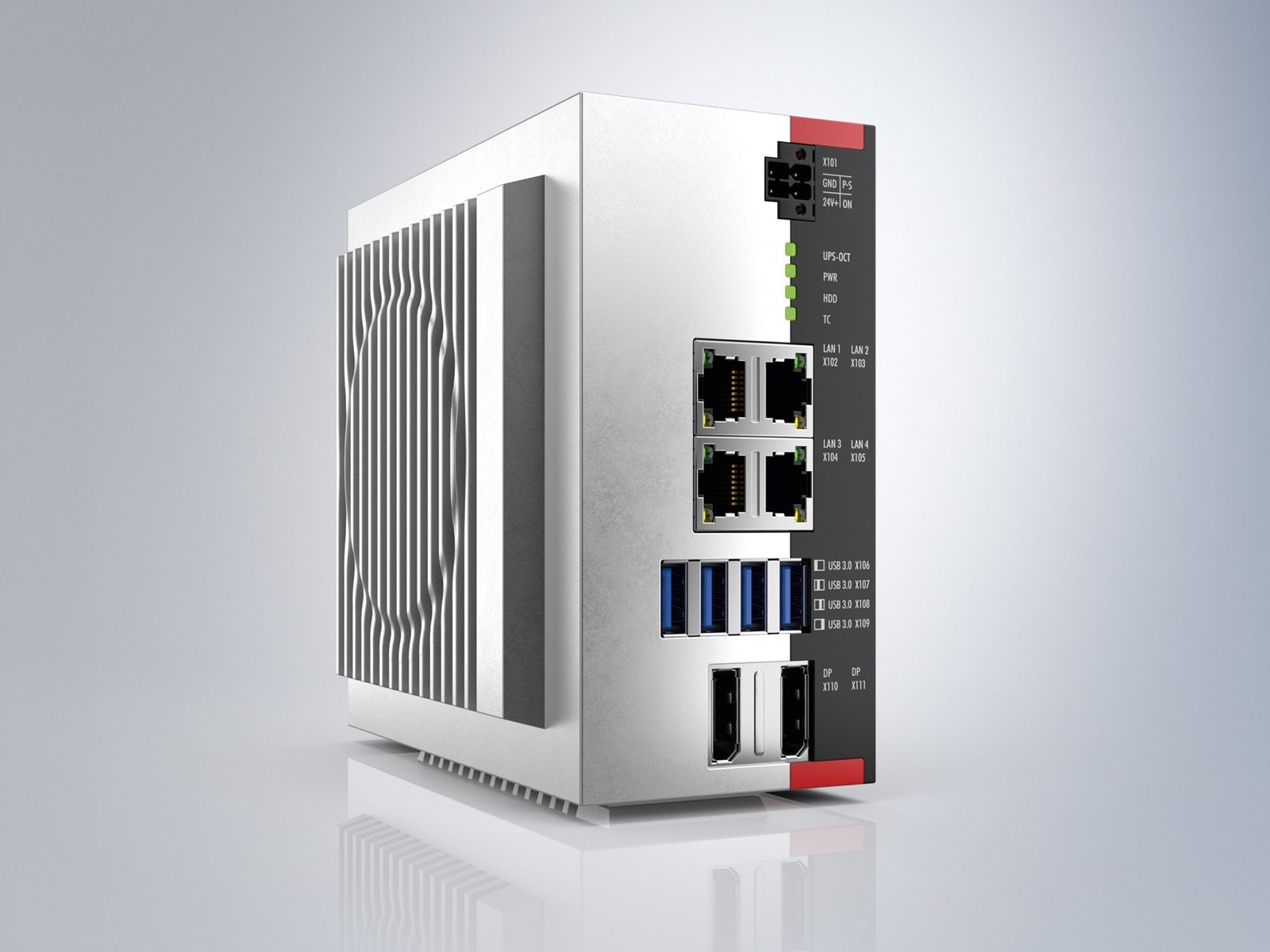
4 High-Impact Industrial Edge AI Applications
1. High-Speed Visual Defect Detection
Mounted directly above automated conveyor lines running at 2 meters per second, an Industrial AI Camera captures frames via global-shutter CMOS sensors, runs object detection models (YOLO-based), identifies micro-scratches, dents, or incorrect component placement down to 20µm, and triggers pneumatic rejection solenoids via isolated GPIO in under 15ms.2. High-Frequency Vibration Anomaly Detection (TinyML)
Piezoelectric accelerometers sample high-frequency machine vibration (up to 20 kHz) on turbine bearings and high-speed spindles. Rather than transmitting millions of data points, a local Cortex-M33 MCU executes an FFT (Fast Fourier Transform) and feeds the spectral coefficients into an Autoencoder neural network, detecting bearing race micro-flaws months before mechanical breakdown occurs.3. Acoustic Leak Detection & Discharge Monitoring
Micro-electro-mechanical systems (MEMS) microphone arrays capture ultrasonic frequencies (30–100 kHz) generated by compressed gas leaks or electrical partial discharge in high-voltage substations, calculating the precise angle of arrival (AoA) locally without human inspection.4. PPE & Worker Safety Zone Monitoring
Industrial edge video boxes analyze surveillance feeds from heavy machinery danger zones, instantly halting hydraulic presses or robotic arms when workers enter hazardous perimeters without approved hardhats or safety vests.Custom Edge AI Engineering Capabilities at DeviceLab
DeviceLab designs, fabricates, and deploys custom embedded Edge AI hardware tailored to stringent industrial environments:
- Carrier Board Hardware Engineering: High-speed PCB design for high-density compute modules (NXP i.MX8M Plus, Rockchip RK3588, Raspberry Pi CM4) featuring impedance-controlled MIPI-CSI camera interfaces, dual Gigabit Ethernet with TSN support, and optically isolated industrial I/O.
- Rugged Thermal & Enclosure Design: Custom extruded aluminum chassis acting as conduction heatsinks, rated for $-40^\circ C$ to $+85^\circ C$ operation without mechanical fans.
- Embedded Linux & Driver Development: Board Support Packages (BSP), V4L2 camera driver tuning, real-time Linux kernel (PREEMPT_RT), and fail-safe A/B OTA partition architectures.
- Model Quantization & Inference Benchmarking: In-house optimization of customer neural networks to guarantee deterministic latency under target power envelopes.
Accelerate Your Edge AI Product Deployment
Transition your computer vision or predictive maintenance models from desktop Python prototypes to certified, deployable industrial edge hardware.
- Explore our hardware design services: Hardware R&D Services
- Learn about embedded vision systems: Industrial AI Smart Cameras
- Consult with our systems engineering team: Submit Project Consultation