

An embedded system is the synergistic integration of custom electronic hardware and dedicated low-level software (firmware or real-time OS) engineered to execute deterministic, predefined functions with extreme physical reliability and strict real-time responsiveness.
Unlike general-purpose computing platforms (personal workstations or cloud servers) engineered to support arbitrary software suites across virtually unbounded hardware resources, an embedded system is deeply integrated within a physical apparatus: from revenue-grade smart electricity meters, programmable logic controllers (PLCs), and industrial IoT edge gateways to zoned IP public address terminals and automotive anti-lock braking systems (ABS).
Driven by the Fourth Industrial Revolution and the convergence of Artificial Intelligence with IoT (AIoT), modern embedded systems have transcended rudimentary 8-bit microcontrollers blinking indicator LEDs. Today's commercial embedded platforms represent sophisticated compute nodes featuring multi-core ARM Cortex silicon, preemptive real-time kernels (FreeRTOS, Zephyr), customized Embedded Linux distributions, and hardware neural accelerators capable of running on-device edge AI inference directly in harsh field conditions.
This technical guide provides an exhaustive engineering breakdown of modern embedded systems: core architectural distinctions, multi-tiered hardware topologies, operating system trade-offs, and the structured hardware-software co-design methodology required for commercial enterprise deployments.
---
1. What is an Embedded System? Embedded vs. General-Purpose Computing
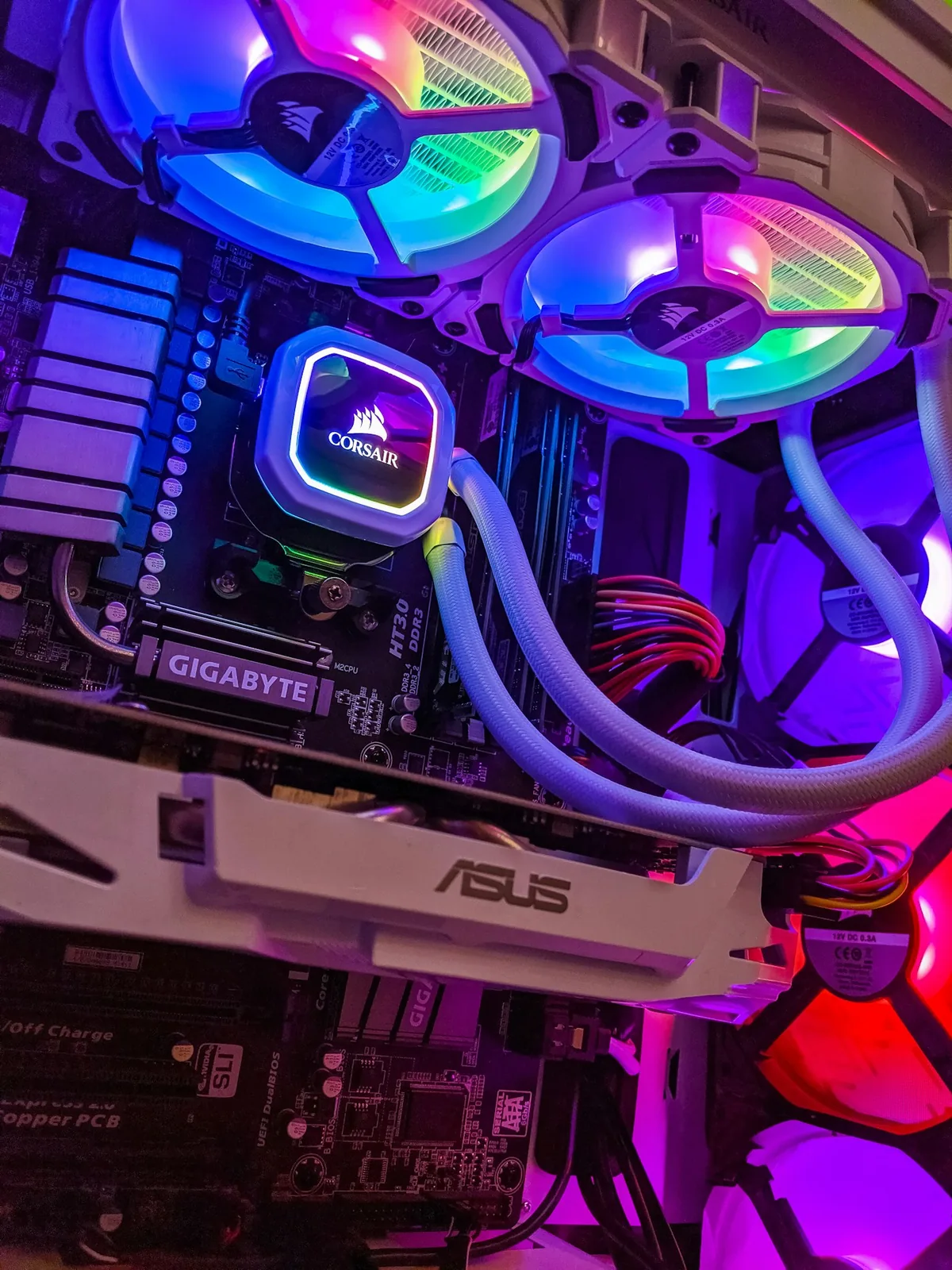
To understand the engineering constraints of an embedded system, evaluate this comparative breakdown against conventional general-purpose computing architectures:
| Technical Metric | Dedicated Embedded System | General-Purpose Computing (PC / Server) |
|---|---|---|
| Design Intent | Single dedicated functional domain (Deterministic Execution) | Multi-purpose workload scheduling with dynamic application installs |
| Silicon Resources | Aggressively optimized (RAM: tens of KB to few MB; Flash: tightly constrained) | Abundant resources (8GB–64GB+ RAM, multi-hundred GB NVMe storage) |
| Timing Constraints | Hard or soft deterministic real-time deadlines (microsecond latency) | Best-effort scheduling; variable latency governed by OS multitasking |
| Power Budget | Ultra-low power (milliwatts to low watts); multi-year battery operation | High power demand (tens to hundreds of watts); mains AC & active fan cooling |
| Operating Environment | Hostile field conditions: electrical EMI, vibration, -40°C to +85°C industrial temp | Climate-controlled corporate offices or tier-3 data centers |
| Reliability Standard | Continuous 24/7/365 uninterrupted operation; zero unhandled lockups | Periodic updates, frequent background restarts, process isolation crashes |
| Hardware Interfacing | Direct physical silicon I/O: GPIO, ADC, PWM, UART, SPI, I2C, CAN bus, RS485 | Standardized high-level abstraction: USB, PCIe, HDMI, Gigabit Ethernet |
Holistic Architecture of a Modern Embedded System:
┌────────────────────────────────────────────────────────┐
│            User Application Layer (Telemetry / Control)│
├────────────────────────────────────────────────────────┤
│    Middleware & Networking Stacks (MQTT, Modbus, TLS)   │
├────────────────────────────────────────────────────────┤
│ Embedded OS / Kernel (FreeRTOS / Zephyr / Embedded Linux)│
├────────────────────────────────────────────────────────┤
│  Hardware Abstraction Layer (HAL) & BSP Device Drivers │
├────────────────────────────────────────────────────────┤
│ Physical Hardware (MCU/SoC, RAM, NOR/NAND Flash, Sensors)│
└────────────────────────────────────────────────────────┘
---
2. The 3-Tier Hardware Architecture of Modern Embedded Systems

Commercial-grade industrial embedded hardware is architected across modular functional blocks to optimize the Bill of Materials (BOM) for scalable mass production:
1. Core Processing Unit
The compute core is selected based on algorithmic computational intensity and latency tolerance:
- Microcontroller Units (MCUs): Monolithic silicon integrating the CPU core, static RAM, non-volatile Flash, and peripheral controllers on a single die (e.g. ARM Cortex-M0+/M4/M7 series including STM32, ESP32, and NXP LPC). Optimal for sensor acquisition nodes, smart power meters, and ultra-low-power battery devices.
- Embedded Microprocessors (MPU / SoC): Powerful multi-core architectures (ARM Cortex-A cores such as Rockchip RK3568, NXP i.MX6/i.MX8, Allwinner) operating with external DDR3/DDR4 SDRAM. Ideal for multi-protocol IoT gateways, digital Audio over IP terminals, high-throughput machine vision, and Edge AI.
- Specialized Coprocessors: Dedicated Neural Processing Units (NPUs) accelerating convolutional neural networks, Digital Signal Processors (DSPs) handling multi-channel digital audio filtering, or cryptographic hardware security modules (Secure Elements such as ATECC608/Optiga Trust).
2. Memory Architecture & Storage Hierarchy
- SRAM / PSRAM: High-speed volatile memory for execution stacks, RTOS task control blocks (TCBs), and dynamic buffers.
- Internal Flash / External SPI NOR Flash: Non-volatile code storage hosting the primary bootloader and operational application binary. Characterized by high read speeds and robust erase/write cycle endurance.
- NAND Flash / eMMC: High-capacity non-volatile storage essential for Embedded Linux platforms hosting root filesystems, local SQlite diagnostic databases, and web-based device configuration servers.
3. Peripheral Interfacing & Connectivity Topologies
- On-Board Chip-to-Chip Buses: I2C (connecting multi-axis accelerometers, RTCs, and thermal sensors), SPI (driving graphic displays, high-speed ADCs, and external Flash), and UART (interfacing wireless modems and debugging consoles).
- Industrial Fieldbus Interfaces: Galvanically isolated RS485 (Modbus RTU), differential Controller Area Network (CAN bus 2.0B / CAN-FD for automotive and factory automation), and Industrial Ethernet (Modbus TCP, EtherCAT).
- Wireless Telemetry Subsystems: Dual-band Wi-Fi 6, Bluetooth Low Energy (BLE 5.x mesh), Sub-1GHz (LoRaWAN long-range telemetry), and cellular modems (4G LTE Cat 1, Cat 4, NB-IoT).
---
3. Embedded Software Topologies: Bare-Metal vs. RTOS vs. Embedded Linux
Selecting the appropriate firmware architecture dictates long-term device stability, security footprint, and engineering scalability:
| Software Model | Architectural Characteristics | Selection Criteria | Practical Use Case |
|---|---|---|---|
| Bare-Metal (No OS) | Infinite foreground while(1) super-loop coordinated with asynchronous background interrupt service routines (ISRs). Sub-microsecond latency, zero OS overhead, minimal Flash footprint (<32KB). | Extremely simple deterministic control, sub-$1 USD silicon budgets, multi-year battery-powered sensor beacons. | Solenoid valve actuators, digital thermometer probes, door contact sensors. |
| RTOS (Real-Time OS) | Preemptive, priority-based deterministic scheduler supporting multi-tasking, inter-task message queues, and mutex synchronization (FreeRTOS, Zephyr). Lightweight footprint (10KB–100KB RAM). | Devices concurrently servicing physical sensors while managing complex telemetry stacks (MQTT, TLS, Modbus) without blocking time-critical control loops. | Modbus RS485 IoT Gateways, Smart 3-Phase Energy Meters, Solar Inverter Controllers. |
| Embedded Linux | Full-featured POSIX kernel customized and minimized via Yocto Project or Buildroot. Rich networking stacks, advanced multi-process memory management, and broad open-source library ecosystems. | Systems demanding rich touch-screen HMIs, multi-stream digital audio routing, local database indexing, advanced firewall routing, or Edge AI vision pipelines. | Audio over IP Broadcasters, Industrial Edge Gateways, Biometric Access Terminals. |
---
4. Hardware-Software Co-Design Methodology
In professional engineering engagements at DeviceLab, hardware and embedded software are never developed in disjointed silos. Instead, our teams execute an integrated Hardware-Software Co-Design framework:
Commercial Embedded Product Development Lifecycle:
1. System Engineering & Technical Requirements (SRS / PRD)
       │
       ├──> Schematic Design ──> High-Speed PCB Layout ──> Prototype PCBA Fabrication
       │                                                         │
       └──> Software Architecture ──> EVK Simulation ──> BSP Drivers ┴──> Integrated Board Bring-Up
                                                                          │
                                                                   Functional Stress Testing
                                                                          │
                                                             EMC Compliance & Pilot Manufacturing
Stage 1: Architectural Partitioning & Feasibility Analysis
Engineers evaluate functional boundaries to determine whether specific operations should be handled in hardware or delegated to software (e.g. analog passive filtering vs. digital DSP filtering; dedicated crypto IC vs. software mbedTLS library). Accurate partitioning minimizes BOM cost while conserving the power budget.
Stage 2: Concurrent Hardware CAD and Board Support Package (BSP) Development
While custom multi-layer PCBs undergo fabrication and automated SMT assembly, embedded software engineers utilize manufacturer evaluation kits (EVKs) to build out the Board Support Package (BSP): configuring internal clock distribution trees, mapping pin multiplexing (Pinmux), drafting low-level peripheral drivers, and tailoring the RTOS kernel.
Stage 3: Laboratory Board Bring-Up & Validation
When physical prototype boards arrive at the laboratory bench, hardware and firmware leads execute synchronized bring-up protocols:
- Power Rail Sequencing: Validating correct voltage regulation (3.3V, 1.8V, 1.2V core rails) and sequencing timing before releasing the processor RESET pin.
- Clock Integrity Verification: Probing crystal oscillator waveforms with high-bandwidth oscilloscopes to verify frequency stability and signal margins.
- Debugger Interfacing: Establishing boundary-scan JTAG/SWD communication to verify device identification registers and program low-level bootloaders.
- Peripheral Stress Validation: Executing diagnostic test firmware across memory interfaces, loopback communication buses, and physical transceiver transits.
---
5. Critical Engineering Challenges in Commercial Embedded Systems
Transitioning an embedded device from a laboratory prototype to a resilient, commercial-grade product demands addressing four mission-critical engineering hurdles:
4 Pillars of Industrial-Grade Embedded Reliability:
[⚡] Power Supply Resilience (Brownout Detection, Independent Hardware Watchdog)
[🛡️] Harsh Industrial Immunity (ESD 8kV/15kV, Surge 2kV, Electrical Fast Transients)
[🔒] Silicon-Level Security (Hardware Secure Boot, Encrypted Flash, JTAG Lock)
[🌐] Fail-Safe Telemetry (Dual-Bank A/B Flash Partitioning for Zero-Brick FOTA)
- Independent External Hardware Watchdog: Never rely solely on an MCU's internal software-managed watchdog timer in high-noise industrial settings. We implement dedicated external watchdog supervisor ICs that physically power-cycle or reset the CPU if firmware execution halts unexpectedly.
- Dual-Bank Flash Architecture for Zero-Brick FOTA: Remote Over-the-Air updates must never overwrite active operational firmware directly. In a Dual-bank A/B partitioning scheme, incoming firmware images are staged into an alternate bank, verified via SHA-256 cryptographic signatures, and only promoted to execution upon successful self-test validation.
- Robust Field Interface Hardening: External field wiring connecting to terminal blocks (RS485, 24V power, analog inputs) is hardened with bidirectional Transient Voltage Suppressor (TVS) diodes, common mode chokes, and optical galvanic isolation to withstand indirect lightning surges and motor inverter transients.
---
6. Real-World Applications of Embedded Systems
Embedded architectures power essential modern infrastructure:
- Smart Manufacturing & Industrial IoT (IIoT): Intelligent edge gateways sampling pressure sensors, vibration transducers, and motor drives over Modbus RS485, streaming telemetry to SCADA and cloud platforms over TLS-encrypted MQTT.
- Smart Metering & Grid Infrastructure: High-precision revenue-grade multi-channel electricity meters measuring active, reactive, and harmonic power quality in real time.
- Educational Campuses & Smart Facilities: Multi-zone digital IP audio paging systems, automated NTP-synchronized bell systems, and PoE-powered networked acoustic ceiling speakers.
- Intelligent Transportation & Edge Vision: Edge AI vehicle license plate recognition systems, GNSS vehicle fleet telematics units, and driver-monitoring collision avoidance cameras.
---
7. DeviceLab’s Turnkey Embedded Systems Engineering Capabilities
DeviceLab operates as an authoritative hardware R&D and embedded engineering partner for technology enterprises worldwide:
- High-Reliability Hardware Design: Deep expertise across ARM Cortex-M and Cortex-A architectures, multi-layer high-density interconnect (HDI) PCBs, and rigorous EMC/EMI pre-compliance engineering.
- Production-Grade Firmware & BSP Development: Robust Bare-metal, FreeRTOS, Zephyr, and custom Embedded Linux (Yocto/Buildroot) engineering featuring secure bootloaders and hardened communication stacks.
- Full System Integration: Turnkey hardware-to-cloud telemetry handoffs via 4G LTE, Wi-Fi, BLE, and LoRaWAN directly into enterprise dashboard ecosystems.
- 100% Intellectual Property Handover: Upon project completion, clients receive complete ownership of all design files, Git repositories with comprehensive documentation, Altium schematics, Gerber packages, and BOM supply chain documentation.
Related capabilities:
---
Frequently Asked Questions (FAQ)
What is the simplest definition of an embedded system?
An embedded system is a specialized computing system—combining tailored electronic hardware and firmware—engineered to perform a dedicated task with extreme reliability, resource efficiency, and real-time precision inside a larger physical device.
How does embedded software differ from traditional application development?
Traditional development (Web/Mobile/Desktop) targets high-level operating systems with virtually unlimited RAM and storage. Embedded software operates directly on hardware registers, accounts for every byte of static memory, and executes deterministic control loops down to microsecond tolerances.
Is an operating system mandatory for every embedded device?
No. Simple dedicated tasks run directly on Bare-Metal (a main super-loop paired with hardware interrupts), eliminating operating system overhead and enabling sub-$1 USD silicon. An embedded OS (RTOS or Linux) is only introduced when handling concurrent multithreading, complex networking, or advanced file systems.
What is the fundamental difference between an RTOS and Embedded Linux?
An RTOS is an ultra-lightweight real-time kernel (requiring tens of kilobytes of RAM) that guarantees hard deterministic response times for safety-critical tasks. Embedded Linux is a full general-purpose operating system (requiring tens of megabytes of RAM) that provides powerful multitasking and extensive networking stacks, but cannot guarantee microsecond real-time determinism without specialized real-time kernel patches (PREEMPT_RT).
What is the difference between an MCU and an MPU in embedded engineering?
A Microcontroller (MCU) integrates the CPU core, RAM, and Flash memory onto a single monolithic die, making it ideal for compact, low-power control. An Embedded Microprocessor (MPU) contains only the processor core and relies on external DDR RAM and eMMC Flash, providing superior computational performance comparable to mini-computers.
How do engineers select the right microcontroller for a commercial project?
Key criteria include: (1) Required I/O peripheral counts (UART, SPI, I2C, CAN); (2) Core clock frequency and internal Flash/RAM memory sizing; (3) Sleep and active power budgets; (4) Minimum 5-to-10-year component lifecycle availability; and (5) Target BOM cost constraints.
What is the function of a Watchdog Timer in embedded hardware?
A Watchdog Timer is an autonomous hardware counter that must be continuously refreshed ("kicked") by normal firmware execution. If a software defect or electrical transient locks up execution, the counter overflows and asserts an immediate hardware reset, restoring operational status without human intervention.
How does fail-safe Over-the-Air (FOTA) updating work?
FOTA systems utilize dual-bank Flash memory partitioning. The new firmware binary is downloaded into a secondary inactive partition and cryptographically verified. The bootloader only switches active partitions after verifying the binary image's SHA-256 integrity and digital signature, preventing bricked devices in the event of mid-transmission power loss.
What variables drive the cost of custom embedded system development?
R&D investment depends on algorithmic and protocol complexity, environmental compliance standards (IP67, explosion-proof, CE/FCC EMC), processor tier (8/32-bit MCU vs. multi-core Linux SoC), and the number of prototype iteration cycles required.
What stages of the product lifecycle does DeviceLab support?
DeviceLab provides end-to-end support spanning initial technical specification, schematic design, PCB layout, firmware and BSP bring-up, prototype laboratory testing, compliance certification, and transition to mass manufacturing.
---
Conclusion
Embedded systems are the foundational technological bridge connecting digital intelligence with the physical world. Engineering a commercial product demands a meticulous balance of optimized hardware BOM costs, defensive software architectures, and field-proven reliability.
Whether developing a new industrial telemetry node, an edge computing terminal, or a complete connected device ecosystem, contact DeviceLab's senior engineering team to evaluate your project requirements.