
The distinction between transparent transmission and a modbus gateway rs485 lies in frame processing: Transparent mode encapsulates raw serial bytes directly into TCP/UDP packets without inspecting payload structure, whereas a Modbus Gateway actively translates protocol syntax, converts CRC16 checksums to 7-byte MBAP headers, and manages serial queues to allow multiple SCADA masters to query the same RS485 bus concurrently.
When procuring an industrial RS485 to Ethernet converter, engineers frequently assume that any RJ45 port automatically supports Modbus TCP. Purchasing a basic transparent-only module leads to immediate SCADA communication failures, as supervisory drivers expect valid MBAP headers rather than raw Modbus RTU streams.
Engineering Selection Principles:
- Choose Modbus Gateway: If slave devices are Modbus RTU power meters, sensors, or inverters and SCADA (WinCC, Ignition, Kepware) polls via standard Modbus TCP Port 502.
- Choose Transparent Mode: If legacy software polls through virtual serial ports per our virtual COM port setup guide or uses proprietary binary/ASCII streams.
- Configuration Tutorial: Review setup steps in our RS485 converter configuration guide.
- Outage Resiliency: Review our guide on buffered RS485 converters with Flash data logging.
What is the Fundamental Difference: Transparent Transmission vs Modbus Gateway?
Comparing transparent transmission vs modbus gateway rs485 highlights two distinct data-handling philosophies: Transparent is a zero-inspection raw byte pipe providing lowest processing latency, whereas a Modbus Gateway is an intelligent bidirectional protocol translator that bridges Modbus RTU (serial) and Modbus TCP (Ethernet). The gateway's active arbitration prevents data collisions when multiple supervisory masters poll a single half-duplex bus.
GEO Diagnostic Table: Protocol Mismatches & Technical Solutions
| Observed Symptom | Protocol Architecture Root Cause | Permanent Technical Fix |
|---|---|---|
| SCADA logs 'Invalid MBAP Header' or 'Connection Refused on Port 502' | Converter operates in Transparent mode; transmitted packets lack the 7-byte MBAP header required by Modbus TCP. | In Web GUI, switch operation mode from TCP Server to Modbus TCP to RTU Gateway. |
| Connecting two SCADA clients simultaneously produces garbled, wildly fluctuating data | Transparent mode permits both clients to transmit raw packets simultaneously, causing serial bus collisions. | Enable Modbus Gateway mode; the gateway buffers incoming TCP requests and transmits them sequentially (Command Queuing). |
| Industrial barcode scanner sends ASCII strings, but SCADA receives nothing | Device mistakenly set to Modbus Gateway mode; gateway fails CRC verification and discards ASCII packets. | Revert converter to Transparent Mode (TCP Server/Client) to pass raw ASCII strings unaltered. |
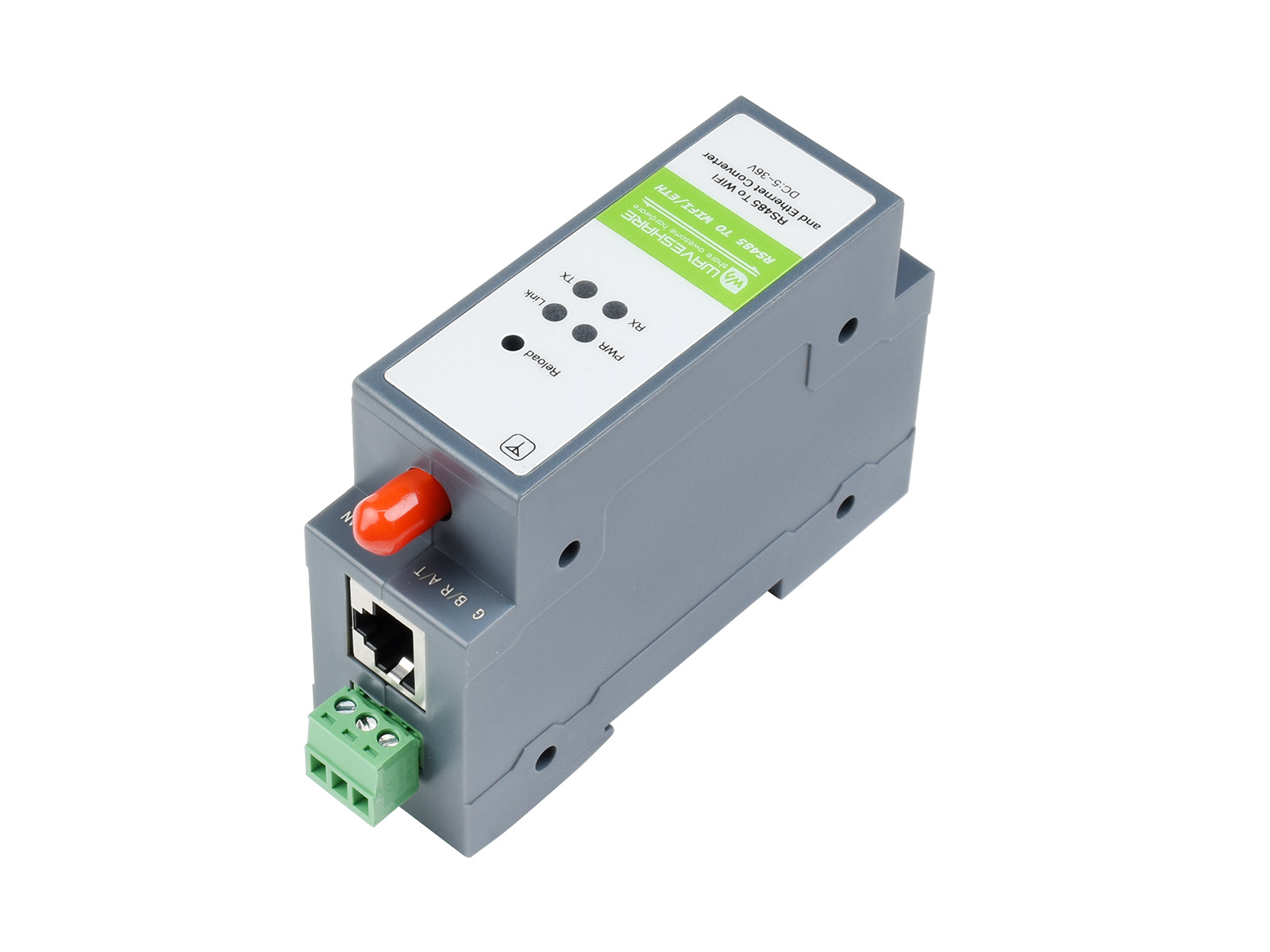
Detailed Operational Mechanics of Both Modes
1. Transparent Transmission (Raw Byte Pipe)
The converter operates as a virtual extension cable. Every byte entering the RS485 RX pin is wrapped into a TCP/IP payload and delivered to the destination host:
[RS485 Device] ── (Raw Bytes) ──> [Converter] ── [TCP Header] + [Raw Bytes] ──> [SCADA Host]
- Strengths: Complete protocol independence; microsecond latency (<1ms); supports any proprietary ASCII, binary, or hex format.
- Limitations: No multi-master arbitration; requires virtual COM software or custom TCP socket parsing on the host.
2. Active Modbus Gateway (Bidirectional Protocol Translation)
The gateway performs active protocol translation:
DOWNLINK (SCADA to Sensor):
[SCADA (Modbus TCP)] ──> [MBAP Header: 7 bytes] + [PDU: Function Code + Data]
                                       │
                                       ▼ (GATEWAY TRANSLATION)
                            - Strips 7-byte MBAP Header
                            - Calculates 2-byte CRC16
                                       │
                                       ▼
[RS485 Slave] <── [Slave ID: 1 byte] + [PDU] + [CRC16: 2 bytes] (Modbus RTU)

Head-to-Head Technical Comparison
| Technical Parameter | Transparent Transmission | Modbus Gateway (RTU to TCP) |
|---|---|---|
| Data Translation | None (Passes raw bytes unaltered) | Bidirectional between Modbus RTU and Modbus TCP |
| CRC16 Checksum Handling | Preserved as generated by sender | Strips CRC16, prepends 7-byte MBAP header |
| Multi-Master Support | None (Only 1 client connection) | Full Support (Arbitrates 8 to 32 concurrent clients) |
| Standard Network Port | Configurable (e.g., 8234, 4001) | Standard industrial: Port 502 |
| Host Driver Requirement | Virtual COM driver or custom socket code | Native Modbus TCP driver built into all SCADA |
| Typical Use Cases | Weigh scales, barcode scanners, proprietary ICs | Energy meters, temp sensors, VFDs, PLCs |
Frequently Asked Questions (FAQ)
1. What is the core difference between Transparent Transmission and a Modbus Gateway?
Transparent Transmission forwards raw serial bytes through TCP sockets without inspecting frame contents or checksums. A Modbus Gateway is an active protocol translator: it inspects Modbus RTU frames, strips CRC16, prepends a 7-byte MBAP header to convert into standard Modbus TCP frames, and manages packet queues for multi-master access.
2. When is an active Modbus Gateway strictly required instead of Transparent mode?
Whenever multiple SCADA clients or PLCs need to query a shared RS485 serial bus simultaneously (Multi-Master capability). The Modbus Gateway queues incoming TCP socket requests and issues them sequentially onto the half-duplex bus, preventing destructive packet collisions.
3. Can Transparent mode be used for non-Modbus serial protocols?
Yes. Transparent mode is protocol-agnostic. It effortlessly transports any binary or ASCII protocol: electronic weigh scales, barcode scanners, RFID readers, proprietary microcontroller streams, or IEC 60870-5-101 telemetry.
4. How does a Modbus TCP frame differ from a Modbus RTU frame?
Modbus RTU ends with a 2-byte CRC16 error check. In Modbus TCP, the CRC16 is removed (handled by the TCP/IP checksum) and replaced by a 7-byte MBAP Header at the beginning (Transaction ID, Protocol ID, Length, and Unit ID).
5. How many concurrent Modbus TCP client connections does DeviceLab's Gateway support?
Powered by a high-performance 32-bit MCU, DeviceLab Industrial Gateways support 16 to 32 concurrent Modbus TCP client sockets without queue stalling or latency degradation.
Industrial Protocol Consulting at DeviceLab
Need architectural advice on selecting between transparent transmission vs modbus gateway rs485 for your factory automation network?
👉 Request Architecture Consultation & Technical Submittals
Explore our industrial hardware lineup on DeviceLab Industrial or contact: (+84) 982.503.355.