
MQTT (Message Queuing Telemetry Transport) is an ultra-lightweight, binary publish/subscribe messaging protocol engineered specifically for constrained embedded devices and high-latency, unreliable network environments. Operating directly over TCP/IP (or WebSocket connections), MQTT decouples data producers (Publishers) from data consumers (Subscribers) through a centralized message Broker, eliminating the heavy headers, polling overhead, and architectural rigidity of traditional HTTP/REST web architectures.
In commercial and industrial IoT deployments, MQTT is the industry standard for telemetry streaming—powering millions of connected smart meters, automotive telematics units, and industrial edge gateways. However, taking MQTT from a hobbyist breadboard test to a scalable, production-grade enterprise deployment requires engineering rigor: designing clean hierarchical topic namespaces, choosing the correct Quality of Service (QoS) tiers, managing socket Keep-Alive timers, and securing broker connections with mutual TLS (mTLS) certificate handshakes.
This technical guide provides an exhaustive engineering blueprint for MQTT: internal packet mechanics, QoS latency and memory trade-offs, Last Will and Testament (LWT) connection supervision, and best practices for scaling embedded clients and broker clusters.
---
1. What is MQTT and How Does It Operate?
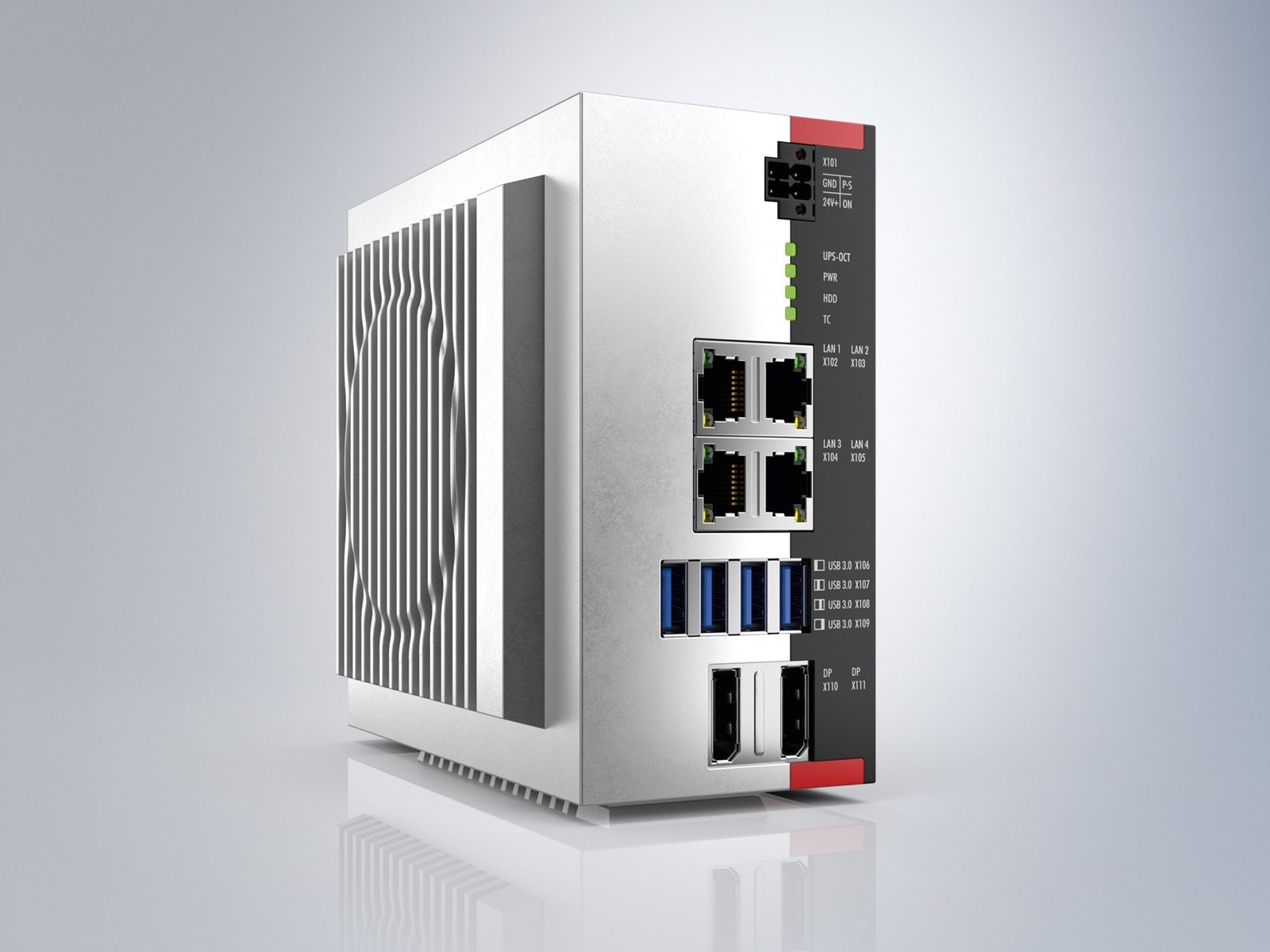
MQTT operates on a decoupled Publish/Subscribe architecture managed by a centralized Broker. Connected clients never communicate directly peer-to-peer; instead, devices publish data payloads tagged with a specific UTF-8 hierarchical topic string, and the Broker automatically routes the payload to all clients currently subscribed to that topic filter.
Edge IoT Gateway (Publisher)
         │
         │  PUBLISH topic: "factory/cell1/press4/telemetry"
         ▼
     MQTT Broker (EMQX / HiveMQ / Mosquitto)
         │
         │  Deliver to active subscribers
         ▼
Enterprise SCADA / Cloud Database / Mobile App (Subscribers)
Core Characteristics of MQTT:
- Minimal Header Overhead: A fixed header size of just 2 bytes allows microcontrollers with modest bandwidth (such as NB-IoT or satellite uplinks) to stream data without incurring costly cellular data bills.
- Bi-Directional Communication: Devices can stream sensor telemetry upstream while concurrently listening on command topics for immediate remote control setpoints from operators.
- Decoupled Topology: Publishers and subscribers do not need to know each other's IP addresses, port numbers, or operational states—they only need to agree on shared topic nomenclature.
- Stateful Connection Supervision: The broker continuously tracks socket liveness, automatically broadcasting fail-safe alert messages if a device drops off the network unexpectedly.
---
2. Engineering Comparison: MQTT vs. HTTP/REST
| Architectural Parameter | MQTT (Publish / Subscribe) | HTTP / REST (Request / Response) |
|---|---|---|
| Communication Paradigm | Asynchronous, event-driven | Synchronous client-initiated polling |
| Transport Protocol | Persistent TCP socket connection | Ephemeral TCP connections per request |
| Minimum Packet Header | 2 bytes | 200 to 800+ bytes (HTTP Headers, Cookies) |
| Server-to-Device Push | Native and instantaneous via Subscription | Requires long-polling, SSE, or WebSockets |
| Network Bandwidth Consumption | Ultra-low (optimized for cellular & LPWAN) | High (significant repetitive header overhead) |
| Connection State | Stateful (Maintains session and queued state) | Stateless (Each transaction is isolated) |
| Offline Resilience | Built-in via QoS and Last Will (LWT) | Must be entirely engineered at application layer |
---
3. Mastering Quality of Service (QoS): Latency vs. Reliability

MQTT specifies three distinct Quality of Service levels governing message delivery guarantees:
QoS 0: [Publisher] ──────── PUBLISH ───────► [Broker] (Fire and forget, zero ACK)

QoS 1: [Publisher] ──────── PUBLISH ───────► [Broker] (Guaranteed delivery,
       [Publisher] ◄─────── PUBACK ───────── [Broker]  risk of duplicates)

QoS 2: [Publisher] ──────── PUBLISH ───────► [Broker] (Four-way handshake,
       [Publisher] ◄─────── PUBREC ───────── [Broker]  strictly exactly once)
       [Publisher] ──────── PUBREL ───────► [Broker]
       [Publisher] ◄─────── PUBCOMP ──────── [Broker]
QoS 0 — At Most Once (Fire and Forget)
The message is transmitted exactly once with no confirmation or retry mechanism. Recommended for high-frequency, continuous telemetry (e.g., motor vibration samples every 100ms, ambient temperature every second) where losing a single isolated data point has zero operational impact.
QoS 1 — At Least Once (Acknowledged Delivery)
The publisher stores the message in a local buffer until it receives a matching PUBACK packet from the broker. If an acknowledgment is not received within the timeout window, the message is retransmitted with the Duplicate flag set. This is the recommended standard for 95% of industrial IoT telemetry.
QoS 2 — Exactly Once (Deterministic Four-Step Handshake)
Guarantees that neither message loss nor duplication occurs through a coordinated two-phase commit exchange. Use sparingly and exclusively for critical financial transactions, high-voltage breaker trip commands, or billing records, as it increases network latency and RAM utilization.
---
4. Connection Lifecycle: Keep-Alive, LWT & Persistent Sessions
[ Connect: ClientID, CleanSession=0, KeepAlive=60s, LWT Configured ]
                                │
                      Normal Operation Window
                                │
        [ PINGREQ ] ─────────────────────────► [ PINGRESP ]
                                │
                 Network Dropout / Power Failure
                                │
      [ 1.5x KeepAlive Exceeded (90s) without packet from device ]
                                │
[ Broker Automatically Publishes LWT: "status": "unexpected_offline" ]
1. Keep-Alive & Ping Timers
During initialization, the client negotiates a Keep-Alive interval (typically 30 to 60 seconds). If the channel remains idle with no data transmission, the client sends a 2-byte PINGREQ frame, and the broker responds with PINGRESP. If the broker receives no communication within 1.5 times the Keep-Alive window, it terminates the TCP socket.
2. Last Will and Testament (LWT)
When establishing a connection, the client registers a pre-configured LWT topic and payload. If the device unexpectedly loses power or cellular coverage, the broker automatically delivers this message to all monitoring subscribers, enabling instant fault detection without polling.
3. Clean Session Flags
With CleanSession = 0 (Persistent Session), the broker retains client subscriptions and queues all missed QoS 1 and QoS 2 messages while the client is disconnected, delivering them immediately upon reconnection.
---
5. Enterprise Cybersecurity Blueprint for Production MQTT
Exposing unauthenticated MQTT brokers on default port 1883 invites catastrophic cyber attacks and unauthorized device commandeering. Production architectures must enforce strict defense-in-depth:
[ Edge Hardware ] ──── mTLS (Port 8883) ────► [ Industrial Broker Cluster ]
       │                                                    │
Hardware Secure Element (ATECC608)           Strict Topic Access Control (ACL)
Unique Private Key (Never Leaves Silicon) Read/Write Restricted to Device Namespace- Mandate TLS 1.3 Encryption (Port 8883): Encrypt all over-the-air communication with modern cipher suites, eliminating plaintext eavesdropping and man-in-the-middle packet tampering.
- Mutual Certificate Authentication (mTLS): Rather than sharing a single global password, provision each physical IoT device with a unique X.509 client certificate securely generated during factory manufacturing.
- Hardware Root of Trust: Store private cryptographic keys within dedicated hardware security elements (such as Microchip ATECC608A or secure MCU enclaves) to prevent key extraction even if physical hardware is stolen.
- Granular Topic Access Control Lists (ACLs): Restrict each client's publish and subscribe rights strictly to its assigned device identifier namespace.
---
DeviceLab Embedded MQTT Engineering Capabilities
DeviceLab designs, implements, and stress-tests production MQTT communication stacks across edge microcontrollers and cloud brokers:
- Low-Memory MQTT Client Stacks: Tailored, thread-safe C/C++ MQTT client libraries for FreeRTOS, Zephyr, and Embedded Linux, optimized for cellular power-saving modes (PSM/eDRX).
- Secure Provisioning & Zero-Touch Onboarding: Automated factory flashing of device-unique X.509 certificates and cloud credentials directly into hardware secure elements.
- High-Throughput Broker Architecture: Design and deployment of enterprise MQTT broker clusters (EMQX, HiveMQ) capable of processing millions of concurrent connections with sub-10ms routing latencies.
Explore our related firmware engineering and connectivity resources: