
What is Industrial IoT for Manufacturing Plants?
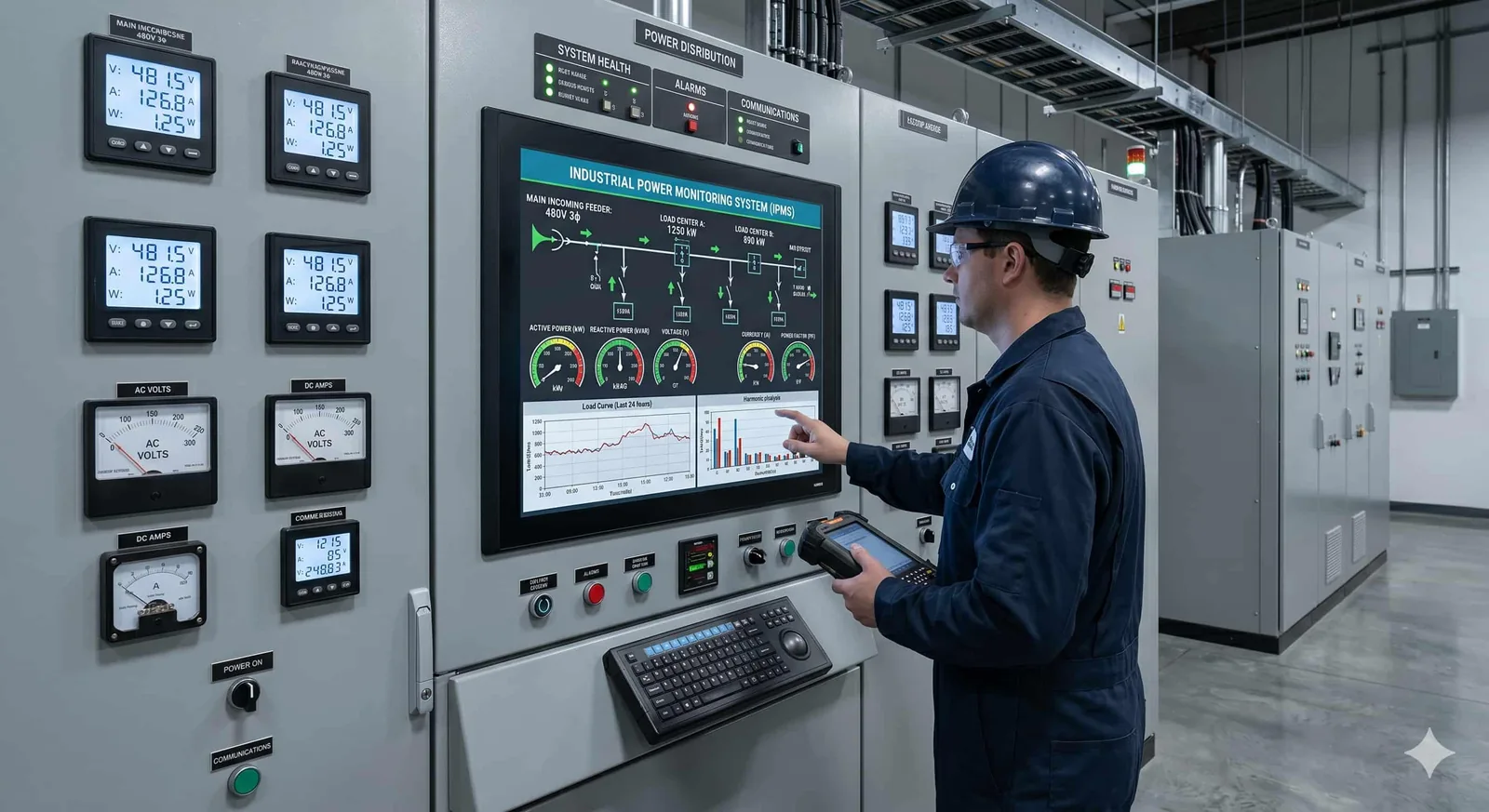
Industrial IoT (IIoT) is the technological infrastructure connecting factory machinery, field sensors, submeters, and production systems to collect and stream mission-critical operational data in real time.
In modern manufacturing plants, operational data is routinely fragmented across incompatible siloes:
- Electronic energy submeters (kWh, kVA, power factor).
- Variable Frequency Drives (VFD) and motor controllers.
- Programmable Logic Controllers (Siemens, Mitsubishi, Omron, Delta).
- Main distribution switchboards (MDB) and sub-distribution panels (SDB).
- Chiller plants, air compressors, and boiler rooms.
- Legacy mechanical machines without native digital interfaces.
Industrial IoT bridges field machinery and enterprise software. It acquires raw machine registers via robust fieldbuses, processes and validates telemetry at the industrial edge, and securely dispatches structured payloads to supervisory dashboards, on-premise SCADA, or cloud MES platforms.
DeviceLab specializes in engineering this physical-to-digital layer around your plant’s existing infrastructure, eliminating the cost and disruption of replacing expensive operational machinery.
Critical Data Challenges in Modern Manufacturing
Most manufacturing plants operate an eclectic mix of multi-generational equipment. Some machines feature Ethernet-enabled PLCs; others communicate via Modbus RTU over RS485; while older legacy equipment only exposes analog relay contacts or mechanical dials.
Plant managers and operational directors consistently struggle to answer basic operational questions:
- Is a specific machine actually producing output, or is it idling while consuming full power?
- Which production line or shift is responsible for peak demand electrical penalties?
- Are motor bearing temperatures or vibration levels trending toward catastrophic failure?
- What is the exact energy cost per completed unit of finished product?
- Did a recent process adjustment actually produce measurable energy savings?
Without automated digital telemetry, these questions are answered by manual clipboard logs, retrospective utility bills, and operator guesswork—leading to undetected waste, unbudgeted downtime, and excessive utility penalties.
Plant-Wide Energy Monitoring & Electrical Submetering
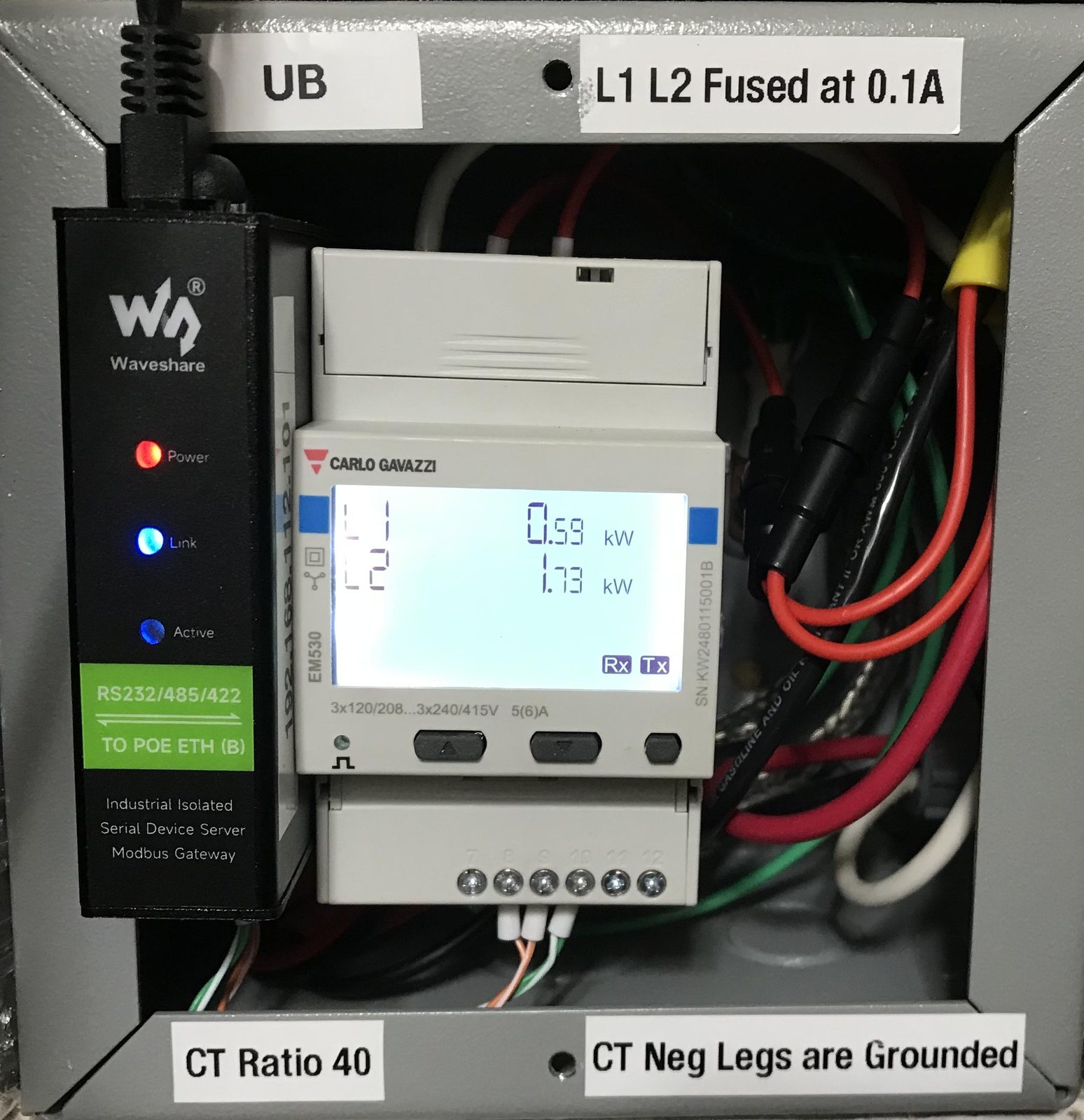
Electricity is frequently the single largest variable operating cost in discrete and process manufacturing. Our telemetry architecture captures electrical metrics at 1-second to 15-minute intervals:
- Active energy (kWh) and reactive energy (kVARh).
- Real-time active power (kW), apparent power (kVA), and peak demand.
- 3-phase voltage (V L-L, V L-N) and current (A) with neutral imbalance monitoring.
- Power factor (cos φ) tracking to eliminate utility reactive power surcharges.
- Total Harmonic Distortion (THD-V, THD-I) protecting sensitive electronic drives.
Data is organized hierarchically across three operational tiers:
- Total Plant Incomer: Tracking the main MDB transformer feed against utility billing meters.
- Workshop & Feeder Panels: Isolating consumption across stamping, injection molding, CNC, and assembly halls.
- Individual Machine Level: Continuous metering on high-draw assets such as air compressors, chillers, and curing ovens.
Real-Time Machine Operating Status & OEE Telemetry
Beyond raw kilowatt-hours, the system decodes machine operational states into actionable categories:
- Running (Under Active Load): Machine is operating and performing work within standard load parameters.
- Idling (Ghost Run): Motors, heaters, or hydraulics are energized, but no material is being processed.
- Planned Stoppage: Machine is powered down for tooling changes, maintenance, or shift handovers.
- Unplanned Fault / Breakdown: Tripped circuit, thermal overload, or mechanical jam requiring intervention.
By synchronizing electrical load signatures with digital sensor inputs, the system computes Overall Equipment Effectiveness (OEE)—Availability, Performance, and Quality—automatically without manual operator logging.
Interfacing with Legacy Machines Without Built-in Connectivity
A core engineering advantage of DeviceLab is our ability to extract clean digital telemetry from older machines lacking modern communication ports:
- Split-Core Current Transformers (CT): Non-invasive current sensors clamped around motor leads without interrupting power.
- Auxiliary Contactor / Relay Contacts: Optically isolated dry-contact sensing on motor starters and run lamps.
- External Digital Sensor Bundles: Proximity switches on conveyor shafts, optical product counters, and magnetic reed switches.
- External Temperature & Pressure Transducers: 4-20mA and 0-10V analog sensors piped into isolated ADC modules.
This allows plants to achieve 100% telemetry coverage across 20-year-old hydraulic presses, vintage lathes, and legacy injection units alongside state-of-the-art automated robotic cells.
Predictive Health: Temperature, Vibration & Condition Monitoring
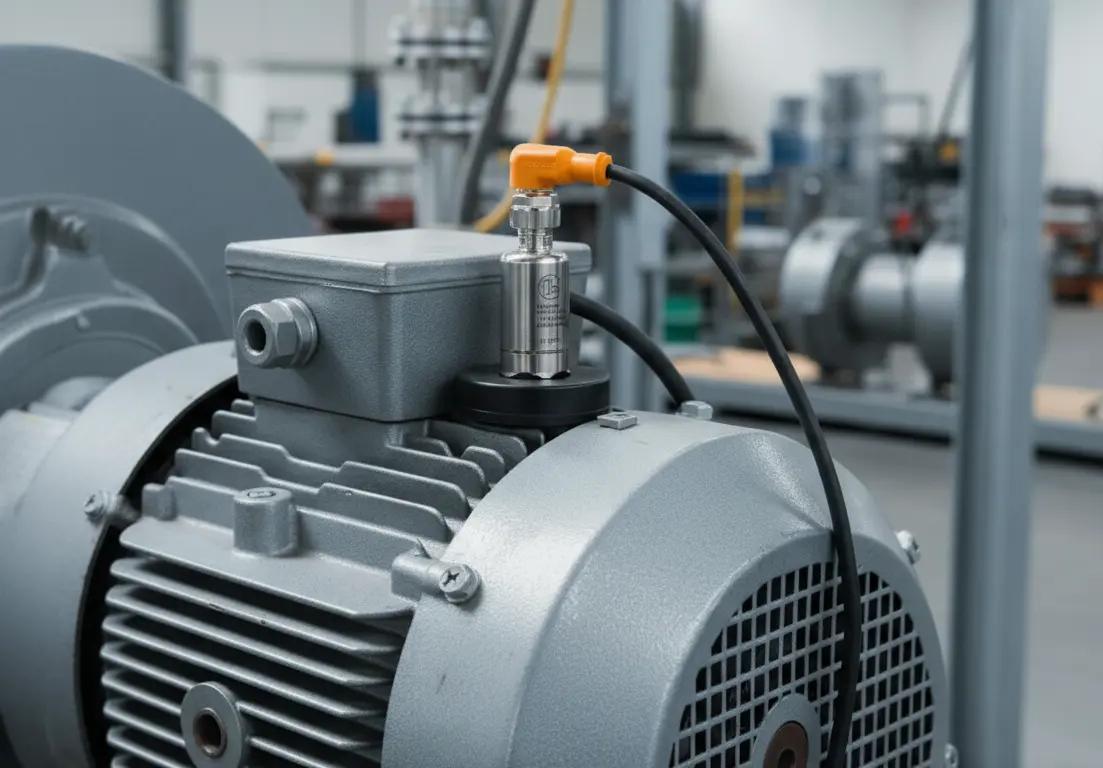
Unexpected mechanical failures bring assembly lines to an immediate halt. DeviceLab integrates localized condition sensors directly into telemetry nodes:
- PT100 / Thermocouple Sensors: Continuous temperature tracking on motor windings, gearbox bearings, and hydraulic reservoirs.
- Industrial Vibration Transducers: FFT frequency domain analysis detecting early bearing spalling, shaft misalignment, and unbalance.
- Cooling Water Flow & Pressure: Detecting clogged filters and pump cavitation before thermal trips occur.
Threshold alerts warn maintenance crews days or weeks before a component fails catastrophically, transforming emergency repairs into planned maintenance windows.

Industrial IoT Gateway Hardware Architecture
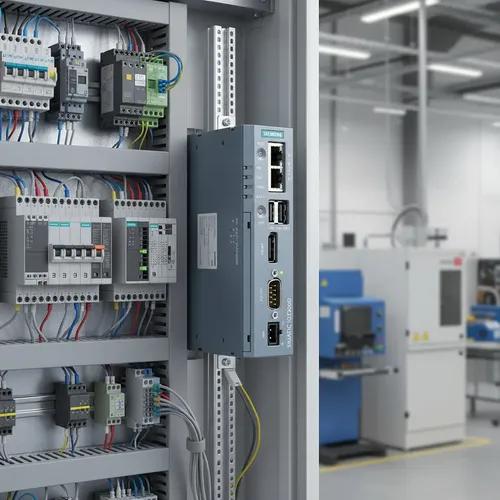
At the center of each field cabinet sits a dedicated Industrial IoT Gateway designed and validated by DeviceLab for harsh factory environments:
- Galvanic Optical Isolation: 2.5kV to 3kV isolation on all RS485 and serial lines to prevent ground loops and high-voltage spikes from motor drives.
- Wide Input Power Supply: 9V to 36V DC input with integrated reverse-polarity, overvoltage, and surge protection.
- Dual Connectivity Uplinks: Dual-SIM 4G LTE cellular failover alongside high-speed Ethernet to ensure uninterrupted cloud reporting during plant network outages.
- Local Flash Storage & Store-and-Forward: On-board non-volatile memory storing up to 30 days of telemetry when network connectivity is lost, syncing automatically upon reconnection.
- Hardware Watchdog Timer: Dedicated supervisor IC guaranteeing autonomous 24/7 reboot and recovery without physical technician intervention.
Protocol Bridging: Modbus RTU/TCP, MQTT, OPC UA
Industrial communication requires bridging legacy serial fieldbuses with modern lightweight IoT protocols:
- Modbus RTU over RS485: Polling multi-drop bus networks of up to 32 devices per channel at rates up to 115200 bps.
- Modbus TCP & Ethernet/IP: Querying networked PLCs and smart instrumentation over plant LAN.
- MQTT with TLS 1.3: Lightweight, publish-subscribe telemetry streaming to cloud brokers with compact JSON or Protobuf payloads.
- OPC UA Integration: Exposing structured data objects directly into enterprise SCADA and MES architectures.

Centralized Monitoring Dashboard & Real-Time Visualization
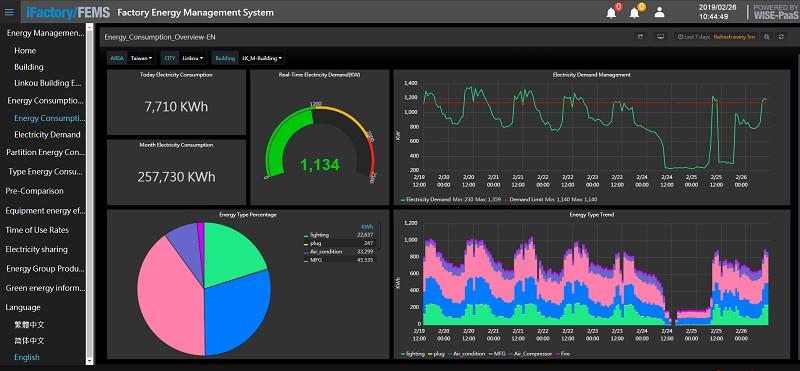
Field telemetry aggregates into a responsive web console engineered for plant managers, energy auditors, and operations directors:
- Plant Single-Line Diagram (SLD): Interactive visual schematic displaying real-time power flows and panel loads.
- Heatmaps & Load Profiles: Visualizing power consumption by hour, shift, and production batch.
- Automated Cost Allocation: Converting kilowatt-hours into monetary figures based on dynamic multi-tariff rate structures (peak, normal, off-peak).
- Multi-Channel Threshold Alerts: Immediate notifications via SMS, Telegram, and Email when current thresholds, phase imbalances, or temperatures exceed safe operating envelopes.
Measurable Business & Engineering ROI
Deploying automated energy and machinery telemetry delivers rapid, quantifiable returns across three primary dimensions:
- 10% to 25% Reduction in Electrical Waste: Eliminating unmonitored night-shift idling, optimizing compressed air leakages, and shaving peak demand spikes.
- 15% to 30% Improvement in Machine Availability: Transitioning from reactive breakdown repairs to condition-based predictive maintenance.
- Precise Product Cost Accounting: Accurate allocation of actual utility expenditures to specific production orders, enabling competitive and profitable commercial pricing.
Implementation Strategy: Starting with a Focused Pilot
DeviceLab advocates a low-risk, phased deployment methodology:
- Phase 1 — Focused Pilot (2 to 4 Weeks): Instrumenting 1 main distribution transformer and 3 to 5 critical production machines or utilities (e.g. air compressor room).
- Phase 2 — Verification & Baseline Analysis: Reviewing 30 days of real-world operational telemetry, validating data accuracy, and identifying initial efficiency targets.
- Phase 3 — Full-Scale Plant Rollout: Scaling the telemetry architecture across all workshop floors, auxiliary equipment, and ERP/MES integrations.
Frequently Asked Questions (FAQ)
Can the telemetry system be installed without interrupting factory production?
Yes. By utilizing split-core Current Transformers (CTs) and non-invasive clamp sensors, sensor installation does not require cutting power busbars or stopping production lines. Gateway and panel wiring is performed safely alongside normal plant operations.
Does DeviceLab provide the hardware, the software, or both?
We deliver an end-to-end turnkey solution: custom-engineered hardware gateways, field sensor procurement, industrial panel assembly, edge firmware, cloud/on-premise server software, and custom web dashboards.
Can we stream telemetry directly into our own ERP or SCADA system?
Yes. Our systems are built upon open industrial standards (Modbus, MQTT, RESTful APIs, SQL). We provide complete register documentation and API endpoints for seamless integration into SAP, Siemens WinCC, Ignition, or proprietary enterprise software.
Who owns the intellectual property and design data?
Under DeviceLab custom development agreements, the client owns 100% of all deployed system documentation, hardware schematics, and configuration files with zero ongoing per-seat software licensing fees.