
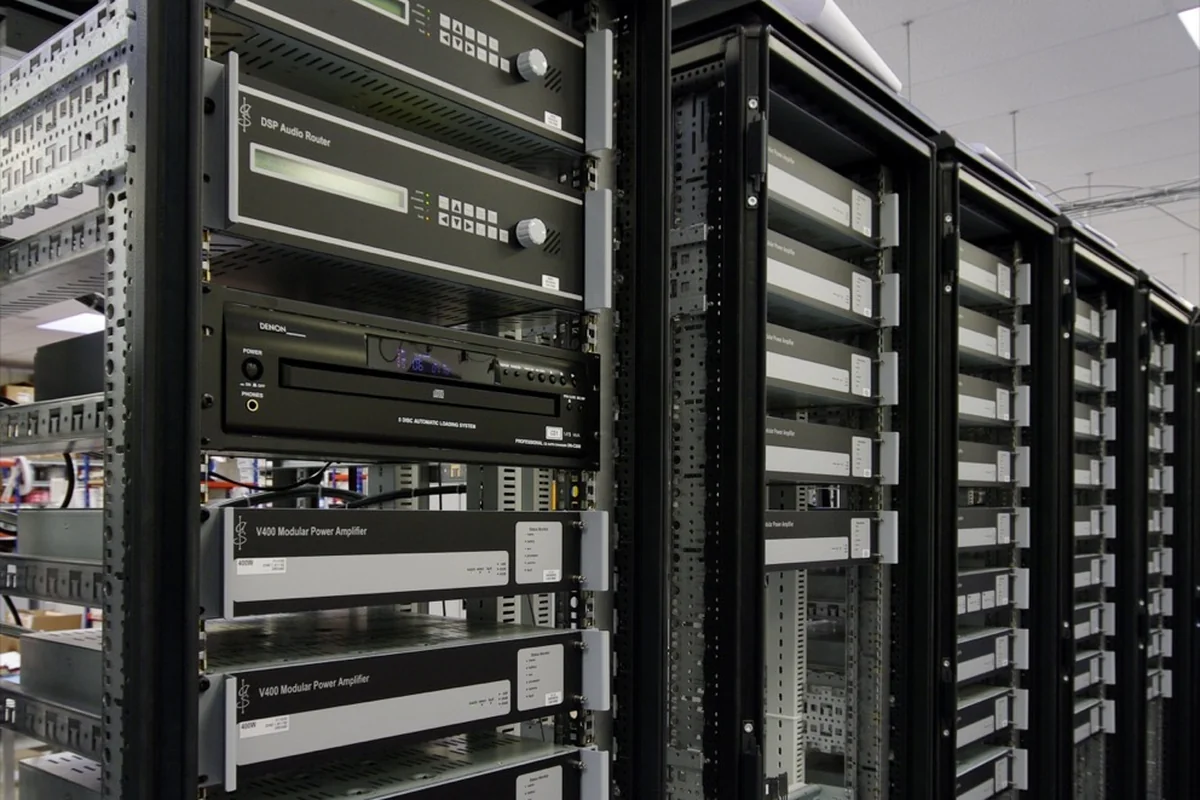
In commercial broadcast facilities, performing arts centers, international conference venues, and smart campuses, Audio over IP (AoIP) has completely supplanted traditional analog audio snakes and digital matrix patchbays. However, as network audio adoption surged, the industry faced an acoustic Tower of Babel: Audinate Dante, Ravenna, QSC Q-LAN, Telos Livewire, and standard SIP/VoIP protocols all competed with incompatible streaming formats.
To bridge this fragmentation, the Audio Engineering Society ratified AES67—an open interoperability standard defining how disparate professional audio platforms synchronize clocks, packetize PCM audio, and exchange multi-channel digital streams over standard routed IP networks.
This technical guide provides a deep architectural comparison of dominant AoIP standards: AES67, Dante, Ravenna, and SIP, analyzing synchronization mechanisms, latency parameters, and network QoS design.
---
1. Comparing AoIP Standards: AES67 vs. Dante vs. SIP
PROFESSIONAL AUDIO / BROADCAST (Sub-Millisecond Latency):
[ Audinate Dante ] <── (AES67 Interoperability Mode) ──> [ Ravenna / AES67 ]
      │                                                         │
      └────────────────────────────┬────────────────────────────┘
                                   │
COMMERCIAL PAGING & PUBLIC ADDRESS (Standard Latency 20ms - 50ms):
                                   ▼
[ SIP / RTP VoIP Protocol ]| Specification Attribute | AES67 (Open Standard) | Audinate Dante (Proprietary) | SIP / RTP (RFC 3261 / 3550) |
|---|---|---|---|
| Primary Industry Focus | Broadcast, pro-audio interop | Commercial pro-AV, staging, studios | Telecom, campus PA, emergency paging |
| Typical Network Latency | Sub-millisecond (125µs to 1ms) | Configurable down to 125µs | 20ms to 50ms (standard VoIP buffer) |
| Clock Synchronization | IEEE 1588-2008 PTPv2 | PTPv1 / PTPv2 (via Dante Controller) | NTP (Network Time Protocol) / None |
| Audio Compression | Uncompressed PCM (24-bit / 48kHz) | Uncompressed PCM (up to 192kHz) | Voice codecs (G.711, G.722, Opus) |
| Device Discovery | SAP (Session Announcement) | Bonjour / mDNS (Dante Controller) | SIP Registrar / Manual IP config |
| Hardware Licensing | Free open standard (No royalties) | Proprietary chip/license (Audinate) | Open standard (Asterisk, FreePBX) |
---
2. Clock Synchronization: The Magic of IEEE 1588 PTP
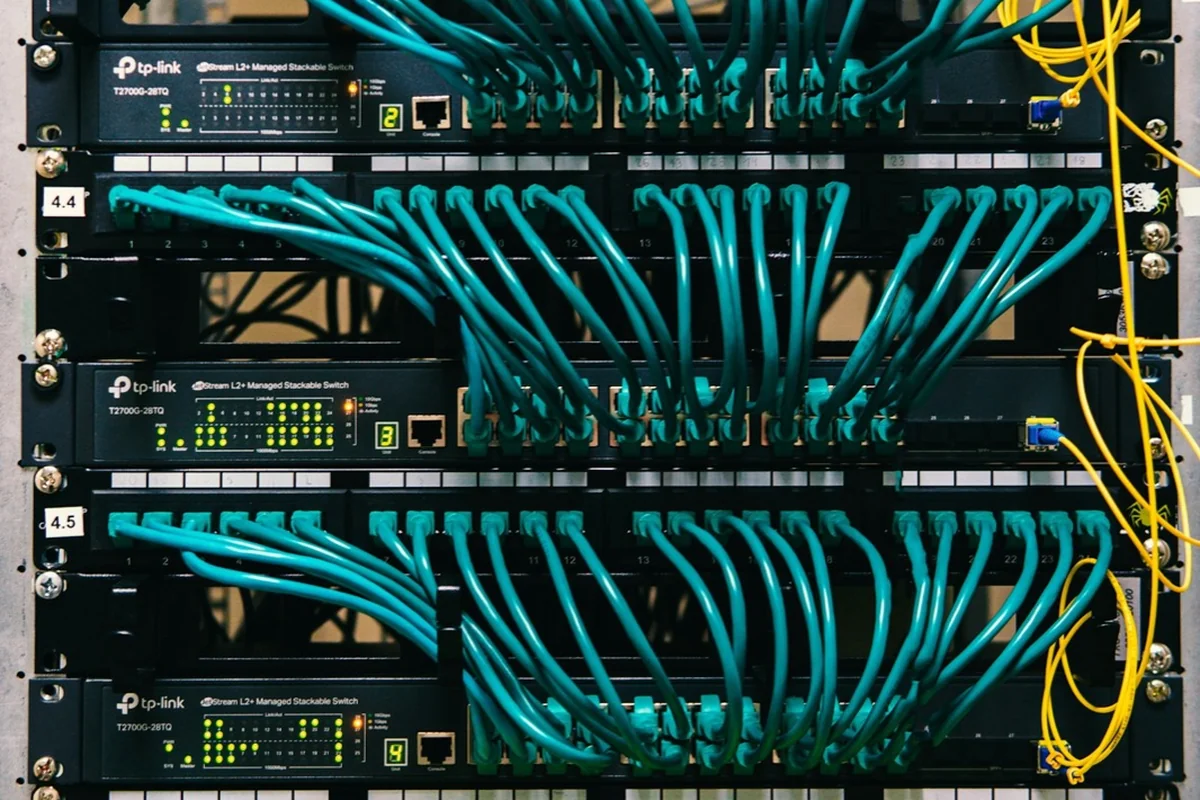
AES67 and Dante rely upon IEEE 1588-2008 Precision Time Protocol (PTPv2). A designated Grandmaster Clock on the network broadcasts microsecond-precise sync timestamps. Every connected endpoint continuously calculates network transit delay, slaving its internal audio DAC sampling clock to the Grandmaster within sub-microsecond precision.
[ Network Grandmaster Clock (GPS Master) ]
                   │
    IEEE 1588 PTPv2 Sync Packets (UDP Port 319)
                   │
    ┌──────────────┴──────────────┐
    ▼                             ▼
[ Speaker A (DAC Phase 0.00µs) ] [ Speaker B (DAC Phase 0.00µs) ]
Identical acoustic wavefronts; zero echo, zero comb filtering!
---
3. Designing Network Infrastructure for AoIP
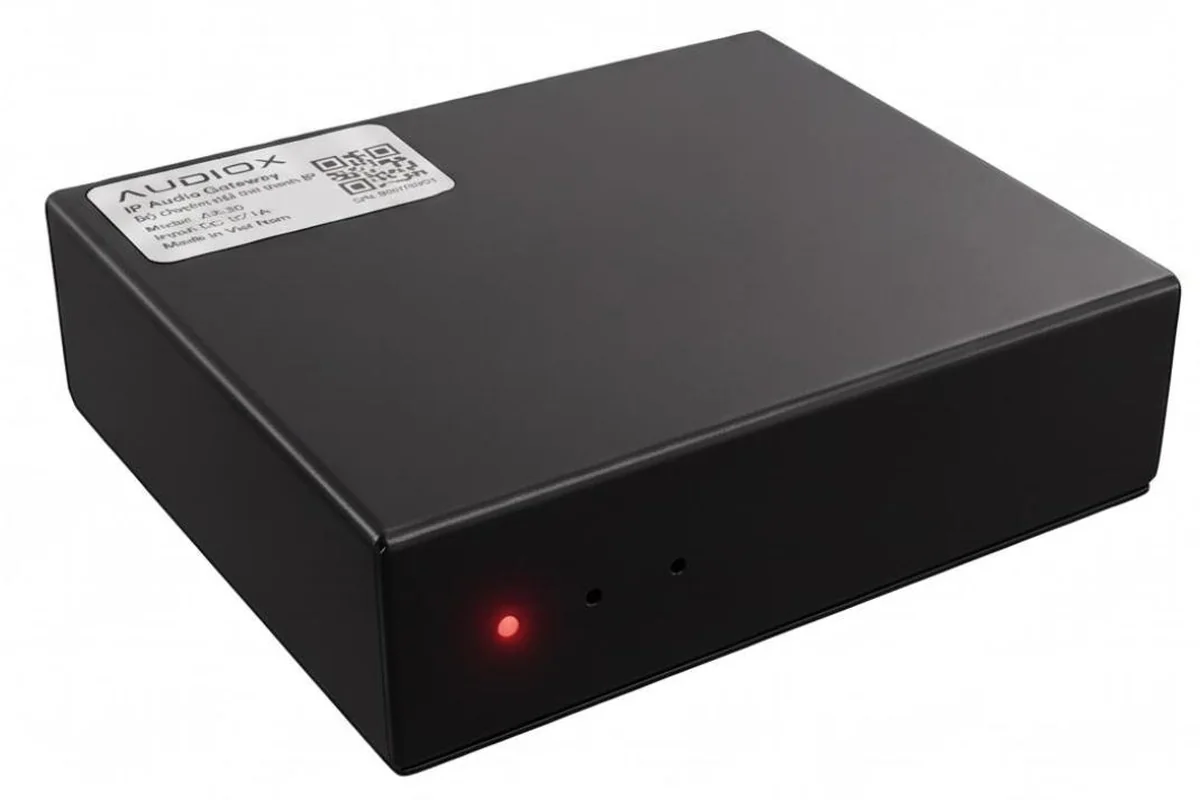
Professional audio streams are intolerant of packet drops. Network switches must be properly provisioned:
- Enable DiffServ QoS (Quality of Service): PTP clock synchronization packets must receive the absolute highest network priority (DSCP 46 / EF). High-bandwidth audio RTP streams follow immediately behind (DSCP 34 / AF41), jumping ahead of bulk data.
- IGMP Snooping & Querier Configuration: An active IGMP Querier must reside on the subnet to maintain multicast group tables, while all managed switches enforce IGMP Snooping to prevent multicast streams from flooding general network ports.
---
DeviceLab AudioX AoIP Hardware & Gateways
DeviceLab engineers professional-grade network audio endpoints:
- AudioX HY-Series IP Audio Gateways: Multi-channel rackmount decoders supporting native SIP telephony registration, multicast RTP streaming, and AES67 compatibility modes.
- High-Power IP Network Amplifiers: Integrated PoE and high-voltage 100V amplifiers engineered for continuous 24/7/365 campus broadcasting.
- Turn-Key AoIP System Integration: Network switch VLAN configuration, PTP clock tuning, and seamless bridging between pro-audio staging mixers and facility-wide PA speakers.
Explore related technical resources: