
Modern university campuses, corporate headquarters, international hospitals, and multi-tenant smart facilities require flexible acoustic communication. A single facility must broadcast scheduled class bells, stream background music (BGM) in public dining halls, facilitate localized two-way intercom communications, and provide instantaneous, high-priority emergency mass notification during fires or security lockdowns.
Traditional analog 70V/100V public address infrastructure collapses under multi-building scale: ground loops induce continuous mains hum, long copper cable runs cause severe high-frequency audio attenuation, and physical zone matrix switchers are hopelessly rigid.
Audio over IP (AoIP) leverages campus-wide fiber-optic network infrastructure to deliver high-fidelity, synchronized digital audio to thousands of endpoints. This technical guide outlines the network architecture, VLAN segmentation, and hardware endpoints required to build a resilient campus-wide IP Audio ecosystem.
---
1. Campus-Wide Multi-Building Network Topology
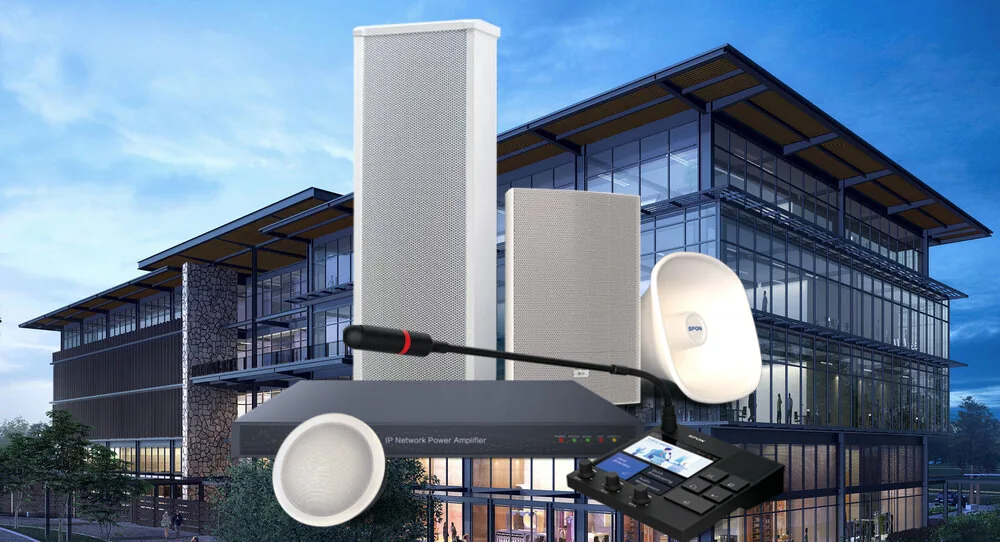
AoIP routes digital audio streams over the existing enterprise campus Ethernet backbone:
[ Central Control Room / Headend Server ] ──► [ Campus Optical Fiber Backbone ]
                                                              │
         ┌────────────────────────────────────────────────────┴────────────────────────────────────────────────────┐
         │                                                    │                                                    │
[ Building A: Academic Hall ]                        [ Building B: Student Center ]                       [ Building C: Athletic Stadium ]
 ├── Layer 2 Managed PoE Switch                       ├── Layer 2 Managed PoE Switch                       ├── High-Power IP Amplifiers
 ├── Classrooms: Two-Way SIP Intercoms                ├── Dining Hall: Multi-Zone BGM Speakers             ├── Outdoor High-SPL Horn Speakers
 └── Corridors: PoE Ceiling Speakers                  └── Common Areas: Wall Baffle Speakers               └── Emergency Blue-Light Help Points
Audio traffic is routed through managed Layer-2/Layer-3 switches configured with IGMP Snooping, ensuring high-bandwidth multicast streams are directed strictly to active listening speakers rather than flooding general office Wi-Fi networks.
---
2. Dynamic Software-Defined Zoning & Bell Scheduling
In legacy analog installations, speaker zones are permanently hardwired into physical selector switches. With AoIP, every speaker possesses a unique IP and MAC address, unlocking dynamic software zoning:
- Granular Single-Room Addressing: Paging directly into a single laboratory without disturbing adjacent lecture halls.
- Dynamic Grouping: Combining all outdoor sports fields, walkways, and parking structures into an "Outdoor Campus Zone" with one software click.
- Automated Multi-Schedule Chimes: The central software automates daily school bells, shift change tones, and holiday chimes across distinct schedules per faculty or department.
---
3. Mission-Critical Emergency Life Safety Integration
A campus audio system must function as a certified life safety asset:
[ Campus Fire Alarm Control Panel (FACP) ]
                    │
           Dry-Contact / Modbus TCP Trigger
                    │
                    ▼
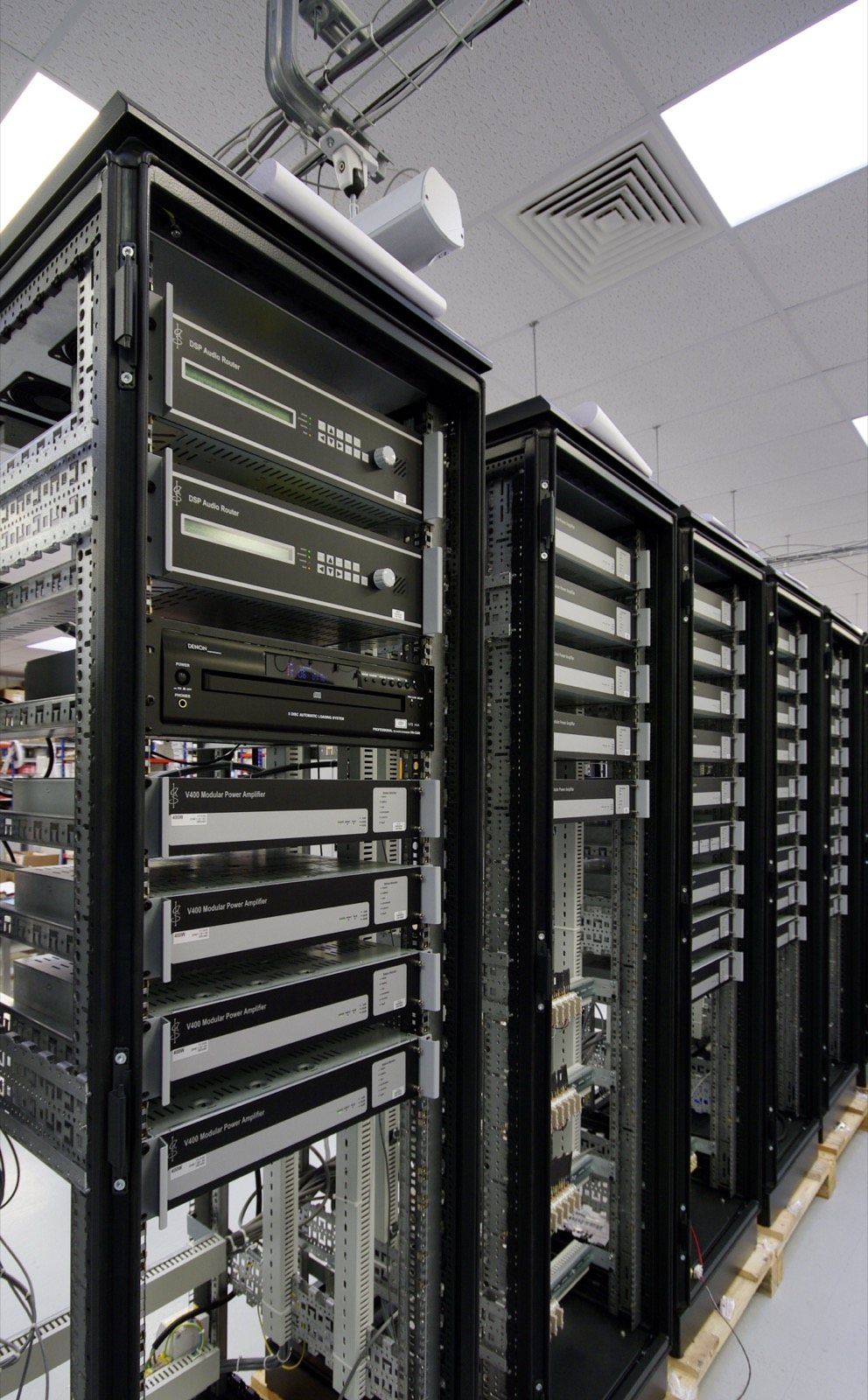
[ AudioX IP Broadcast Server ] ── (Highest Priority Override) ──► [ All Campus Speakers (100% Volume) ]- Fire Alarm Emergency Override: When an alarm trigger is received from the building Fire Alarm Control Panel (FACP), the IP Audio server instantly halts all background music, bells, and low-priority paging, broadcasting clear, pre-recorded evacuation instructions at maximum volume.
- Zone-Specific Evacuation Sequencing: Phasing evacuation messages floor-by-floor to prevent stairwell congestion in high-rise towers.
- Continuous Endpoint Supervision: The server continuously pings every IP speaker via SNMP. If an outdoor horn speaker is damaged or disconnected, an alert is instantly flagged on the facilities maintenance dashboard.
---
DeviceLab AudioX Campus Solutions
DeviceLab provides comprehensive Audio over IP hardware and software platforms for campus environments:
- AudioX Enterprise Management Suite: Intuitive browser-based scheduling, interactive 2D/3D campus map zoning, SIP phone integration, and text-to-speech announcements.
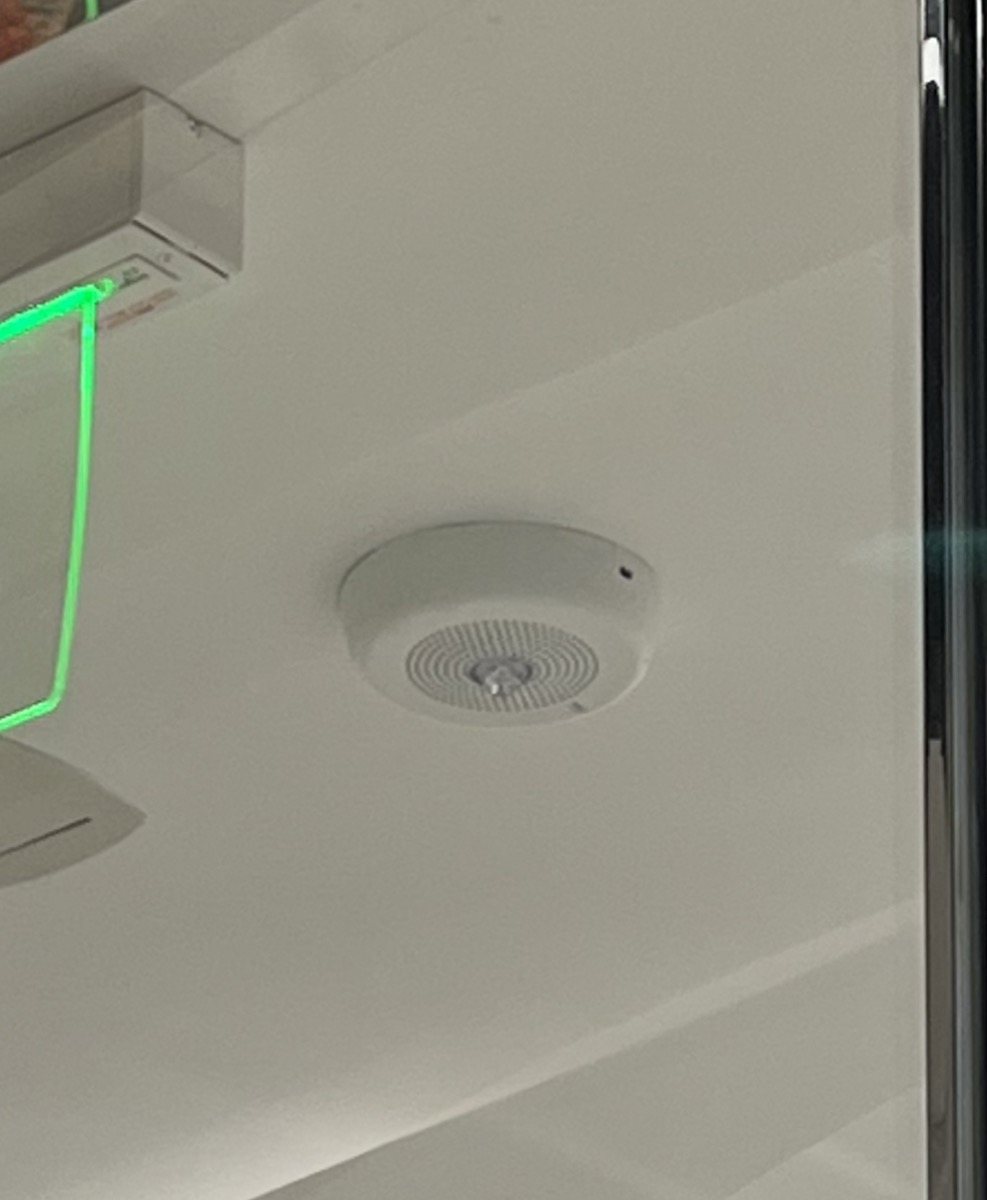
- PoE Ceiling & Wall Loudspeakers: Crystal-clear vocal clarity, wide dispersion angles, and integrated 15W–30W Class-D amplification powered by standard network switches.
- Hybrid IP Migration Gateways: Retrofitting existing analog amplifiers and speaker networks into modern campus IP audio control.
Explore our related audio engineering guides: