
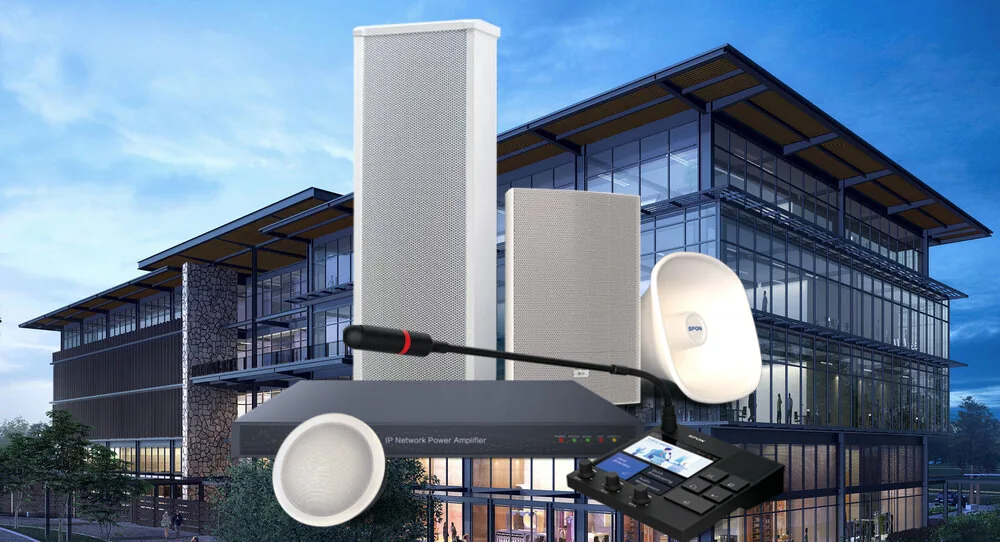
AudioX Overview & Architectural Concept
AudioX is a next-generation Audio over IP (AoIP) broadcasting and communication system developed by DeviceLab. It replaces cumbersome analog public address (PA) cabling with standard IP networking, streaming high-definition digital audio, automated schedules, two-way intercom, and emergency voice alerts across school campuses, regional hospitals, industrial parks, and commercial towers.
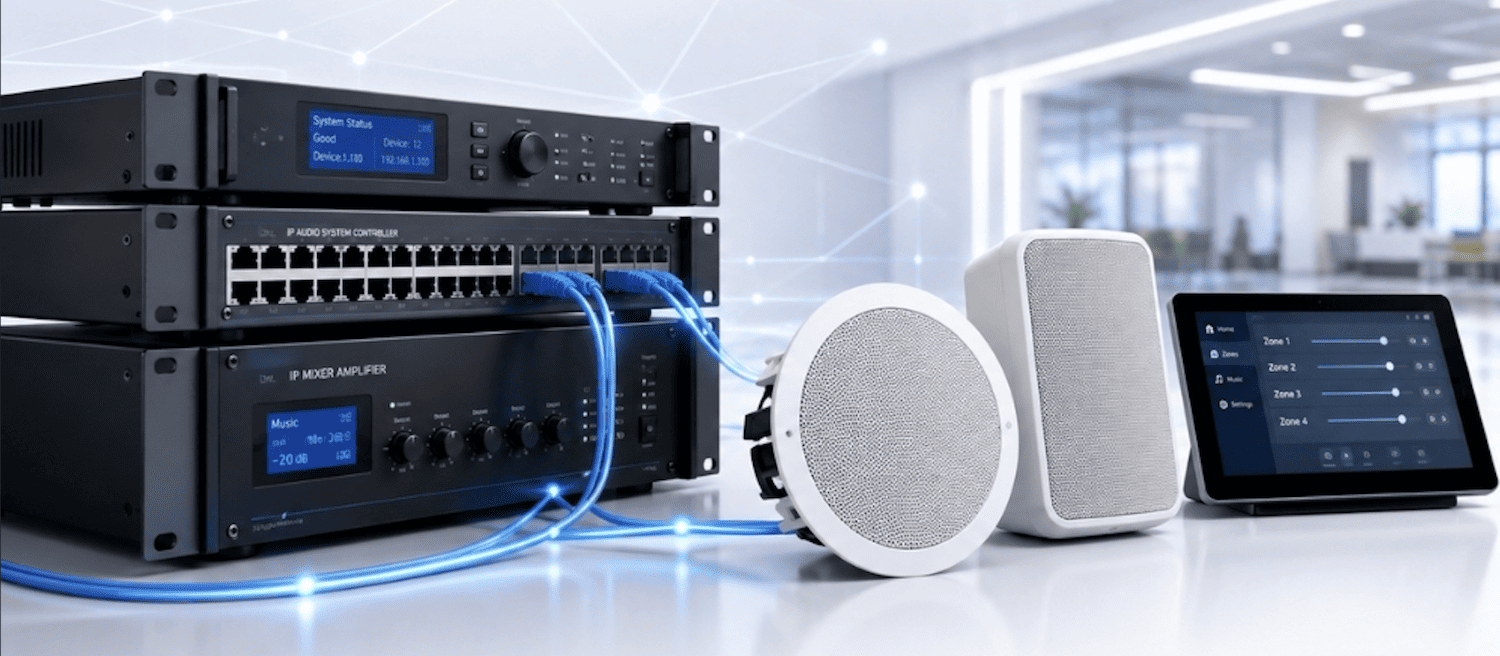
Unlike centralized analog amplifiers that push high-voltage 100V audio down miles of copper wire, AudioX operates on a distributed digital edge architecture. Audio streams are encoded digitally at the management server or paging console, transmitted across existing Cat5e/Cat6 LAN infrastructure using UDP/RTP multicast, and decoded directly at individual speaker endpoints with integrated high-efficiency Class-D amplification.
The Engineering Flaws of Legacy 100V Analog PA Systems
Traditional analog public address systems suffer from severe architectural limitations:
- High Cabling Costs & Signal Degradation: Requires thousands of feet of specialized high-voltage speaker cabling prone to electromagnetic hum, interference, and corrosion.
- Rigid Hardware Matrix: Partitioning zones requires physical mechanical switchboards. Reconfiguring speaker zones after construction is virtually impossible without pulling new cables.
- Single Point of Failure: A failure at the central analog amplifier rack leaves the entire building or campus completely voiceless.
- Zero Telemetry: Facility managers cannot verify whether a loudspeaker in a distant corridor is functional or disconnected until someone manually notices.
Core Capabilities of the AudioX IP Audio Platform
AudioX addresses every operational demand of complex modern facilities:
- Granular Multi-Zone Paging: Broadcast to a single classroom, an entire workshop hall, an outdoor sports field, or the entire campus simultaneously with one click.
- Automated Bell & Chime Scheduling: Programmable weekly calendars for school class change bells, factory shift change chimes, and pre-recorded announcements with sub-50ms synchronization.
- Remote Audio Telemetry: Real-time device heartbeat surveillance and remote acoustic monitoring allowing operators to audit audio quality from a web console.
- Two-Way SIP Intercom: Full-duplex voice communication between gate terminals, classroom intercom stations, and the security control desk.
- Emergency Broadcast Override: Direct integration with building fire alarm systems (dry contact or API) to trigger automated high-priority evacuation announcements instantly.
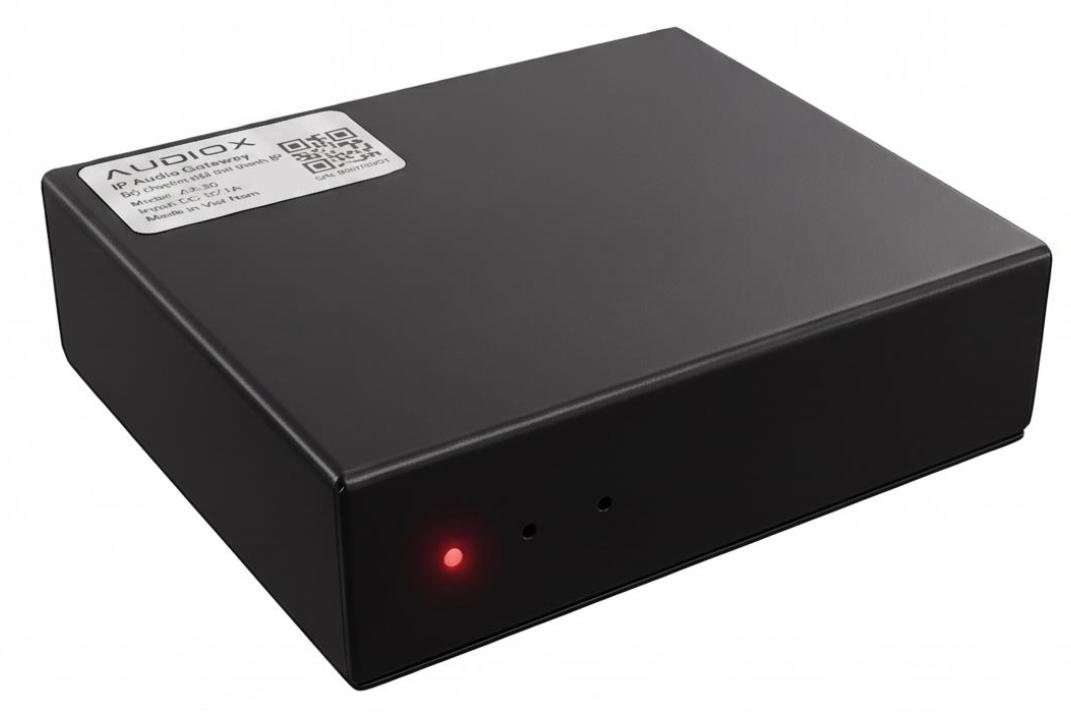
Hardware Endpoint Design: Decoders & Class-D Amplifiers
DeviceLab engineered the AudioX hardware terminal from the ground up for industrial continuous-duty operation:
- Dedicated Processing SoC: Dual-core processing architecture dedicated to RTP audio stream decoding, acoustic echo cancellation (AEC), and network protocol serialization.
- Integrated Class-D Amplification: Ultra-low thermal dissipation digital power amplifiers delivering 30W to 120W RMS directly into standard 8Ω or 70V/100V speakers.
- Dual Network Interfaces: 10/100 Mbps Ethernet port with optional Power-over-Ethernet (PoE+ / 802.3at) alongside 2.4GHz Wi-Fi for locations where cabling is impractical.
- Auxiliary Local Inputs: 3.5mm line input, balanced microphone port, and dry-contact alarm inputs for localized physical switches.
Frequently Asked Questions (FAQ)
Can we reuse our existing analog speakers and horn loudspeakers?
Yes. AudioX IP decoders provide standard low-impedance (4–8Ω) or high-voltage (70V/100V) line outputs, allowing you to connect directly to existing wall speakers and outdoor horn arrays without replacing acoustic hardware.
Does IP audio streaming congest the existing corporate or campus LAN?
No. AudioX utilizes advanced IGMP multicast routing. High-fidelity uncompressed voice streams consume only 64 to 128 kbps per channel, representing a fraction of 1% of standard 1Gbps network capacity.
Can the system operate if the external internet connection goes down?
Yes. AudioX management servers and decoder terminals communicate entirely over the local area network (LAN). Internet access is only required for optional remote mobile app administration off-site.